We bring dogs home to be part of our lives – road trips, camping, dog walking, hiking, maybe a patio. We have so many big plans that come hand in hand with wondering how to train a dog to walk on a leash! It’s disappointing when our plans for our dog don’t work out.
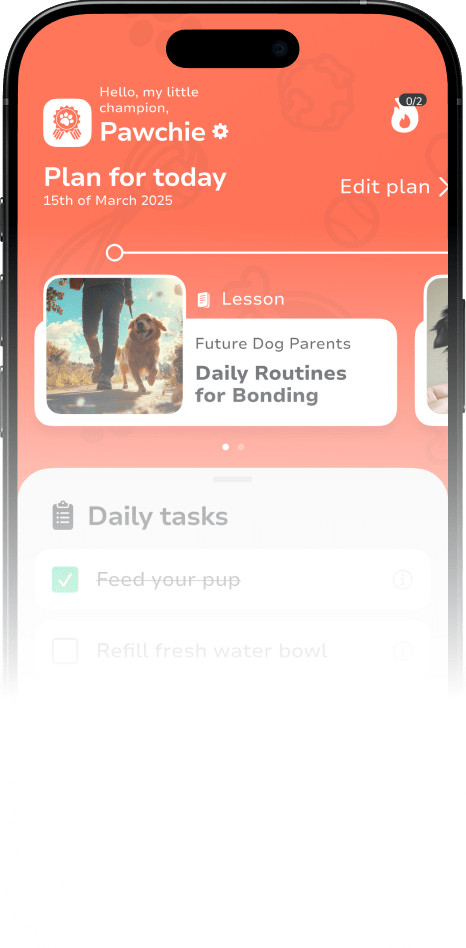
Want a clear plan instead of trial and error? PawChamp app creates a personalized obedience plan that helps you train the exact skill your dog needs for calmer, safer walks.
Key takeaways
Leash pulling usually comes from missing foundations, not stubbornness
Check-ins, cue response, and connection around distractions drive real progress
Leash manners matter for safety and confidence, not just “polite walking”
Training works best when you focus on the exact skill your dog is missing first
Why Leash Manners Matter
When you can’t make it around the block without being pulled everywhere and you’re coming home frustrated and embarrassed, you have two options:
Stay home and don’t do the fun things;
Or leave your dog at home for those events and deal with the guilt
And it’s not just frustrating — over 423,000 people landed in the ER after being pulled or tripped by a dog on a leash, according to a 2023 study in Medicine & Science in Sports & Exercise.
That’s why leash manners matter. Even dogs often labeled as calm dog breeds can struggle on leash without clear guidance. Most pulling issues come down to a few obedience basics, like checking in, responding to cues, and staying with you when something interesting happens. If you’re not sure which foundation your dog is missing right now, a personalized obedience plan can help you focus on the exact skills to build first—so walks start feeling safer and calmer, step by step.
You Don’t Have to Choose Between Your Dog and Your Life
But walking a dog that pulls shouldn’t mean giving up joy, freedom, or connection. There’s a better way. You can follow these 5 steps to master leash skills for dogs starting today. Read on and you’ll learn:
Proven 5-step strategy on how to train loose leash walk, an approach that’s already improved the walks of hundreds of dog parents just like you.
Top tips that have instantly improved walks for me and my dog, as well as countless others!
Let’s dive right into the 5 dog walking tips!
Courtesy of Amanda VanTassel, No Hassle Dog Training
1. The Right Tools and Motivation for Stress Free Dog Walks
First step – do a dog walking equipment review. Is it the best harness for dog walking? Is there room for your dog’s shoulders to move freely? If you answered no to either of those questions, it may be time for a new harness.
Leash Training Tips
Now, thinking about leashes – I like extra length. Instead of a standard 4-6-foot leash, consider your new standard an 8–10-foot leash. If you have quiet spaces or live on a quiet road, you can even use a 20-foot leash!
💡 Pro tip
Look for local companies that make biothane leashes. They’re waterproof + stink-proof!
You also need to think about setting some goals for you and your dog to succeed. Working through dog leash training tips toward a goal keeps us motivated to do the training.
Start with Small Wins on Every Walk
Think about small goals you can set, things like:
Getting outside calmly
Walking nicely in the driveway or in front of your apartment
Pick some landmarks, like trees or driveways, a short distance in either direction
Write your goals down (1 or 2 goals are fine for now!) and stick them on your fridge or somewhere you’ll see them every day.
💡 Pro tip
Don’t forget to celebrate each goal you reach! It can be as big or small as you want, but each of you should get something!
2. Managing Calm Dog Walks Right Now
Now that your goals are set think about quieter places where you can walk your dog. Right now, while they’re learning, it’s about allowing them the exercise they need while trying to not practice how to stop dog pulling on leash.
Use a longer leash – dogs are often just a little faster than we are. If we can safely use a longer leash (even 8 to 10 feet), it can make a big difference.
Practice in empty parking lots, closed business parks, and walking trails at quiet times
If your dog is good off leash, take them for an off leash walk
Use those landmarks from your goals! Walk towards them, then back home, then in the opposite direction, and back home again. A little ping pong action, always returning to home base.
3. Leash Training Advice: Calm, Connected, Focused
If your dog isn’t engaged with you and can’t listen when you’re on a walk, then they most likely can’t walk nicely on a leash! Reducing some of the excitement before a walk even starts can be helpful for excitable and overstimulated dogs.
Give your pup a longer-lasting chew before starting your walk prep to create some calmness.
Once geared up, move around your space for a minute or two. You’re waiting for your dog to relax a little bit (watch their body language) and to be able to look at you.
Now move outside. Give them a few minutes to sniff a favourite spot, then wait for them to look at you again before moving on.
Keep those little check-ins going throughout the walk, rewarding each with treats and/or praise!
💡 Pro tip
Is there a certain point where your dog gets jazzed up about the walk? Maybe when you touch your shoes or pick up the leash. Throughout the day, pick up that item. Walk around for a moment and put it away again. Then, move on with your day! (Do not do this before a Zoom call!)
4. Leash Training for Dogs: Core Skills
Now that you have a dog that’s able to look at you occasionally, let’s get them working on core skills like the actual loose leash walking and heel.
Loose leash to me is simply slack on the leash. They can be ahead or behind, as long as my arm isn’t being pulled out of its socket!
Heel means stay really close. We’re not looking for perfect dog heel training, we just need them close for safety purposes – like traffic, crossing busy roads, or so another person and dog can pass by.
To teach loose leash, the easiest way is to capture moments when it’s happening naturally. Find a quiet spot and move around so there’s some slack on the leash and pair it with a verbal cue, I use “let’s go”.
To teach heel, use a long mixing spoon dunked in a tasty wet food (pumpkin, dog safe peanut butter, yogurt etc). Hold that down at your side and move about letting your dog lick their reward and walk nicely! Use the cue “heel” when they’re in position next to you.
Keep up that practice, pairing the action with the word, and you’ll have a dog strutting their loose leash stuff in no time! For a simple, expert-backed plan tailored to your dog, try PawChamp.
5. How to Handle Dog Walking Distractions
Once you’re both feeling more confident in walking in quieter locations, you can start including real world dog training distractions!
Rate your dog’s distractions – think about which distractions are manageable, a little iffy, and definitely impossible. Write it down!
Start with lower-level distractions – allowing you and your dog to continue to be successful. A little bit of a challenge is good, but we don’t want to overwhelm either of you!
As you progress through your distractions list, reassess it occasionally. Have some of the iffy things become more manageable? Was there a time that your dog didn’t react to something previously impossible? Update that list!
And don’t forget to celebrate your progress as you move through this list! It’s important that you’re both rewarded for a tough job.
If you’re unsure how to work through it safely, the Ask Experts feature in PawChamp app can help you troubleshoot your specific situation. You can share what your dog is reacting to, where it happens, and what you’ve tried so far, and get practical guidance you can actually use on your next walk.
Loose Leash Walking Goals Check In
Finally, I want you to go back to your original goals. Maybe it was to just make it around the block. Did you do it? Yes? Great work! Set a new goal and work towards that! It could be another neighborhood, a walk in a park, maybe a quiet patio? The world is your oyster!
If you haven’t hit your goal yet, think about what you can change to make the walk around the block more successful. Consider trying at a different time of day, for instance.
How to Make Dog Walks Better: Final Thoughts
Your job is always about problem-solving. Ask yourself: how can you break the goal down into smaller steps, or how can you make your dog more successful? Don’t ever be afraid to go back a step or two and find that place of success again. We’re working through leash training challenges at the dog’s pace. Now go forth and have more adventures with your dog!