A question I often get asked since becoming a certified Pet Nutrition Coach is, "how long can a dog go without eating?" This is a controversial question, and my first question back is always why. Some dogs have a loss in appetite or are simply just turning their food away. Luckily, there are some answers, even for the pickiest of eaters.
Key Takeaways
- In most cases, the dog is just being picky and there is no raised concern.
- There can be other underlying causes as to why your dog is not eating.
- Fasting can sometimes be good for your dog.
- A dog who suddenly stops eating may need a vet visit.
How Long Can a Dog Go Without Eating Safely?
There can be many reasons why a dog stops eating, and surprisingly enough, there are a couple of different answers as to how long dogs can go without eating. Safely, with no serious issues occurring, a dog can tolerate anywhere from 24–48 hours without eating. Of course, this depends on the amount of energy they are using, whether or not they have water available, and a couple of other factors.
⚠️ Tip:
Between 3–5 days is when you will notice some weight loss and weakness.
Around 1 week, the dog's immune system will start to weaken and a significant amount of muscle loss will occur. Around 2 weeks or so, many dogs will be unable to survive much longer.
Does Age, Breed, and Health Affect How Long a Dog Can Fast?
Some of the most crucial pieces of information to keep in mind here are your dog's age, breed, and whether they're showing any signs of illness. This plays a huge role in how long they are physically able to skip meals safely. A diabetic dog, for example, should never skip meals — that's not considered safe and should be avoided.
A healthy adult dog with no health-related issues can go the longest without eating. Puppies (under a year) and seniors cannot go as long, due to their reduced muscle mass and limited energy reserves.
🐕 Tip:
Larger breeds tend to be able to go longer without eating than smaller breeds, because smaller breeds have a faster metabolism and larger breeds have more energy reserves.
Why Is My Dog Not Eating?
Dogs can skip their meals and avoid eating for many reasons. The most common reason is simply because they're picky. They may not like the food given to them and turn their head and walk away.
Other reasons are usually due to an underlying health condition. This can be a list of things, as a dog not eating is one of the most common symptoms for lots of illnesses.
Common Reasons Dogs Refuse Food
A food they eat every day that they suddenly turn their head at is worth troubleshooting first — try changing the flavor or adding a topper to see if that entices them. A dog who still refuses to eat may have another issue beyond being picky.
Other reasons can be dental pain, an upset stomach or anxiety. Try feeding wet food and see if this gets the dog to eat. Usually, dogs with dental or mouth pain will go for the wet food, which can be a sign that a vet visit is needed.
🍽️ Tip:
If your dog refuses to eat, spice their bowl up a bit — but not literally. Add something fun and exciting like pumpkin, plain Greek yogurt, bone broth, or top it off with their favorite treats!
Dog Not Eating but Drinking Water: Should You Worry?
A dog that is not eating but still drinking water is usually less urgent than one who is doing neither; however, it should still not go unnoticed. There can be other causes such as diabetes, kidney disease, or even intestinal blockage. A dog who hasn't eaten after many attempts across a 36–48 hour period should be seen by a vet.
How to Get a Dog to Eat Again Safely
Getting your dog to eat again should be a gradual process. Some people like to introduce bone broth or goat's milk first. After the dog finishes that, wait until their next mealtime to feed. Instead of their usual amount, give less — usually about a quarter. For example, a dog who normally eats 1 cup per meal gets a quarter cup. Watch them afterwards and make sure no vomiting or diarrhea is present. Increase the next meal to half of their feeding and monitor.
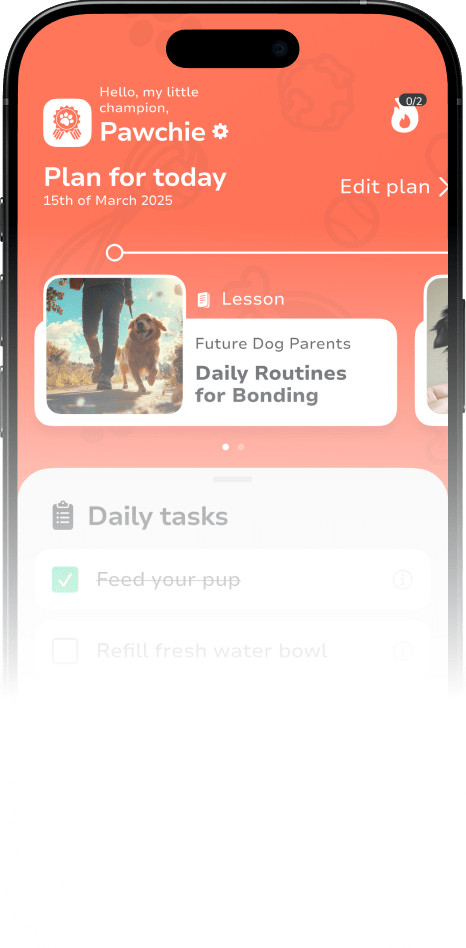
Rebuilding a dog's appetite works best with structure, and that's hard to keep consistent on your own. PawChamp's step-by-step guides help you build steady mealtime routines your dog can rely on.
When Should I Worry About My Dog Not Eating?
Tried different food options and treats, or seeing other symptoms or signs of illness? A vet visit should be immediate.
When to Take a Dog to the Vet for Not Eating
A dog still refusing food after about 36–48 hours, showing ill signs such as vomiting, diarrhea or lethargy, or living with a medical condition, needs a vet as your next step.
How PawChamp Helps
The medical side belongs with your vet. The daily side — consistent mealtimes, a calmer feeding environment, and knowing what's normal for your dog — is where PawChamp supports you.
- Step-by-step guides for building consistent mealtimes your dog can predict.
- Daily challenges that create the structure and routine a fussy eater often needs.
- Positive-reinforcement techniques for making the bowl a low-pressure place.
- The Ask a Dog Expert chat for when you're unsure whether a behavior is fussiness or something to raise with your vet.
Not sure whether your dog is being picky or telling you something's wrong? Talk it through with a PawChamp expert before you start switching foods.
Bottom Line
A dog refusing food can be a sign of an underlying condition, or it can just be them being a fussy eater. It is important to know when it's a serious concern and when it isn't. Any other signs alongside the not eating mean a vet visit may be needed, and you should consult your veterinarian.