The most exhausting thing I recollect from my experience as a puppy parent is consistently waking up at 2 am and taking my puppy out for a pee run. For a while, it had me wondering whether it’s a training issue, a routine problem, or something more.
Before we get into the nitty-gritty of trying to fix it, it may actually help to understand what is normal for dogs! This guide on how long can dogs hold their pee is a good place to start. Let’s break down the common reasons night accidents happen, and what you can realistically do about them.
If you’re unsure whether your dog’s nighttime accidents are normal or how to fix them, having a clear plan can save you a lot of trial and error. With PawChamp, you can take a quick quiz and get personalized potty training guidance tailored to your dog’s age, routine, and needs.
Key takeaways:
Most healthy adult dogs can hold pee overnight for about 7-8 hours, but regularly pushing past that isn’t a goal.
Puppies don’t reliably sleep through the night at first. Overnight holding depends on age, size, and the late-evening routine.
Senior dogs may need potty breaks every 4-6 hours, even overnight, especially with mobility or cognitive changes.
Late water intake, evening play, chewing, and salty snacks can increase thirst and trigger nighttime peeing.
Stress and anxiety can reduce bladder control and make nighttime accidents more likely.
Sudden overnight accidents in a previously house-trained dog can be a medical red flag; call your vet sooner rather than later.
Use the Potty Reset Challenge in the PawChamp app to create healthy daily potty habits and chat with experts for personalized guidance.
The Question Every Dog Parent Asks at 3 A.M.
I get it… “When will my puppy start sleeping through the night?” is usually the first question that pops up in your head when you’re up, yet again, at 3 am with Lysol and paper towels in your hand. It is difficult because you’re doing it while you should be getting your REM sleep.
As a CPDT-KA certified trainer and an experienced puppy parent, I can tell you with confidence that when they’re that young, you’d be shooting for the stars if you expect your puppy to hold their pee through the night.
💡 Beware:
For the first few nights, they WILL wake up to relieve themselves.
But the good news is this phase is short-lived. Puppies grow in size by the minute. I remember waking up to a puppy bigger every single day than the one I put to bed the previous night. So, their bladder control only gets better. Secondly, puppies catch on to routines better than you think they do. Find a routine that works for you or create one with the PawChamp app and make sure to meet your pup midway with it.
How Long Can Dogs Hold Their Pee Overnight?
Overnight holding time is shaped by two practical things: how fast your dog produces urine and how comfortable they are holding it while asleep. That’s why the same dog can make it through some nights easily and struggle on others.
Holding ability tends to go down if your dog is small, newly adopted, and still adjusting, stressed, or older and dealing with weaker bladder control or slower movement getting outside.
Adult Dogs
Living with healthy adult dogs raised from puppyhood is like a breeze! They are attuned to your routine; you are well-versed with their bodies and needs.
However, if you have recently adopted an adult dog, it is important to know that their ability to hold pee depends on their size. Smaller breeds have smaller bladders and may need to relieve themselves more often. Larger breeds like Golden Retrievers and Labs can hold their pee up to 7-8 hours or overnight comfortably. On some days, they may be able to hold for a little longer, too. That said, it’s always about specific cases rather than generalizations. All dogs are different, just like we are, so that always comes first.
💡 Important:
Anything beyond 7-8 would be pushing them into a medical emergency.
Puppies: Tiny Bladders, Big Expectations that Backfire
When it comes to puppies, I swear by the rule of months + 1 hr hack through the day. But keep in mind that this is a general rule and doesn’t take into consideration the time of day or the breed. Furthermore, puppies’ need to relieve themselves varies throughout the day. An active time of the day (such as evening) calls for frequent pee breaks (every 30-45 minutes).
Speaking of overnight bladder control, it really depends on their late evening routine. If your puppy’s meal time is late evening and they tend to drink a lot of water before sleeping, expect them to wake up for a bio break. However, if your puppy’s meal is done by 5 pm, their body clock will eventually get adjusted, and they will be able to sleep through the night.
💡 Tip:
Crates are helpful to an extent as they condition dogs to rest in it for longer and avoid accidents.
How Long Can Senior Dogs Hold Their Pee Overnight?
Senior dogs are more prone to mobility issues and cognitive issues as they age. This may very well affect their bladder control and ability to hold through the night. In some cases, it may also cause incontinence.
If your dog is going through medical issues, make sure to give them bio breaks every 4-6 hours, even at night.
Why Is My Dog Peeing at Night? Common Causes
Not every night accident is a “potty training problem”. A lot of the time, the bladder is doing exactly what it’s supposed to do: filling up faster than usual because something in the evening routine increased thirst or urine output.
💡 Think about it:
These triggers are easy to miss because they feel normal, like a slightly later walk, an exciting play session, a new treat, or a stressful day. But if they happen close to bedtime, they can shift your dog from “can hold it overnight” to “needs a break at 2 a.m.”.
Late Water Intake and Evening Play Sessions
Your dog’s evening and nighttime routines are one of the biggest determinants of their ability to hold their pee overnight. While I would never ask you to keep the water bowl away after a certain time, it might be a good idea to discourage any activities at night that may urge your dog to gulp down too much water. Active play sessions, chewing on bones, playing tug, etc., are the top reasons why dogs feel the need to drink water. Avoid these after sunset.
Diet, Treats, and Salty Snacks
While a cracker here and there really wouldn’t hurt your dog, having one in the night may be detrimental to training them bladder control. Diet plays a bigger role in nighttime potty needs than most of us realize.
High protein diets or diets high in moisture or even sudden food changes may also affect digestion and water balance, thereby increasing the urge to pee. Monitoring treat ingredients and timing snacks earlier in the evening can significantly reduce nighttime urgency.
Stress, Anxiety, and Changes in Routine
Did you know a stressed dog is way more likely to pee in the middle of the night than a dog who is not plagued by anxiety? This is because when a dog is stressed, their nervous system goes into overdrive, causing loss of bladder control or instinctual, automatic release of urine. This behavior is common in puppies and anxious, fearful, or highly excited dogs.
Dog Suddenly Peeing at Night? When It’s a Medical Problem
Overnight peeing becomes a red flag when the math stops adding up: your dog’s routine hasn’t changed, but the night accidents start anyway, or the urgency feels extreme compared to the amount of water they drank.
The key difference is the mechanism:
Training issues usually look like poor timing or incomplete emptying before bed.
Medical issues tend to look like irritation, overproduction, or leakage.
If you’re noticing sudden changes in your dog’s bathroom habits, it’s not always easy to tell whether it’s behavioral or something more serious. With PawChamp, you can get a personalized care plan that helps you better understand your dog’s needs and take the right next steps with confidence.
Medical Causes That Disrupt Bladder Control
Dogs struggling to hold their pee overnight may not just be behavioral. There may also be medical reasons. Urinary tract infections (UTIs) can cause bladder irritation and urgency, while kidney disease and diabetes increase urine production, filling the bladder faster than normal. Hormonal incontinence, especially in spayed female dogs, can weaken the urinary sphincter and lead to involuntary leakage during sleep.
These issues are, at times, unavoidable, but early diagnosis and treatment are critical to prevent worsening symptoms and long-term health complications.
Signs It’s Time to Call the Vet
This is where most pet parents falter- “Does this problem need an expert intervention?” This is where I stress that prevention is the best cure. Any anomaly requires an expert intervention.
If your dog is suddenly unable to hold their pee overnight, don’t ignore it. Repeated accidents in a previously house-trained dog, straining to urinate, whining or restlessness at night, blood or strong odor in urine, excessive thirst, or frequent small pees are all signs that something medical may be going on. The earlier you involve your vet the easier, and often cheaper it is to treat the underlying cause.
3 Tips to Help Your Dog Make It Through the Night Comfortably
Between a dog who makes it to morning and a dog who wakes you up at 2 a.m., the difference is usually small and predictable. Most overnight issues come down to timing, not effort.
Timing the Last Potty Break Like a Pro
Make the final potty break of the night intentional. Avoid rushing your dog out for a quick pee and heading straight back in. This often leads to incomplete bladder emptying.
Try slowing it down. Walk a little, pause, and give your dog time to fully finish. It’s okay if your dog wants to sniff around for a bit. Calm movement and patience will encourage a more complete release. This will be a huge help in enabling your dog to comfortably hold their pee.
Evening Routine Tweaks That Actually Work
Think of the evening as a phase that directly sets the tone for the night. The activities that your dog does in the evening have a direct consequence on the quality of sleep they’ll be getting at night.
Aim to serve dinner earlier in the evening, allowing enough time for digestion and a post-meal potty break. Your dog’s wind-down routine should be as predictable as breathing for your dog.
How to Manage Nighttime Accidents in Dogs?
When you can see trends clearly, you stop guessing and start managing. This is of utmost importance so that accidents don’t become a long-term habit. Crates, routine changes, diet changes, and water accessibility are all a part of healthy management techniques.
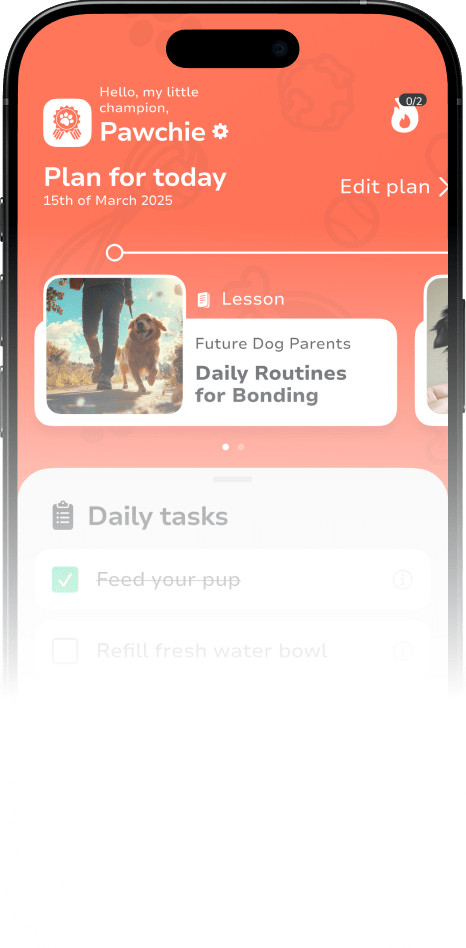
The experts on the PawChamp app can help you solve real behavior problems with structure, not guesswork. With personalized, science-backed training plans, daily video lessons, interactive games, and 24/7 access to certified trainers, we not only help you understand why issues like night accidents happen, but also how to tackle them in the best possible way.
How PawChamp Helps?
Understanding how long your dog can hold their pee is important—but knowing how to build a routine that actually works in real life is where many dog owners struggle. This is where PawChamp becomes especially helpful.
PawChamp supports dog owners with structured, easy-to-follow guidance that goes beyond guesswork. Instead of trying random fixes, you get a clear plan tailored to your dog’s age, routine, and specific challenges.
The app provides:
Personalized potty training plans that adapt to your dog’s schedule and development stage.
Step-by-step routines that help reduce nighttime accidents and build consistent habits.
Guidance on managing evening triggers like water intake, activity, and feeding timing.
Progress tracking to help you spot patterns and adjust your approach more effectively.
Access to dog experts when you’re unsure whether an issue is behavioral or something more serious.
By combining routine-building, behavior insights, and expert support, PawChamp helps you move from reacting to accidents to preventing them with confidence.