How often your dog needs to pee directly dictates how many walks and potty breaks they need each day. It is vital information for structuring your entire routine around them. This information impacts potty training success, accident prevention, and how confidently you can plan your workday when leaving your dog home alone.
Many of us tend to focus on “how long our dogs can hold their urine for," but frequency matters just as much. This article will help you understand what a healthy daily bathroom routine really looks like and how to build one that works for both you and your dog.
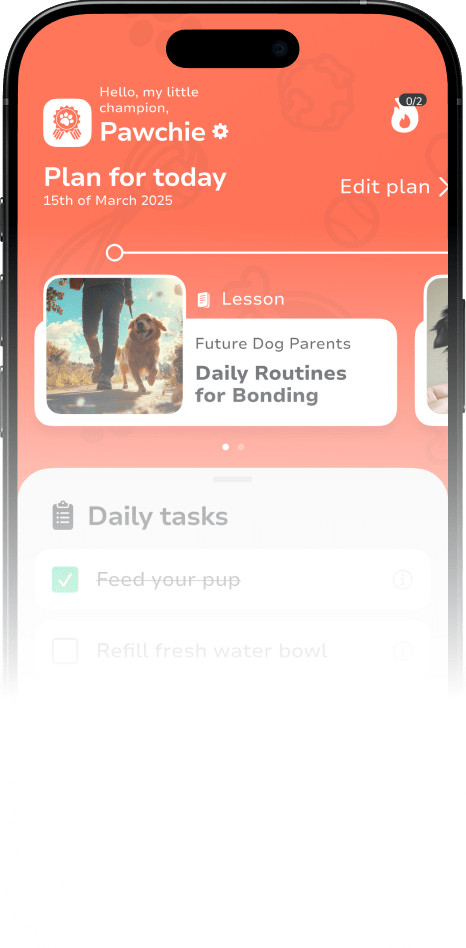
To stop second-guessing how often your dog needs breaks, try the PawChamp quiz and get a plan designed around your dog.
Key Takeaways:
Most healthy adult dogs pee every 6–8 hours, but this varies by age and health.
Puppies usually hold their bladder for about one hour per month of age.
Senior dogs often need more frequent breaks, especially dog peeing at night.
If your dog is peeing more than usual, don’t assume it’s training — check for stress or medical causes.
Changes in diet, water intake, size, and activity level all affect how often dogs need to pee.
What’s Considered “Normal” for Dog Peeing?
What looks “Normal” for a Labrador is not normal for a Shih tzu. This is because both dogs are built differently with different metabolism and biology.
An active Border Collie on a high protein diet with an active lifestyle will need to pee more frequently than a lapdog Pug. Both of these dogs use energy and process fluids differently. High activity levels combined with a high-protein diet increase water intake, body temperature, and metabolic rate, eventually leading to faster urine production. The Pug, in contrast, is a slower-moving dog, and his bladder will fill at a much slower pace.
💡 Remember
How often your dog needs to pee is a direct byproduct of their diet, water intake, lifestyle, and health condition.
How Often Should Dogs Actually Pee in a Day?
Every dog’s daily urination frequency varies widely depending on its developmental stage and physical condition. Understanding these differences helps you set realistic, healthy expectations.
How Long Can Adult Dogs Hold Pee?
Most adult dogs can usually hold their pee for about 6 to 8 hours. This is why many owners are comfortable leaving their healthy adult dogs alone for the full day.
The pee routine for most dogs set up by their owners usually looks like this:
Morning (after waking up)
Midday (if someone is home or a walker comes)
Evening (after work)
Before bed
Sometimes, one extra outing in between
Once in a while, your dog may even accommodate that one long meeting or overtime. But pushing them every day to control their urge for extra time would mean pushing them towards a medical emergency. Being a better pet parent starts with understanding your dog’s limits, and the PawChamp app helps you turn that knowledge into action.
How Often Do Puppies Pee?
Many people refer to the rule of months for puppies when it comes to potty training them. It means a puppy can usually hold their bladder for about one hour per month of age.
This means that a two-month-old puppy can hold their pee for up to two hours. A three-month-old puppy can hold for up to three hours and so on.
💡 Reality check:
this is a best-case average and doesn’t hold true in all cases.
Small breed puppies may need to go out more often than bigger breeds. Active puppies may feel the need to pee every hour, whereas others may be able to go on for longer.
If you follow the rule of the month and still get accidents, it’s not bad training. It just means your puppy needs more breaks, not stricter rules.
Senior Dogs: Why Is My Dog Peeing a Lot?
Senior dogs often need to pee every 4 to 6 hours, sometimes even more often. If you’ve noticed your senior dog peeing a lot, especially during the night, this change can feel sudden and concerning. One day they’re fine, the next day they’re pacing at midnight or having surprise accidents. That shift catches most owners off guard.
Aging weakens bladder muscles and changes kidney function. This is a normal body response for an aging dog. It is not regression.
💡 Quick fact:
Older dogs are more prone to nighttime and early-morning urgency. Adjusting schedules early can prevent stress, discomfort, and messy wake-up calls.
What Really Influences How Often Your Dog Needs to Pee?
There are 6 questions you need to ask yourself to figure out how often your dog needs to pee-
What is his diet like? Is it rich in protein, salt, or moisture? All of these trigger frequent urination.
How much is his water intake? The weather may very well make your dog more or less thirsty.
What is the size of my dog? Smaller dogs have tiny bladders and, therefore, less control as compared to bigger dogs.
What is my dog‘s physical health like? Are there any signs of a UTI or hormonal imbalance or any other medical situation? Does everything look and seem normal?
What is my dog’s metabolism like? Dogs with higher metabolic rates can digest food and water faster than other dogs. These dogs may feel the need to pee more.
What are my dog’s activity levels? Highly active dogs feel the need to pee more frequently than moderately active dogs.
Is Frequent Peeing a Potty Training Issue?
If you catch your dog peeing more often, especially all of a sudden, it may just be a signal that something bigger is going on. Medical conditions like urinary tract infections, kidney disease, diabetes, and hormonal imbalances can all increase urine production or reduce bladder control, making accidents more likely.
Lifestyle and environmental changes affect our dogs more than we realize. A new schedule, increased stress, moving homes, weather changes or changes in activity level – all these are known to disrupt your dog’s normal bathroom habits.
A dog transitioning from adulthood into their senior years may also slowly start losing their ability to hold their pee for long.
In all of the above cases, retraining alone will not solve the problem. Attempt to understand and address the root cause. When accidents keep happening, the PawChamp app helps you start potty training with a structured, step-by-step approach.
Should I Be Concerned if My Dog Pees Too Little?
Medical issues like dehydration, urinary blockages, kidney problems, or pain during urination can all cause dogs to pee less frequently or avoid peeing altogether. This can quickly become dangerous.
For several healthy adult dogs, this may be behavioral, and it may happen when they get strongly conditioned to only relieve themselves in certain places.
I remember constantly scrubbing pee puddles when my dog was a puppy, but as she grew, she became so used to going outside that she eventually refused to pee indoors at all. While that sounds ideal, it can become risky when dogs are left alone for long hours and choose to hold it for 10–11 hours rather than have an accident. At that point, it’s no longer “good training.” It’s just pushing their body toward a medical emergency.
4 Tips to Support Healthy Pee Habits Without Hovering Over Your Dog
You cannot micromanage your way out of your dog's natural biology. If they need to go, they need to go. Having said that, you can definitely help support healthy pee habits in your dog.
Setting a routine is great, but make sure to meet them midway. Hiring a walker to supervise your healthy adult Labrador to take him out to pee every 4-5 hours is a great idea. But the same idea may not work for a Chihuahua having severe separation anxiety. They would need way more supervision and more frequent pee runs. Try to accommodate that.
A comprehensive annual vet checkup is highly recommended to make sure everything is functioning OK.
💡 Remember:
Dogs are experts at hiding pain and discomfort.
Watch Patterns, Not Isolated Accidents - One accident doesn’t mean failure, but repeated timing indicates a pattern. If your dog consistently struggles at the same hour every day, that’s your cue to adjust walks, meals, or water access; not to punish or ignore it.
Make Potty Breaks Calm, Not Rushed - Rushed potty breaks often lead to incomplete emptying. Slow down, let your dog sniff, move, and fully finish because a “half-pee” now usually means an accident later.
How PawChamp Helps With Dog Training for Better Pee Habits
PawChamp is designed to be a guiding light for your training needs – before, during, and after. It can help you build consistent routines using potty cues and proper timing so dogs clearly understand which behavior earns rewards.
During training, it emphasizes smart management, supervision, limited roaming, and proper sleep setups to prevent setbacks. And if progress stalls, the unlimited 24/7 Ask a Dog Expert chat provides personalized guidance you can access anytime, even for free on the web.
Bottom Line
Monitor very, very closely. Dogs are constantly communicating with us; we just have to be attuned enough to listen and respond. Dogs are most comfortable following a routine. So, if you see anything going off track, don’t ignore it.