The first time you clip a leash onto your puppy's collar, the world suddenly feels a lot bigger — for both of you. Maybe your pup freezes like a statue, maybe they zoom in frantic circles, or maybe they simply flop down and refuse to budge. Whatever happens, take a breath: this is completely normal, and with the right approach, those first wobbly steps will turn into confident, joyful walks before you know it.
Key Takeaways
- Start collar and leash introduction indoors, long before your first outdoor walk.
- Use positive reinforcement — treats, praise, and patience — at every stage.
- Keep early sessions very short (2–5 minutes) to avoid overwhelming your puppy.
- Puppies under 16 weeks are in a critical socialization window; gentle exposure now pays off for life.
- Consistent, calm practice is far more effective than rushing the process.
Why Early Leash Training Matters So Much
The period between 3 and 16 weeks of age is what behaviorists call the socialization window — a golden stretch of time when a puppy's brain is primed to form positive associations with new experiences. Introduce collars, leashes, and outdoor sights and sounds now, and your dog is far more likely to accept them calmly for life. Wait too long, and the same experiences can feel genuinely scary.
This doesn't mean you need to rush your eight-week-old onto a busy sidewalk. It simply means that gentle, low-pressure exposure started early builds a foundation of confidence that no amount of remedial training can fully replicate later. If you're still picking your breed, our guide on choosing a dog as a first-time owner can help you set realistic expectations before leash training even begins.
Why Early Leash Training Matters So Much
🐾 Fun Fact:
Puppies that are gently exposed to collars and leashes before 12 weeks tend to adapt far more quickly than those introduced later. Even just wearing a lightweight collar around the house for a few days can make a huge difference when leash time arrives.
Step 1: Introduce the Collar First
Before there is ever a leash involved, your puppy needs to feel comfortable wearing a properly fitted collar. A good rule of thumb: you should be able to slip two fingers underneath it easily — snug enough that it won't slip over the head, loose enough to be comfortable.
Put the collar on for short stretches during positive moments — right before a meal, during playtime, or when you're offering a treat. Most puppies scratch at a new collar for the first minute or two, then forget it's there entirely. Resist the urge to remove it the moment your pup seems bothered; that teaches them that fussing makes the collar disappear. Instead, redirect their attention with a treat or a toy and let them adjust naturally.
Aim for 3–5 short collar sessions per day over 2–3 days before introducing the leash at all. Breeds with sensitive skin or heavy coats — like a Golden Retriever or a Shih Tzu — may need an extra day or two to fully settle.
💡 Tip:
Choose a lightweight, flat buckle collar or a well-fitted harness for your first sessions. Heavy or bulky gear is uncomfortable for tiny puppies and can create a negative association right from the start. Save the harness-vs-collar debate for later — right now, comfort and simplicity win.
Step 2: Let Your Puppy Meet the Leash
Once your puppy is collar-comfortable, it's time to introduce the leash — but not by clipping it on and walking. Start by simply placing the leash on the floor near your puppy and letting them sniff it at their own pace. Pair every calm sniff or nudge with a small treat and a quiet "good girl" or "good boy."
Next, hold the leash near the puppy without attaching it. Let them see it move, hear the clip jingle, and approach it voluntarily. Only when they show relaxed body language — a loose posture, no tucked tail, no backing away — should you clip it on for the first time.
When you do clip it on, let the leash trail loosely on the floor while you stay seated nearby. Don't hold the other end yet. Give your puppy 30–60 seconds to drag it around and realize it's not a threat. Keep the atmosphere light and happy, offering treats and calm praise throughout.
Step 3: Build the Follow-Me Foundation Indoors
With the leash clipped on and loose in your hand, take a single step forward and encourage your puppy to follow. Use an upbeat, encouraging voice — "let's go!" or "this way!" work great — and lure them with a treat held just in front of their nose if needed. The moment they take even one step toward you, mark it with a treat and enthusiastic praise.
The goal at this stage is not a perfect heel. It's simply the idea that moving alongside a human while wearing a leash leads to wonderful things. Keep sessions to 2–3 minutes maximum; puppies under 16 weeks have extremely short attention spans and tire quickly. Several short sessions throughout the day beat one long, exhausting one every time.
Practice in different rooms of your house. A change of location — even just from the living room to the hallway — is genuinely novel for a young puppy and helps generalize the skill. Once your puppy is trotting alongside you indoors without pulling, bunny-hopping, or freezing, you're ready for the outdoors.
🧠 Think About:
If your puppy plants their feet and refuses to move, never drag or pull them forward. Instead, crouch down to their level, pat the ground gently, or move a few steps in the opposite direction to spark curiosity. Pulling creates resistance; curiosity creates movement.
Step 4: Take Your First Steps Outside
The backyard or a quiet front step is the perfect first outdoor classroom — not the dog park, not a busy street. Outside, your puppy's senses are bombarded with new smells, sounds, and sights all at once, which is exactly why starting in a low-stimulation environment is so important.
For the first outdoor session, your only goal is for your puppy to feel safe. Let them sniff the ground, look around, and choose the pace. Follow them rather than leading, allowing the leash to stay loose. If they startle at a noise, stay calm and neutral — your energy is your puppy's biggest cue. Crouch down, offer a treat, and wait for their body to relax before moving on.
Gradually, over several sessions across a few days, start introducing mild directional cues: a gentle change of direction when the leash goes taut, paired with a treat lure and your "let's go" cue. This is the very beginning of loose-leash walking — and the habits you build now will either prevent or cause the kind of leash reactivity issues that frustrate so many dog owners down the road.
📌 Remember:
Keep outdoor sessions between 5 and 10 minutes for puppies under 12 weeks. Their joints are still developing, and over-exercise on hard pavement can cause real physical harm. A short, positive walk is always better than a long, tiring one at this age.
Common Mistakes to Avoid With Young Puppies
Even well-meaning owners can accidentally make leash training harder. Here are the pitfalls worth knowing about:
- Allowing pulling to "work": If your puppy pulls toward something and you follow, you've just taught them that pulling is the correct strategy. Stop moving the moment the leash goes tight, and only proceed when there's slack.
- Training when your puppy is tired or hungry: Overly hungry puppies are frantic; overly tired puppies check out. Aim for a session when they're alert, slightly hungry, and in a good mood.
- Using a retractable leash: These teach puppies that a tight leash is normal — the exact opposite of what you want. Stick to a standard 4–6 foot leash during training.
- Skipping the indoor phase: Heading straight outdoors without any indoor practice means your puppy is learning two hard things at once: what a leash is AND what outside is. Build each skill separately.
- Repeating commands endlessly: Saying "let's go, let's go, let's go" while your puppy ignores you teaches them to tune the cue out. Say it once, lure if needed, and reward the response.
How Can PawChamp Help?
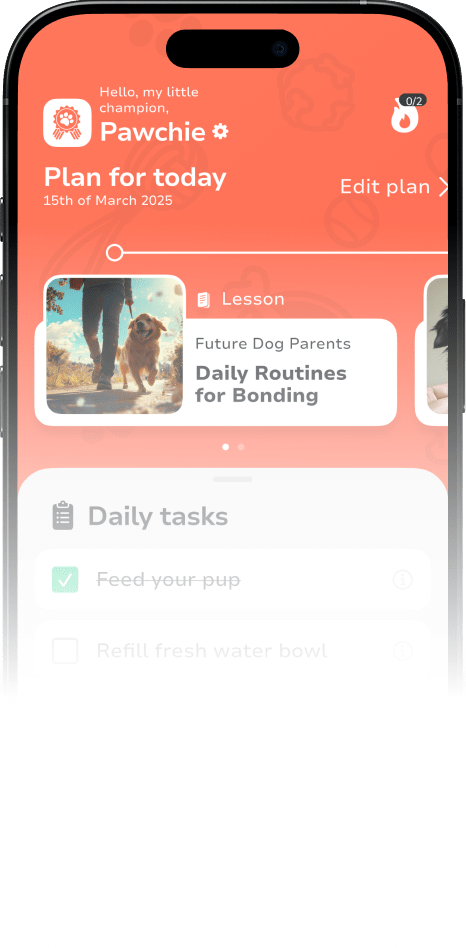
PawChamp takes the guesswork out of those first weeks of puppy training with a structured, expert-designed program built around your dog's age, breed, and learning pace.
- Personalized training plans: PawChamp builds a day-by-day leash training schedule tailored to your puppy's specific age and temperament, so you always know exactly what to work on next.
- Expert-verified lessons: Every lesson in the app is developed and reviewed by professional trainers, ensuring the techniques you're using are safe, humane, and proven to work.
- In-app expert chats: Hit a wall because your Dachshund refuses to budge, or your Border Collie puppy is already pulling hard? Ask a Dog Training Expert or Dog Health and Care Expert directly inside the app for real, personalized guidance.
Whether you have a tiny Chihuahua or a boisterous Labrador, PawChamp meets you and your puppy exactly where you are.
Bottom Line
Leash training a puppy for the first time is all about small, positive steps — quite literally. Start with the collar indoors, introduce the leash without pressure, build the follow-me habit before ever stepping outside, and let your puppy set the pace in those first outdoor sessions. Every calm, rewarded step you take together now is an investment in a dog who genuinely loves going on walks with you for the rest of their life.