When learning how to socialize a puppy, many pup parents fall into the belief that “more is better.” Yet, when it comes to puppy socialization, excessive exposure or exposures of the wrong type can easily backfire. Effective puppy socialization is not about quantity, but quality.
Here’s the scoop: puppies are brought into this world with immature nervous systems and limited coping skills. This makes them particularly susceptible to overwhelming experiences. Rather than building confidence and acceptance, overwhelming puppy socialization experiences lead to unsettling feelings such as anxiety and fear.
When to Start Puppy Socialization?
Early experiences shape later behavior. Stolzlechner et al. (2022) found that maternal care, early handling, and environmental enrichment all help build long-term stress-coping skills in puppies.
In puppies, there is a sensitive developmental period during which their brain is especially receptive to social and environmental learning. This puppy socialization period takes place between 3 and 12-14 weeks. This means that when most pet parents take their puppies home at around 8 weeks of age, they are assuming responsibility during one of the most behaviorally influential stages of development.
When Can Puppies Go Outside and Meet Other Dogs?
A question that often pops up in regards to puppy socialization is when can puppies go outside? Another question that pup parents also often ask is when can puppies be around other dogs?
Both come from a real fear of infectious disease before vaccinations are complete. The American Veterinary Society of Animal Behavior in a position statement emphasizes the importance of taking advantage of every safe opportunity to expose young puppies to their environment. Puppies can start puppy classes as early as 7 to 8 weeks of age. Such classes offer excellent opportunities for socialization, training and strengthening the human-animal bond in an environment where risk of illness can be minimized.
How to Properly Socialize a Puppy Step by Step
When it comes to how to socialize a puppy, the process works best in gradual, structured steps. Pup parents may often find online a puppy socialization checklist, but these lists can be misleading especially when interpreted as a “box-ticking” exercise.
True puppy socialization is not about collecting experiences, but about shaping positive emotional responses, so how to properly socialize a puppy?
Proper puppy socialization is most effective when broken into structured, gradual steps. Here is a general step-by-step approach:
Start with a controlled home environment where the puppy is exposed to everyday sounds and puppy handling in a calm way.
Next, introduce a puppy socialization checklist that includes gentle exposure to people of different ages, surfaces, and common household objects, always at a distance the puppy finds comfortable.
Progress to short, positive outdoor experiences, such as quiet streets or parks, ensuring the puppy is not overwhelmed.
Add carefully selected interactions with vaccinated, well-behaved dogs.
Finally, increase complexity slowly while monitoring stress signals. Always prioritize emotional safety over exposure volume.
Move at your puppy's pace, not the checklist's.
Puppy Fear Periods and How to Handle Them
Something pet parents should be aware of is the phenomenon of puppy fear periods. Fear periods, as the name implies, are developmental stages during which puppies become temporarily more sensitive to novel or potentially startling experiences.
Puppy behavior problems may arise during these times since puppies can react more intensely to situations they would normally tolerate with ease.
A loud noise, unfamiliar person, or unpleasant interaction may therefore trigger avoidance, barking, withdrawal, or heightened vigilance. Because emotional learning is particularly powerful during these stages, negative experiences may leave lasting impressions if puppies are overwhelmed. For this reason, knowing how to socialize a dog properly, especially during these critical times is important.
Building Puppy Confidence Through Positive Exposure
When seeking for ways on how to build confidence in a puppy, the focus should be on creating positive emotional associations rather than forcing interaction. To help puppies succeed, they should be gradually exposed to people, sounds, surfaces, and environments at a pace they can comfortably handle.
💡 Tip:
Puppies should be free to interact without being pressured and any form of curiosity should be rewarded with treats, praise, and play while allowing puppies the freedom to retreat if unsure.
One of the most important puppy training tips is to avoid the phenomenon of “flooding.” Flooding takes place when puppies are overwhelmed with excessive stimulation. Being exposed to overwhelming experiences increases fear rather than decreasing it and interferes with building resilience. Being aware of what constitutes flooding is important for pup parents seeking help on how to train a puppy.
Short, predictable, and positive exposures paired with recovery periods therefore help support emotional stability in puppies and the development of long-term confidence.
How to Socialize a Shy or Fearful Puppy?
Learning how to socialize a puppy requires also closely monitoring for signs of shyness or fear. Shy and fearful puppies need extra patience, gentleness, and careful handling, because they're easily overwhelmed by too much stimulation, forced interactions, or chaotic settings. The dog socialization process will need to be custom tailored to the puppy’s individual temperament, coping skills, and comfort level. Fearful or timid puppies require gradual, controlled exposures paired with lots of positive feedback and rewards, and the freedom to disengage when uncomfortable.
Pup parents will need to keep a close eye so as to monitor carefully the puppy’s body language to ensure they remain safe and comfortable through the socialization process. These careful introductions and close monitoring can help prevent puppy behavior problems associated with fear, anxiety, avoidance, and defensive responses later in life.
Puppy Playdate: How to Do It Right
A puppy playdate may be a great opportunity for learning and social development, but will require careful screening. Interactions should ideally involve healthy, vaccinated, behaviorally stable dogs in controlled environments. Puppies should be matched with appropriate play dates by size, play style, and confidence level to reduce the risk of fear or overwhelming experiences.
Watch body language closely and interrupt play the moment either puppy seems stressed, over-aroused, or unable to disengage. Structured puppy classes run by professionals are a safe, supervised way to get this right while taking the guesswork off your plate.
Common Puppy Socialization Mistakes and How to Avoid Them
Commonly made mistakes during the puppy socialization process often contribute to later puppy behavior problems. As mentioned, a frequent mistake is overwhelming the puppy with too many new people, dogs, or environments at once.
Another is forcing interactions instead of allowing choice and distance, which may increase fear responses. When learning how to socialize a dog, the focus should remain on ensuring gradual exposures, monitoring body language, and rewarding calm behavior.
Signs Your Puppy Is Overwhelmed During Socialization
During the socialization period — and especially during fear periods — puppies can get startled and overwhelmed. These moments can leave a lasting impression, so it's worth protecting your puppy from them.
🔍 Fun fact:
Early stress signs are easy to miss — lip licking, yawning when not tired, or turning the head away often come before a freeze or retreat.
The best prevention is fluency in your puppy's body language. Spotting early stress lets you step in before things tip over. Early signs include lip licking, yawning when not tired, turning the head away, freezing, a lowered posture, tucked tail, widened eyes, or sudden clinginess.
Puppy Socialization Checklist: What to Cover
While a puppy socialization checklist can come handy, it’s important to prioritize quality over quantity. How to properly socialize a puppy? The focus should remain on gradual and calm introductions to a variety of people, dogs, sounds and environments.
Build in gentle handling exercises too, so your puppy learns to accept grooming and veterinary care — always watching how it responds. Every exposure should be positive, controlled, and tailored to your individual puppy's confidence and coping ability.
People
Men, women, and people with deep or loud voices
Children and toddlers (calm, supervised)
Seniors and people moving slowly or unsteadily
People in hats, hoods, sunglasses, high-vis, or uniforms
People using wheelchairs, canes, crutches, or walkers
People carrying bags, umbrellas, or boxes
Other animals
Healthy, vaccinated, friendly adult dogs (calm, not overwhelming)
Other vaccinated puppies of similar size and play style
Cats or other household pets, at a distance first
Livestock or wildlife at a safe distance (if relevant to your area)
Sounds
Household: vacuum, hairdryer, doorbell, washing machine, TV
Kitchen clatter, dropped objects, pots and pans
Outdoor: traffic, sirens, construction, lawn mowers
Thunder, fireworks, rain (low volume first; recordings help)
Other dogs barking
Surfaces & environments
Grass, gravel, sand, mud, wet ground
Tile, wood, carpet, metal grates, slippery floors
Stairs, ramps, and thresholds
Quiet streets first, then gradually busier areas
Short, positive car rides
Happy visits to the vet clinic and groomer (no procedure, just treats)
Handling, grooming & vet care
Paws and nails touched and handled
Ears, mouth/teeth, and tail gently examined
Brushing and being toweled off
Wearing a collar or harness and walking on leash
Being gently held or restrained the way a vet would
Standing on a scale or exam table
Objects & everyday experiences
Umbrellas opening, bikes, scooters, skateboards
Strollers, shopping carts, wheelie bins
Balloons, flapping bags, large statues or signs
Being alone for short, gradually increasing periods
A crate or safe space (always positive, never punishment)
How PawChamp Helps
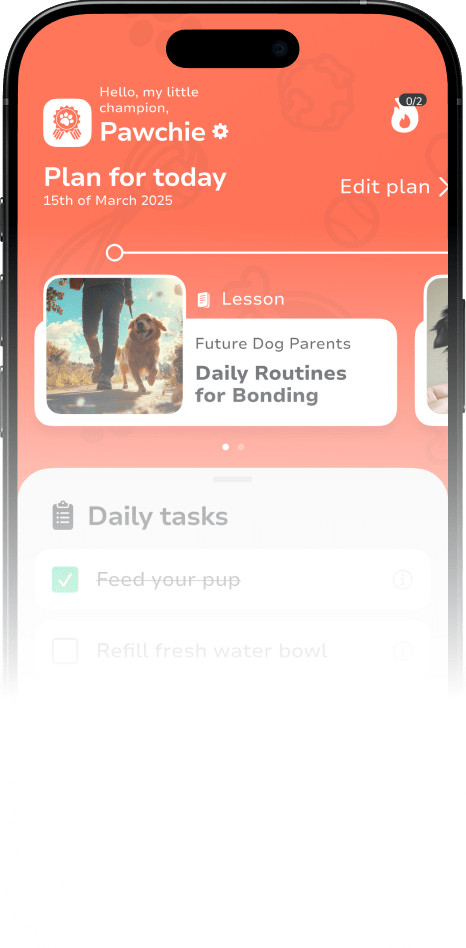
Navigating puppyhood alone is where most owners get overwhelmed. PawChamp guides you from early puppyhood into adulthood with structured, easy-to-follow support at every stage:
Step-by-step exercises that build skills gradually, without flooding your puppy
Progress tracking so you can monitor improvement over time
Ask Dog Experts — real expert chats for fear periods, overarousal, or adolescent regression
Unsure if you're moving too fast? Take the in-app quiz and get a training plan matched to your puppy.
Key Takeaways
Puppies are born with immature nervous systems, so their ability to process stress is still developing.
Socializing a puppy well means gradual, positive exposures — not a checklist race.
Too much, too fast can overwhelm a young nervous system.
Forced greetings with dogs or strangers can create lasting fear-based associations.
Pet parents must learn to recognize early stress signals.
Bottom Line
Socializing a puppy is about quality, not quantity. It's fundamentally about building positive emotional associations through gradual, controlled experiences — not exposing a puppy to everything at once. Because puppies have immature nervous systems and limited coping skills, paying close attention to body language lowers the risk of fear-based problems down the line. Prioritize emotional safety and confidence, and you'll help your puppy grow into a resilient, socially confident adult dog.
References
American Veterinary Society of Animal Behavior. (2008). AVSAB Position Statement on Puppy Socialization.
Stolzlechner, L., Bonorand, A., & Riemer, S. (2022). Optimising puppy socialisation — short- and long-term effects of a training programme during the early socialisation period. Animals, 12(22), 3067.