Chihuahuas are bold, bright, and brimming with personality — which makes them endlessly entertaining and occasionally exhausting to live with. If you've ever tried to teach one to sit and ended up being bossed around instead, you're not alone. Training a Chihuahua isn't harder than training a larger breed — it just requires understanding why these tiny dogs behave the way they do and adjusting your approach accordingly.
Key Takeaways
- Chihuahuas are highly intelligent but strong-willed — consistency beats force every time.
- Small-dog handling errors (carrying, excusing bad behavior) are the biggest training saboteurs.
- Their alertness and single-person bonding tendencies require specific socialization strategies.
- Short, frequent training sessions (3–5 minutes) work far better than long ones for this breed.
- Positive reinforcement, not punishment, is the only approach that earns a Chihuahua's trust.
Why Chihuahuas Are Uniquely Challenging to Train
The Chihuahua is one of the oldest and most recognizable toy breeds in the world. According to the American Kennel Club, they are among the most confident dogs pound-for-pound — and that confidence is exactly what trips up so many owners.
Unlike a Labrador Retriever or a Golden Retriever, which are bred to look to humans for direction, Chihuahuas are independent thinkers. They are naturally alert, quick to react to environmental stimuli, and highly bonded to one or two people. This combination means they can be:
- Suspicious of strangers — triggering barking, snapping, or hiding.
- Over-reliant on their favorite person — leading to separation anxiety when that person leaves.
- Reactive to other dogs — especially larger ones, which they may confront fearlessly (and dangerously).
- Resistant to commands from anyone they haven't chosen to trust.
None of these tendencies make a Chihuahua untrainable. They make them a breed that rewards patient, consistent owners who understand the dog's perspective.
Why Chihuahuas Are Uniquely Challenging to Train
🧠 Think About:
A Chihuahua's bold behavior is rarely true aggression — it's usually anxiety masked as bravado. Before labeling your dog "difficult," ask whether the environment feels safe and predictable to them. Training improves dramatically when the dog feels secure.
The Biggest Small-Dog Handling Mistakes That Ruin Training
The single most common reason Chihuahua training stalls isn't the dog — it's unintentional human behavior. Small dogs receive a fundamentally different type of handling than large breeds, and many of those differences quietly undermine every lesson you teach.
Carrying Instead of Walking
Carrying a Chihuahua to avoid a tricky situation (a bigger dog, a noisy crowd, a stranger) teaches the dog that the world is dangerous and that you are the escape hatch. Over time, this escalates reactivity rather than reducing it. Let your Chihuahua walk on their own four paws whenever it's safe to do so.
Excusing Bad Behavior Because "They're So Small"
A Chihuahua that growls at guests, jumps on furniture uninvited, or barks for 20 minutes is exhibiting real behavioral problems — the fact that they weigh 5 pounds doesn't make those problems cute or harmless. Hold the same standards you would for a German Shepherd. The rules should be identical; only the leash and treat size differ.
Inconsistent Rules Across Household Members
Chihuahuas bond fiercely and observe everything. If one family member lets the dog on the sofa and another doesn't, the dog will work out exactly who gives the most ground — and push harder with everyone else. Household-wide consistency isn't optional; it's foundational.
📌 Example:
If your Chihuahua barks at the doorbell and you pick them up to calm them down, you've just rewarded the barking with exactly the attention and security they wanted. Instead, wait for quiet, then calmly redirect to a mat or a sit — and reward that behavior instead.
How to Start Training a Chihuahua: The Foundations
Whether your Chihuahua is a puppy or a rescue adult, the foundation is the same: build trust first, then build behavior. A dog that doesn't trust you won't learn from you.
Keep Sessions Short and Frequent
Chihuahuas have sharp minds but short attention spans when it comes to formal training. Aim for three to five sessions per day, each lasting just three to five minutes. End every session on a success — even if that means going back to a command they already know — so the dog associates training with winning.
Use High-Value Rewards
Standard kibble often won't cut it. Find what genuinely excites your dog — tiny pieces of cooked chicken, cheese, or commercial soft treats — and reserve those exclusively for training. The reward must be worth the effort in your Chihuahua's eyes, not yours.
Start in a Low-Distraction Environment
Because Chihuahuas are so environmentally aware, trying to train near a busy street or at the dog park before a behavior is solid is a setup for failure. Proof behaviors indoors first, then gradually introduce distractions — a process called generalization. Only add the next layer of difficulty when the dog succeeds eight to nine times out of ten in the current environment.
Use a Marker Word or Clicker
A clear, consistent marker (the word "yes!" or a click from a clicker) tells your Chihuahua the exact moment they did the right thing. This precision matters enormously with a quick, alert breed that moves fast and reads cues constantly.
Teaching the Core Commands: Sit, Stay, Come, and Leave It
Every well-behaved Chihuahua needs a reliable set of core behaviors. These four are the most practical for daily safety and manners.
Sit
Hold a treat just above your Chihuahua's nose and slowly move it back over their head. As their nose follows the treat upward, their bottom naturally goes down. The moment they sit, mark and reward. Avoid pushing the hindquarters down — Chihuahuas dislike being physically manipulated and will resist rather than comply.
Stay
Ask for a sit, then hold your palm out flat like a stop sign. Take one step back, pause one second, return, and reward. Build duration and distance in tiny increments. Never call your dog out of a stay — always return to them to release, or you'll accidentally teach them that stay is optional.
Come (Recall)
A reliable recall is a safety essential. Practice it daily in a low-distraction space with a long line for outdoor sessions. Crouch down, open your arms, use a happy tone, and make coming to you the best thing that ever happened to your dog. Never call your Chihuahua and then do something they dislike (nail clipping, bath time) or recall will deteriorate quickly.
Leave It
Place a treat in your closed fist. Let the dog sniff and paw. The moment they pull away, even slightly, mark and reward from your other hand. This behavior is especially critical for Chihuahuas, who are low to the ground and frequently encounter dropped food, small hazards, or other dogs' waste on walks.
💡 Tip:
Never repeat a command multiple times hoping your Chihuahua will eventually comply. Say "sit" once, wait five seconds, and if there's no response, reset and try again. Repeating commands teaches dogs that the first cue is optional and that you'll keep asking until they feel like it.
Socialization: The Non-Negotiable Chihuahua Priority
Chihuahuas that aren't properly socialized early tend to become reactive, fearful, or aggressive toward strangers and other animals — and that pattern becomes significantly harder to reverse in adulthood. Socialization isn't about forcing your dog to like everyone; it's about building a dog who can cope with the world without falling apart.
The critical socialization window for puppies runs from roughly 3 to 14 weeks of age. During this period, positive exposure to a wide variety of people, sounds, surfaces, and animals lays the foundation for a confident adult dog. If you have a Chihuahua puppy, prioritize this above almost everything else.
For adult Chihuahuas who missed that window, desensitization and counter-conditioning are your tools:
- Desensitization: Gradual, controlled exposure to the trigger at a level that doesn't cause a stress reaction.
- Counter-conditioning: Pairing the trigger with something the dog loves (high-value treat, play) to shift the emotional association from negative to positive.
Work below your Chihuahua's threshold — the point where they notice the trigger but don't react. Progress slowly. Rushing socialization in a dog that isn't ready causes setbacks, not breakthroughs. Just as with larger breeds that require thoughtful introductions to new environments, Chihuahuas need a pace that respects their individual comfort level.
Managing Chihuahua Alertness and Barking
Chihuahuas are natural watchdogs. Their hearing is acute, their instinct to alert is strong, and their bark is surprisingly loud for their size. While some owners appreciate this trait, uncontrolled barking is one of the most common behavioral complaints about the breed.
Teach a "Quiet" Cue
You cannot teach quiet by shouting — you just add your voice to the noise. Instead, wait for a one-second pause in the barking, mark it immediately, and reward. Over many repetitions, the dog learns that silence earns rewards. Once they pause reliably, add the verbal cue "quiet" just before the pause you expect.
Give Them a Job Instead of Silence
Asking a Chihuahua to simply stop barking without giving them something else to do rarely works. Train a go-to-place behavior — a mat or bed — so that when the doorbell rings, your dog has an alternative response ready. "Go to your mat" becomes the new habit, replacing "bark at the door."
Manage the Environment
If your Chihuahua spends hours staring out a front window and barking at every passerby, management is your friend. Block the view temporarily, provide enrichment (puzzle toys, chews), and reduce the number of trigger exposures while you work on the behavior. You can't out-train an eight-hour-a-day rehearsal of the problem.
🐾 Fun Fact:
Chihuahuas are one of the few breeds that sometimes choose a single "person" and remain mildly suspicious of everyone else for life. This isn't a flaw — it's a deeply ingrained trait. Channel it by having your chosen-one person lead all training sessions initially, then slowly involve other family members once behaviors are solid.
Addressing Single-Person Bonding and Separation Anxiety
The flip side of a Chihuahua's intense loyalty is separation anxiety. A dog that has bonded exclusively to one person may panic, bark, or become destructive the moment that person leaves — even briefly. This is more common in Chihuahuas than in most other toy breeds and should be addressed proactively rather than waiting for it to become a crisis.
Build Independence Gradually
Practice short absences from the room — not the house — while your dog is calm and occupied. Return before they have a chance to get worked up. Over many sessions, extend the duration. The goal is to teach your dog that departures are boring, not catastrophic.
Avoid Big Hellos and Goodbyes
Dramatic departures and excited reunions amplify your Chihuahua's emotional response to your comings and goings. Keep them calm and matter-of-fact. This is one of the most counterintuitive things owners are asked to do, but it genuinely reduces anxiety over time.
Encourage Multiple Bonds
Have other family members feed, walk, train, and play with the dog regularly. A Chihuahua that sees value in multiple people is less vulnerable to anxiety when the primary person is absent. Enlist everyone in the household from day one, even if the dog initially seems uninterested.
How Can PawChamp Help?
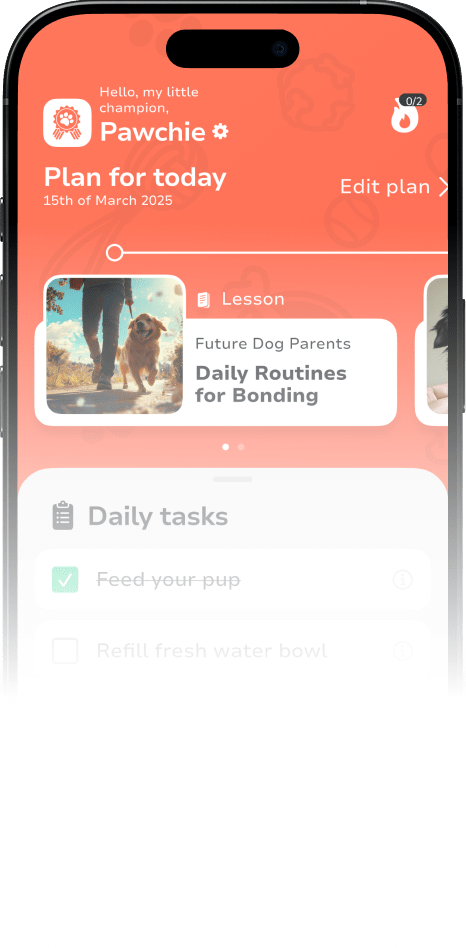
PawChamp is designed for exactly the kind of nuanced, breed-aware training that Chihuahuas require — not generic commands, but a plan that actually fits your dog's personality and history.
- Personalized training plans: Answer a short quiz about your Chihuahua's age, behavior challenges, and goals, and PawChamp generates a day-by-day plan built around their specific needs — whether that's reactivity, barking, socialization, or basic obedience.
- Expert-verified lessons: Every lesson in the app has been reviewed by professional dog trainers, so you're always working from sound, humane methodology — not internet guesswork.
- In-app expert chat: When you hit a wall — a behavior that isn't improving, a new problem that just appeared — you can connect directly with a Dog Training Expert or a Dog Health and Care Expert inside the app without booking an expensive in-person consultation.
Whether you're starting from scratch with a Chihuahua puppy or working through years of ingrained habits with an adult rescue, PawChamp gives you a structured, expert-backed path forward.
Bottom Line
Training a Chihuahua successfully comes down to three things: understanding the breed's natural tendencies, eliminating the small-dog handling habits that quietly undermine progress, and staying consistent with positive reinforcement every single day. These dogs are sharp, loyal, and entirely capable of excellent behavior — they just need an owner who takes their training as seriously as they would for any larger breed. Start with the foundations, socialize early and often, and let a structured plan like PawChamp's guide you through the breed-specific challenges so you and your Chihuahua can actually enjoy each other.