You did it — you adopted a rescue dog. The car ride home felt like a movie moment. But then you walked through the front door, and your new dog immediately hid under the bed, refused treats, or zoomed frantically through every room. Sound familiar? Before you worry that something is "wrong" with your dog, take a breath. What you're witnessing isn't a behavior problem — it's a completely normal stress response. And how you handle the next 30 days will shape your bond for years to come.
Key Takeaways
- The first 30 days with a rescue dog should prioritize decompression over obedience training — pushing too fast can backfire.
- The 3-3-3 rule (3 days, 3 weeks, 3 months) is a trusted framework for understanding how a rescue dog settles in.
- Structure, predictability, and calm consistency are the most powerful "training tools" you have in week one.
- Formal cue training can begin gently around days 14–21, once your dog shows signs of emotional safety.
- PawChamp gives you a day-by-day personalized plan and access to a Dog Training Expert so you're never guessing what to do next.
What Is Decompression — and Why Does It Matter?
Decompression is the period your rescue dog needs to simply decompress from stress before they can learn anything meaningful. Shelters — even the best ones — are loud, unpredictable, and socially overwhelming. Your dog has just lost every familiar smell, routine, and face they knew. Their nervous system is on high alert.
Think of it this way: if you had just moved to a foreign country with no warning, would you be ready to sit through a language class on day one? Probably not. Your dog needs to feel safe before their brain can absorb new information.
Research in animal behavior consistently shows that chronic stress suppresses learning. A dog operating in a state of fear or anxiety cannot form the positive associations that positive reinforcement training depends on. Skipping decompression doesn't speed things up — it slows everything down and can lock in reactive or anxious patterns that are much harder to undo later.
What Is Decompression — and Why Does It Matter?
🧠 Think About:
Many new rescue dog owners mistake decompression shutting down for the dog being "boring" or "broken." A dog who is quiet, low-energy, and disengaged in week one is often just conserving emotional resources. That stillness is normal — resist the urge to force interaction or flood them with new experiences to "cheer them up."
The 3-3-3 Rule: Your Rescue Dog's Timeline
The 3-3-3 rule is the most widely used framework among rescue organizations and trainers for setting realistic expectations. It breaks the adjustment period into three phases:
- First 3 Days: Your dog is overwhelmed and shut down. They may not eat, drink, play, or make eye contact. They are simply surviving the transition. Your job is to keep things very quiet.
- First 3 Weeks: Your dog starts to understand the routine. They learn where food and water are, when walks happen, and that you are safe. Personality begins to emerge — sometimes including behaviors that were hidden at the shelter (barking, resource guarding, leash reactivity).
- First 3 Months: Your dog finally feels at home. They understand the house rules, trust their bond with you, and are emotionally ready to learn at a higher level. This is when more formal training truly clicks.
Knowing which phase your dog is in helps you respond appropriately instead of reacting with frustration when behavior seems "off." It also reassures you that a dog who seems shut down or anxious in week one can absolutely blossom into a confident, joyful companion — given time and the right approach.
Days 1–7: The Quiet Zone
Your entire goal for the first seven days is deceptively simple: make your dog feel safe. That means resisting the urge to invite friends over to meet the new dog, take them to the dog park, or run them through a sit-stay-down routine. Here's your practical framework for week one:
Set Up a "Home Base"
Designate a quiet, low-traffic area of your home — a corner of the living room, a spare bedroom, or a sectioned-off space — with a comfortable bed, water, and a few low-arousal items like a stuffed Kong or a snuffle mat. This becomes your dog's safe space. Let them choose when to leave it. Do not lure them out or force interaction.
Limit New Stimuli
Keep the TV low, visitors to zero (or just immediate household members), and children calm. Introduce household sounds gradually. If you have other pets, use the same patient, gradual introduction approach you'd use with a new puppy — don't toss them together and hope for the best.
Leash for Safety, Not Obedience
Keep a lightweight drag line (a leash attached but not held) on your dog indoors for the first few days. This lets you gently guide them without grabbing or chasing — both of which spike stress. Outdoor potty trips should be calm, low-stimulation, and short.
Build a Predictable Routine
Feed at the same times. Walk at the same times. Use the same door to go outside. Predictability is the fastest way to communicate to an anxious brain: this place is safe and consistent. You don't need to say a word of "training" — routine IS the training in week one.
📌 Example:
A newly adopted Greyhound may sleep 18+ hours a day in the first week and show almost no personality. An adopted Border Collie might pace, pant, and seem unable to settle. Both responses are normal stress presentations — the anxious energy and the shutdown are two sides of the same coin. Adjust your week-one plan to your individual dog's stress style rather than expecting one universal reaction.
Days 8–14: Gentle Observation and Relationship Building
By the start of week two, most dogs begin to exhale — literally. You'll notice slower blinking, a relaxed open mouth, a wagging tail at mealtimes, maybe even a play bow. These are green-light signals that your dog's nervous system is starting to downregulate. Now you can begin intentional relationship building — but still no formal obedience drills.
This is the week to:
- Charge your marker word. Say "yes!" in a calm, bright tone and immediately follow it with a high-value treat. Repeat 10–15 times in a row, twice a day. You're not asking for anything yet — you're simply teaching your dog that a specific sound predicts good things. This is the foundation of all future training.
- Observe and note triggers. Does your dog stiffen when you reach over their head? Freeze when they hear a skateboard? These observations are gold. Write them down. They become your training roadmap — not problems to fix immediately, but information to work with patiently.
- Practice "passive leadership." Move calmly and deliberately around the house. Avoid looming, sudden movements, or direct stares. Let your dog follow you — the desire to be near you is one of the earliest signs your dog is beginning to love and trust you, and it should emerge naturally, not be forced.
Walks in week two can become slightly longer and slightly more exploratory — but keep them sniff-led. Let your dog stop and smell everything. Sniffing is a self-soothing behavior that actively lowers heart rate and cortisol. A 15-minute sniff walk does more for your dog's mental health than a 45-minute forced march.
Days 14–21: Introducing Foundation Cues
Around the two-week mark — and only if your dog is consistently showing relaxed, engaged body language — you can begin introducing foundation cues using positive reinforcement. Start with the highest-value treats you can find (small pieces of chicken, cheese, or commercial high-value treats work well).
The Three Cues to Start With
Keep it to three cues maximum in the first round of formal training:
- Sit — lure with a treat held above the nose, moving slightly back. The moment the hindquarters touch the floor, mark ("yes!") and treat.
- Name recognition — say your dog's name once in a happy tone. The moment they look at you, mark and treat. This is the most important foundation skill you can build and is often overlooked.
- Come/Recall — start indoors, crouch down, open arms, and say "come" in the most inviting tone you have. Mark and treat enthusiastically. Never punish a dog for a slow or imperfect recall — doing so poisons the cue permanently.
Keep Sessions Short and Joyful
Two to three minutes per session, two to three sessions per day. Always end on success — even if that means going back to something easy. Your dog's emotional experience of training matters more than the speed of their progress. A dog who loves training sessions will outperform a drilled, pressured dog within weeks.
If your dog disengages, yawns, sniffs the ground, or turns away during a session, that's a stress signal — not stubbornness. End the session, give them a break, and try again later with even lower criteria.
💡 Tip:
Use your dog's regular kibble for low-stakes repetition exercises like name recognition, and save the really good stuff (chicken, cheese) for high-distraction environments or emotionally challenging moments like meeting a new person or encountering a trigger on a walk. This keeps high-value treats genuinely high-value.
Days 21–30: Building Confidence and Real-World Skills
The final week of your first month is about expanding your dog's world in small, controlled increments. By now, your dog understands the household routine, recognizes their name, has a few foundation cues, and — crucially — has learned that you are a safe, predictable source of good things. That relationship is the scaffolding for everything that comes next.
In week four you can:
- Introduce loose-leash walking skills on quiet streets before graduating to busier environments.
- Begin desensitization work on any triggers you noted in week two — always at sub-threshold distance and with high-value treats. Never flood your dog by forcing them closer to something that frightens them.
- Introduce a crate or confinement area if you need one, using a slow, positive association protocol (tossing treats inside, feeding meals near/inside the crate, never locking the door until the dog is comfortable going in voluntarily).
- Add grooming handling practice — touch ears, paws, and body gently while pairing with treats. Many rescue dogs have unknown grooming histories, and building tolerance early prevents struggles later. If you want a full guide, this step-by-step home grooming resource covers everything from brushing to nail trims.
Remember: "slow is fast" when it comes to rescue dog training. Every session where your dog succeeds and feels good is a deposit in your trust bank. Rush or pressure them, and you make withdrawals that take much longer to repay.
🐾 Tip:
Around days 21–30, some rescue dogs go through a second behavioral dip — they test limits once they feel secure enough to express themselves. A dog who was perfectly quiet suddenly starts barking at the front door, or a dog who seemed bomb-proof on leash starts lunging at other dogs. This is normal and actually a good sign: your dog feels safe enough to communicate. Respond with calm redirection and structured training, not punishment.
Common Mistakes That Undermine the Decompression Phase
Even well-meaning owners can accidentally derail their rescue dog's adjustment. Here are the most common pitfalls to avoid:
- Flooding with socialization too early. The dog park, pet store, and big family gatherings can wait until month two or three. Overwhelming a dog who hasn't yet established emotional safety can create lasting fear associations.
- Anthropomorphizing stress signals. A dog who won't eat is not "being dramatic" — they're genuinely too stressed to activate appetite. A dog who hides is not "ungrateful" — they're coping. Respond to the behavior, not the label you put on it.
- Inconsistency between household members. If one person lets the dog on the couch and another doesn't, the dog cannot predict outcomes — and unpredictability feeds anxiety. Align your household rules before the dog arrives.
- Using punishment to address stress-based behavior. Snapping, growling, cowering, and reactive lunging are all communication signals. Punishing communication doesn't resolve the underlying emotion — it just teaches the dog to suppress the signal, making behavior harder to read and ultimately less safe.
- Giving up at the three-week mark. This is when the "honeymoon phase" ends and real personality emerges. Many adopters return dogs at exactly this stage. Stick with the framework — what you're seeing is progress, not deterioration.
How Can PawChamp Help?
PawChamp was built specifically for real-life dog owners navigating real-life challenges — and the first 30 days with a rescue dog is exactly where having expert-backed support makes the biggest difference.
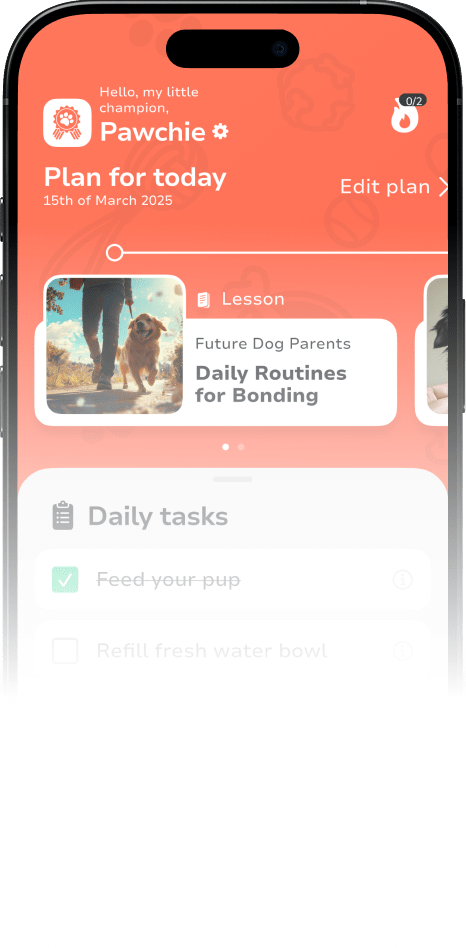
- Personalized training plan: PawChamp builds a day-by-day plan tailored to your rescue dog's breed, age, background, and your specific goals — so you always know exactly what to work on without guessing.
- In-app expert chat: Have a question at 10 p.m. about why your rescue dog is suddenly growling at the crate? Connect directly with a Dog Training Expert or a Dog Health and Care Expert inside the app — real guidance from qualified professionals, not a generic FAQ.
- Expert-verified lessons: Every training lesson in PawChamp is built on positive reinforcement science and reviewed by professionals, so you can follow along with confidence knowing you're not accidentally reinforcing the wrong things during a critical window.
Whether you're on day one of total decompression silence or day 25 of introducing loose-leash skills, PawChamp adapts with you and your rescue dog every step of the way.
Bottom Line
Training a rescue dog well doesn't start with commands — it starts with patience, structure, and the willingness to let your dog set the pace. The decompression phase isn't wasted time; it's the foundation that makes every future training session faster and more effective. Give your rescue dog the first 30 days they deserve, and you'll build a bond that lasts a lifetime.