You've heard the pitch: send your dog away for a few weeks and get back a transformed, well-behaved companion. Board and train programs — sometimes called dog boot camp — sound almost too good to be true. And honestly? Sometimes they are, and sometimes they really do deliver. The answer depends on a few factors that most programs don't advertise upfront. Here's what you actually need to know before you decide.
Key Takeaways
- Board and train means your dog lives with a trainer for an intensive, set period — results can be real, but they're not guaranteed to follow your dog home.
- Owner involvement after the program is the single biggest factor in whether training sticks.
- Costs typically run into the thousands and vary widely by location, length, and trainer.
- Private lessons or guided at-home training are often cheaper and produce longer-lasting results for most dogs.
- Aggressive dogs and young puppies need extra care when choosing a program — some boot camps use methods that can do more harm than good.
What Is Board and Train?
Board and train is exactly what it sounds like: your dog moves in with a professional trainer for a set stretch — usually one to four weeks — and receives intensive, daily training during that time. Programs are often marketed as dog boot camp, promising structured routines, socialization, and polished obedience by the time your dog comes home.
A typical program includes:
- Basic or advanced obedience (sit, stay, heel, recall)
- Leash manners and impulse control
- Socialization with other dogs and people
- A handoff session at the end to show you what your dog learned
Some programs go further and tackle specific issues like separation anxiety, reactivity, or aggression. The pitch is speed and convenience — you hand over your dog, life continues, and a trained dog returns. Whether that promise holds up is a different question entirely.
Before booking any board and train program, ask the trainer exactly which methods they use. Force-free and positive reinforcement programs exist — they're worth seeking out.
What Is Board and Train?
Does Board and Train Actually Work?
The honest answer is: yes, sometimes — but with a significant catch.
Dogs are remarkably good at reading context. A dog who sits beautifully on command for a trainer in an unfamiliar environment may come home and act like those three weeks never happened. This isn't stubbornness — it's how learning works. Behavior is tied to context, and a skill practiced in one setting doesn't automatically transfer to another.
Trainers call this the transfer problem, and it's the most common reason board and train results fade. The dog learned — they just learned in a different world than the one they actually live in.
The deciding factor is almost always owner involvement. Programs that include coaching sessions for the owner before, during, and after the stay tend to produce lasting results. Programs that hand you back a dog with a quick demonstration and a good-luck wave tend not to.
If you want training that's built around your real daily life — your home, your schedule, your relationship with your dog — an at-home approach keeps you in the loop from day one. How long training actually takes depends less on the method and more on consistency, and that's something only you can provide at home.
Think about it: If your dog only ever practices "stay" in a trainer's quiet backyard, why would they nail it in your busy kitchen? Context is everything.
🌍 Think About:
Context shapes everything a dog learns. A skill practiced only in a trainer's environment may not transfer to your home because the dog associates that behavior with a completely different setting, not with you or your daily life.
How Much Does Board and Train Cost?
This is usually where the conversation gets uncomfortable. Board and train is not cheap. Programs in the United States typically range from $1,000 to $6,000 or more, depending on location, the trainer's credentials, the length of the program, and what it covers. A two-week basic obedience stay in a mid-sized city might run around $1,500–$2,500. Specialized programs — aggression work, advanced off-leash training — push that figure higher.
According to Forbes Advisor, the average cost of professional dog training in the US ranges from about $30–$80 per hour for group classes up to several thousand dollars for intensive programs. Board and train sits firmly at the expensive end of that range.
That sticker shock is real, and it's worth sitting with before you book.
Board and Train vs. Private Lessons
Private lessons typically cost $50–$150 per session, and most dogs see meaningful progress in six to twelve sessions — putting the total well below most board and train programs. The tradeoff is time and consistency: private lessons put the work in your hands between sessions, which is slower but tends to produce results that actually hold.
Here's a quick comparison:
- Board and train: Fast, hands-off during the program, expensive upfront, transfer risk at the end.
- Private lessons: Slower, owner-led, lower total cost, results built into your real environment from the start.
If finding a good local trainer feels like a challenge — cost, availability, location — it's worth knowing that structured at-home training with expert guidance can fill that gap effectively for the majority of dogs and behavioral goals.
Board and Train Pros and Cons
No training approach is perfect for every dog or every owner. Here's a fair look at both sides.
Pros:
- Speed: Intensive daily work can produce noticeable results faster than weekly lessons.
- Convenience: Ideal for owners going through a major life event — a move, a new baby, a surgery — who genuinely can't commit to training right now.
- Structure: Some dogs thrive with a consistent, focused routine they're not getting at home.
- Professional eyes: A good trainer will notice things about your dog you might miss.
Cons:
- Cost: One of the most expensive training options available.
- Time apart: Weeks away from home can be stressful for some dogs, particularly those with separation anxiety.
- Transfer risk: Without proper handoff coaching, skills often don't stick in the home environment.
- Variable quality: The dog training industry is largely unregulated, so programs range from excellent to harmful.
- You're not in it: The biggest relationship-building moments happen with the trainer, not with you.
Board and train genuinely suits some owners — those with severe time constraints, dogs with complex needs, or situations where safety is an immediate concern. For the majority of dogs working on everyday obedience and manners, it's rarely the most efficient or lasting solution.
Board and Train for Aggressive Dogs and Puppies
These are the two cases that deserve extra care.
Aggressive dogs: Some boot camp programs — particularly those marketing themselves as specialists in aggression — rely on aversive, punishment-based methods: shock collars, prong collars, intimidation. These approaches can suppress behavior in the short term while creating deeper anxiety and a higher long-term risk. If your dog has a genuine aggression or bite-risk issue, the right call is a qualified in-person behavior professional — ideally a certified applied animal behaviorist or a veterinary behaviorist — not a boot camp with flashy before-and-after videos.
Puppies: A young puppy's most critical socialization window closes around 12–16 weeks. Spending that time in a training facility rather than your home, meeting your family, learning your routines, can actually work against you. Puppy board and train isn't automatically harmful, but the timing and the program's philosophy matter enormously. Ask hard questions before enrolling a puppy under six months.
For aggression or bite history, always look for credentials: Certified Applied Animal Behaviorist (CAAB), Board Certified Veterinary Behaviorist (DACVB), or Certified Professional Dog Trainer - Knowledge and Skills Assessed (CPDT-KSA) with documented behavior experience.
🐾 Tip:
The dog training industry is largely unregulated, which means program quality varies widely. Asking a trainer about their methods and credentials before booking is one of the most important steps you can take for your dog's wellbeing.
How Can PawChamp Help?
Here's where the middle path comes in.
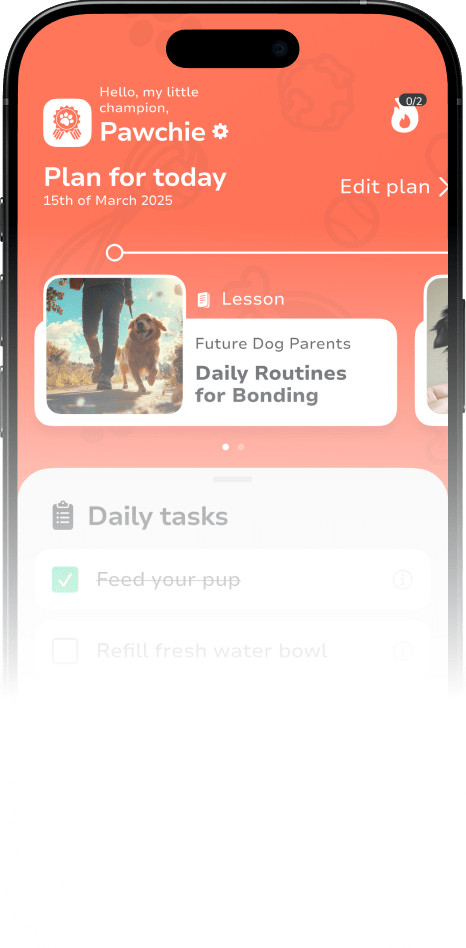
Instead of sending your dog away and hoping the results follow them home, PawChamp brings expert-designed, force-free training into your daily life — structured around your dog, your home, and your schedule. Daily personalized lessons mean your dog is learning in the actual environment they live in, which is precisely where you need the behavior to show up.
The Ask a Dog Expert chat connects you with knowledgeable coaches whenever a question comes up — no waiting until next week's session, no guessing. And because you're the one doing the training, the bond that builds is between you and your dog, not between your dog and a stranger they'll never see again.
For owners dealing with tougher behavioral challenges, PawChamp's Aggression course offers structured, positive-reinforcement-based guidance. That said, if your dog has a bite history or poses an immediate safety risk, please work with a qualified in-person professional alongside any app-based support — some situations genuinely need hands-on expertise.
The cost comparison speaks for itself: at a fraction of a board-and-train program, you get ongoing expert access, daily structure, and training that actually lives where your dog does.
Bottom Line
Board and train can deliver real results, but you pay for them in money, weeks apart, and the real risk that training doesn't transfer home. For most dogs, consistent owner-led training with expert guidance is cheaper, kinder, and more likely to stick. Save intensive programs and in-person specialists for the toughest, safety-critical cases — and whatever route you choose, make sure you're part of the process.