Your new puppy seems to zoom around the house like a tiny furry tornado — and then crash so hard you check to make sure they're still breathing. Sound familiar? Welcome to puppy parenthood. The truth is, sleep isn't just downtime for a puppy; it's the engine behind every ounce of growth, learning, and emotional regulation happening inside that small, wiggly body. Get the sleep piece right, and almost everything else — training, biting, mood — gets easier, too.
Key Takeaways
- Puppies need 16–20 hours of sleep per day, depending on age — far more than adult dogs.
- Sleep requirements gradually decrease from 8 weeks to 6 months as the brain and body mature.
- An overtired puppy doesn't wind down — it bites harder, barks more, and becomes hyperactive.
- Consistent nap schedules are as important as nighttime sleep for healthy development.
- PawChamp can help you build a customized daily routine that includes age-appropriate sleep and training windows.
Why Puppies Sleep So Much: The Science Behind the Snoozing
It can feel alarming to watch your 8-week-old Labrador snooze for what seems like the entire day. But puppy sleep is deeply productive. During sleep, the body releases growth hormones, consolidates memories from training sessions, repairs muscle tissue, and strengthens the immune system. The brain is also doing heavy lifting — processing the enormous amount of new sensory information a puppy encounters every waking hour.
Think of sleep as your puppy's charging cable. Without enough of it, every system runs on low battery: emotional regulation falters, impulse control disappears, and learning new cues becomes nearly impossible. This is why a puppy that misses several naps in a row often becomes a biting, barking, seemingly uncontrollable little gremlin by evening — not because they're "bad," but because they're exhausted and overwhelmed.
If you've ever wondered why your adult dog seems to snooze a lot too, the reasons dogs sleep so much at different life stages are worth understanding — sleep needs don't disappear after puppyhood, they just evolve.
Why Puppies Sleep So Much: The Science Behind the Snoozing
🧠 Think About:
A puppy's brain at 8 weeks is roughly equivalent to a human toddler's brain. Just as you wouldn't skip a toddler's nap and expect good behavior, skipping your puppy's nap sets the stage for a meltdown — puppy-style.
Puppy Sleep Schedule by Age: Week by Week From 8 Weeks to 6 Months
Sleep needs shift noticeably as your puppy matures. Here is a practical breakdown of what to expect at each stage, how many hours of total daily sleep are typical, and how to structure naps around short training and play sessions.
8–10 Weeks: The New Arrival (18–20 Hours per Day)
At this age, your puppy has just left their mother and littermates — a massive stressor in itself. Their nervous system is immature, and even a 20-minute play session is genuinely exhausting. Expect 4–6 naps per day, each lasting 30 minutes to 2 hours. Nighttime sleep will be broken at first; most puppies this age need a middle-of-the-night bathroom trip.
Sample daily rhythm:
- 7:00 AM — Wake, potty, a 10-minute play or training session
- 7:30 AM — Breakfast, then nap (60–90 minutes)
- 9:30 AM — Short explore and socialization window
- 10:30 AM — Nap (60–90 minutes)
- 12:00 PM — Potty, play, brief training
- 1:00 PM — Nap (60–90 minutes)
- Continue alternating naps and short active windows through the afternoon and evening
- 10:00 PM — Bedtime; expect one overnight wakeup
10–12 Weeks: Finding a Groove (17–19 Hours per Day)
You may notice your puppy starting to string slightly longer awake windows together — maybe 45 to 60 minutes before needing to rest again. This is a great time to begin establishing a consistent routine, because predictability helps regulate the puppy's nervous system. Aim for 4–5 naps during the day and start pushing for a longer first stretch of nighttime sleep (3–4 hours).
Keep training sessions to 3–5 minutes maximum and schedule them at the start of an awake window, when the puppy is rested and sharp. A tired puppy cannot learn effectively and will become frustrated quickly.
3–4 Months: Increasing Stamina (16–18 Hours per Day)
Between 12 and 16 weeks, most puppies transition to 3–4 naps per day, and awake windows may stretch to 1–1.5 hours. Nighttime sleep consolidates significantly around this period — many owners see their first 5–6 hour stretch. This is also the peak socialization window, so make the most of those awake periods by exposing your puppy to new sights, sounds, and friendly people. Just watch closely for tiredness cues (see the tip below).
A Border Collie or Australian Shepherd puppy at this age may seem to have more energy than a Basset Hound, but the underlying sleep need is surprisingly similar — high-drive breeds simply mask fatigue longer before the overtired crash hits.
4–5 Months: The Nap Dropout Phase (15–17 Hours per Day)
Around 16–20 weeks, many puppies start resisting their midday nap — much like a toddler fighting the afternoon sleep. Don't be fooled: they still need it. If your puppy skips this nap, expect a much harder evening filled with nipping, jumping, and demand barking. Enforce the nap by placing them in a crate or pen with a stuffed Kong or chew. Most will settle within 5–10 minutes.
Awake windows can now stretch to about 1.5–2 hours, and training sessions can grow to 5–10 minutes, ideally split into two short sessions per awake window.
5–6 Months: Approaching Teenage Territory (14–16 Hours per Day)
At this stage your puppy is sleeping more like a young adult dog, though still significantly more than a fully mature dog. Many puppies are down to 2–3 naps per day, with 2–3-hour awake windows. Nighttime sleep should now be a solid 6–8 hours, though some individuals vary. You're also heading into the adolescent phase, which brings its own behavioral challenges — and a well-rested puppy handles those challenges far better than a sleep-deprived one.
This is also a good time to revisit your puppy's full health and development timeline. If you haven't already nailed down their vaccination schedule, check your records against a puppy vaccine schedule by age to make sure nothing has been missed alongside all this growth.
👀 Tip:
Classic overtiredness cues in puppies include: suddenly biting harder than usual, frantic zooming that seems joyless, yawning repeatedly, losing interest in toys, staring blankly, and whale-eyeing or growling at normal handling. Any of these signals means nap time — not more play or stimulation.
How Over-Tiredness Fuels Biting and Hyperactivity
One of the most common complaints from new puppy owners is sudden explosive biting and wild hyperactivity in the late afternoon or early evening. This window — often called the "zoomies hour" or "witching hour" — is almost always a direct result of accumulated sleep debt throughout the day.
Here's what happens physiologically: when a puppy is overtired, their cortisol (stress hormone) levels spike. Rather than slowing them down, this cortisol surge creates a state of frantic arousal — similar to how a sleep-deprived toddler gets wired instead of sleepy. The puppy loses impulse control, their bite inhibition worsens, and they become hypersensitive to movement and noise.
The instinctive owner response is often to try to exercise the puppy more to "tire them out." This almost always backfires. More stimulation feeds the cortisol cycle. The correct intervention is to calmly place the puppy in their crate or quiet pen with something to settle on — a lick mat, a frozen Kong, or a bully stick — and let them decompress and sleep.
Over time, a consistent nap schedule prevents cortisol buildup in the first place, producing a puppy that is noticeably calmer, softer in their biting, and more trainable.
📌 Example:
Try this: for three days in a row, enforce every scheduled nap by crating your puppy even if they seem fine. Compare the behavior in the evenings to the previous week. Most owners report a dramatic reduction in evening biting and hyperactivity within 48–72 hours of consistent nap enforcement.
Setting Up the Perfect Sleep Environment
Even a puppy with an excellent schedule will fight sleep if their environment is working against them. Here are the key elements of a sleep-friendly setup:
- Crate training: A properly sized crate — large enough to stand, turn, and lie down, but not so large it becomes a play space — creates a safe den that triggers the puppy's natural instinct to rest. Cover three sides with a blanket to reduce visual stimulation.
- White noise or calm music: Household noise (TV, conversation, other pets) can prevent deep sleep. A white noise machine or quiet classical music helps buffer these disruptions, especially for young puppies still adjusting to their new home.
- Cool and dark: Puppies sleep more deeply in a slightly cooler, dimmer space. Avoid placing the crate in direct sunlight or next to a heat vent.
- Familiar scent: A small cloth or soft toy carrying the scent of their littermates or a worn T-shirt of yours can dramatically reduce settling time for very young puppies under 10 weeks.
- Consistent location: Keep the sleep spot the same every time. Rotating between the crate, your bed, the couch, and a dog bed teaches the puppy that sleep is everywhere and nowhere — making it harder for them to settle in any one place.
Crate training done well is genuinely one of the highest-return investments in your puppy's long-term behavioral health. It builds independence, reduces separation anxiety, and makes travel, vet visits, and recovery from illness dramatically easier.
💡 Tip:
If your puppy cries in the crate at nap time, try placing the crate right next to where you're sitting and working quietly. Many puppies settle within a few minutes when they can sense your presence without being actively engaged by you. Gradually move the crate further away over several days.
Common Puppy Sleep Mistakes to Avoid
Even well-intentioned owners make sleep mistakes that ripple into behavioral problems. Watch out for these:
Letting the Puppy "Crash Anywhere"
Puppies who sleep in random locations — the couch, the middle of the floor, your arms — often don't get deep, restorative sleep. They get light dozes that don't fully recharge their system. Always guide them to their designated sleep spot for scheduled naps.
Overscheduling Activities During Prime Nap Windows
Puppy classes, playdates, errands — all valuable, but scheduling multiple activities back-to-back during what should be a nap window creates a severely overtired puppy by afternoon. Block nap windows in your calendar as non-negotiable.
Rushing the Night Routine
A rushed bedtime without a wind-down period (calm sniff walk, gentle play, lick mat) dumps an aroused puppy into the crate and then wonders why they won't settle. Give 15–20 minutes of calm decompression before lights out.
Comparing to Other Dogs
A neighbor's German Shepherd puppy sleeping through the night at 8 weeks doesn't mean your Cavalier King Charles Spaniel should too. Individual variation is real. Follow YOUR puppy's cues, not someone else's timeline.
How Can PawChamp Help?
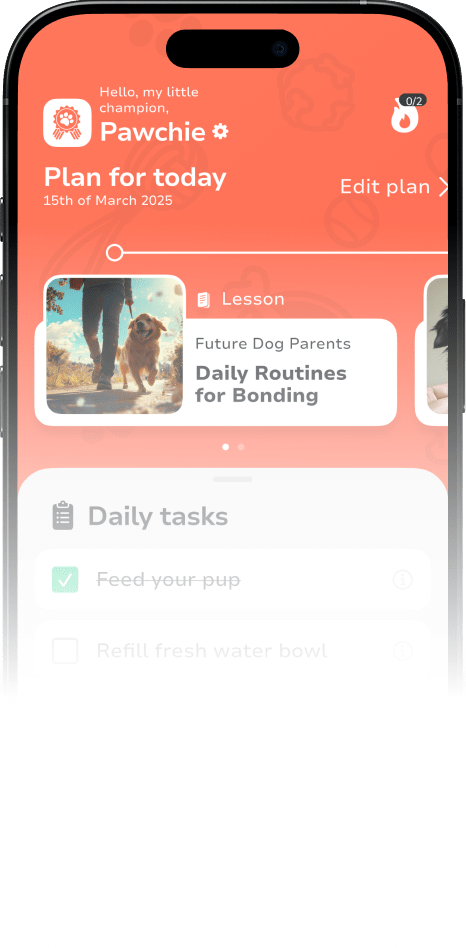
PawChamp is built to support you through exactly these nuanced, age-specific puppy challenges — not just with generic advice, but with tools that adapt to your puppy's actual stage of development.
- Personalized training plans: PawChamp builds a training plan around your puppy's age, breed, and energy level — structuring sessions so sleep and learning work together rather than against each other.
- Expert-verified lessons: Every in-app lesson is structured around realistic attention spans, ensuring you're never pushing a tired puppy through training that won't stick — and won't feel good for either of you.
- In-app expert chat: When you're not sure whether your puppy's behavior is overtiredness, a health concern, or something else entirely, you can get fast, reliable guidance from a Dog Training Expert or a Dog Health and Care Expert directly inside the app.
Building good sleep habits early is one of the most powerful things you can do for your puppy, and PawChamp gives you the structure and support to make it stick.
Bottom Line
Puppies need between 14 and 20 hours of sleep per day depending on their age, and that need is far from passive — it drives growth, immune health, emotional regulation, and the ability to learn. A consistent puppy sleep schedule by age, with enforced nap windows and a calm sleep environment, is one of the single most effective tools for reducing biting, hyperactivity, and general chaos in your home. Start the habits early, stay consistent, and trust that a well-rested puppy is always a more trainable, happier puppy.