As a reactivity expert, I know all too well that dogs struggle to respond to standard dog training cues, like 'lie down' and recall, when they are unable to cope. In service dog training, we need a lot more from our dogs than reliably responding to basic cues; service dogs are often expected to perform complex tasks for disabled people who are reliant on them in busy and distracting public places. To determine how much we should ask of any dog, we need to think about the task, the environment and whether they can genuinely cope with either.
Key Takeaways
- Standard dog training should build skills that help dogs cope and keep them safe in our human world.
- Service dog training is about specific disability-support tasks sometimes performed in challenging environments.
- A service dog needs to be adaptable and enjoy performing tasks that support a handler with a disability.
- Suitability should be determined by whether a dog is robust enough to meet their handler's needs, even when they compete with their own.
Standard Vs Service Dog Training: The Core Difference
The line between service dog and regular dog training can seem blurred, but they are fundamentally different. At its heart, standard dog training should be about developing solid foundations, such as a reliable recall and loose lead walking. Skills that build communication and trust between you.
For many disabled people, having a reliable service dog is the difference between whether or not they are able to participate in everyday events, such as shopping in public areas.
👉 Example:
What Tasks Does A Service Dog Learn?
The tasks a service dog can do vary dramatically because they are matched directly to what the handler needs to be supported with, and the range is wider than most working dog roles. Service dogs often perform:
- medical alerts for diabetics
- opening and closing doors
- finding another person and alerting them when help is needed
- physically interrupting harmful behaviours
- removing clothing like socks
- guiding a handler around obstacles
📝 Think about:
My girl Tilly supporting me and doing her role as a helper dog in reactivity consultations, when I need a mobility scooter.
What Service-Level Training Actually Involves
In my work, goals are centred around overcoming complex reactivity and aggression issues. It is unlikely my clients will be asking how to train a service dog; reactive dog families are usually having a hard time in everyday life without additional pressure.
Suitability matters. Fido may love chasing a ball in the park for hours, but if he sometimes drops it halfway on a retrieve or would rather do a victory lap than return with it, you have a long way to go before starting service dog skill training, such as retrieving a mobility aid.
For that service dog training cue, the dog must be motivated to collect the mobility aid when asked without the excitement of a game, pick it up correctly for their handler to hold and willingly hand it over.
Public Access Training And Requirements
In public access training, we are asking for more than you might imagine.
Practical service dog requirements are incredibly high. We are asking dogs to perform highly skilled tasks and demonstrate their ability to cope well in higher-pressure situations by avoiding things like barking at other dogs and jumping up at strangers.
One of my reactive and scentwork group sessions which are held in public areas.
Foundation skills are what make any of this possible, and they are built long before a dog ever works in public.
Psychiatric Service Dogs Vs Emotional Support Dogs
Psychiatric service dog training involves specific tasks that support people with a mental health disability, such as guiding a disoriented handler to safety, whereas emotional support dogs provide companionship and a calm presence.
The legal distinction between a service dog and an emotional support dog is significant. Across the UK, disabled people can be accompanied by service dogs in public places where emotional support dogs have no equivalent legal access rights. Natalie Turton notes that US law draws the same line: emotional support dogs are not service animals under the Americans with Disabilities Act, while psychiatric service dogs are, because they are trained to perform specific tasks.
Can I Train My Dog Like A Service Dog At Home?
By now you might be asking, 'can I train my own service dog?' The answer really depends on your dog's personality, how complex the task is and in what environments you will be reliant on them. Self-training a service dog is possible in the UK; there are no legal requirements for certification. You can start to train a service dog at home, wherever you live, by building strong foundations with standard training.
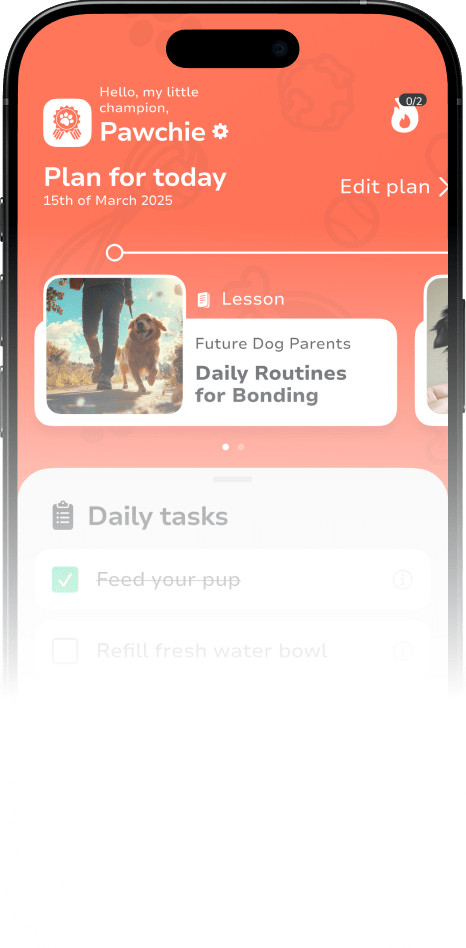
PawChamp's Service-Dog-Level Challenge can be a really useful tool to help you strengthen core skills by providing you with short daily exercises that you can complete anywhere, such as a tuck under, teaching your dog to rest under chairs, tables, etc, a crucial element of public access work.
What Does It Take To Get There?
How long it takes to train a service dog depends on many factors.
💡 Tip:
It can take as much as one to two years and sometimes longer.
The cost of service dog training can also be significant, especially if you are paying for a professional programme; that's why so many opt to start building the foundation skills themselves, alongside everyday mental stimulation. Having some professional and structured guidance can really help make high-level service training much more accessible.
Target training at home with my helper dog Tilly
How PawChamp Helps
You might hear me say this a lot, but one of the reasons I champion the PawChamp training app is that, whether you have a reactive dog that would not cope in a group class, need flexibility, or even if you have a disability, it makes welfare-led training accessible.
For me, there is nothing better than being able to learn new training skills with my canine companions from the comfort of my own home, whenever I have a spare 5 minutes to break up the day. Better still, it gets results without the additional pressure and stress of public environments; that's one of the reasons I conduct so many behaviour consultations online.
Bottom Line
Service dog training is only appropriate when a dog can demonstrate that they are able to cope with meeting their disabled handler's needs. You can begin building the required foundations at home, but success depends on so much more than whether your dog can learn skills in quiet, undistracting environments. Having structured professional support will help you make progress with training at a pace your dog can cope with, helping you become an effective team.
References
Foltin, S., & Glenk, L. M. (2023). Current perspectives on the challenges of implementing service dogs in human mental health care. Veterinary Sciences, 10(1), 62.
Howell, T. J., & Bennett, P. C. (2022). Community awareness of service dog public access rights among Australian adults. Human-Animal Interaction Bulletin, 10(2), 48-72.
Lloyd, J., et al. (2019). Psychiatric service dog use for people living with mental health disorders. Frontiers in Veterinary Science, 6, 166.
Marcato, M., et al. (2022). Service dog selection and performance assessment methods using behavioural and physiological tools and devices. Applied Animal Behaviour Science, 254, 105691.
Marcato, M., et al. (2024). Prediction of working outcomes in trainee dogs using the novel Service Dog Test Battery (ADTB). Applied Animal Behaviour Science, 272, 106212.
McManus, B., et al. (2021). Interactions between the public and service dog handlers and trainers. Animals, 11(12), 3359.
Rodriguez, K. E., et al. (2020). Defining the PTSD service dog intervention: Perceived importance, usage, and symptom specificity of psychiatric service dogs for military veterans. Frontiers in Psychology, 11, 1638.
Salmon, A., et al. (2022). Issues regarding the welfare of service dogs. Animals, 12(23), 3250.