Bringing a new puppy home is one of life's great joys — and also an instant avalanche of questions. Near the top: when can puppies go outside? The answer isn't a single age. It depends on puppy vaccines, your local environment, and what 'outside' actually means. Puppy training and socialization are also urgent during this same window, creating a real tension worth understanding.
Key Takeaways
When can puppies go outside — controlled exposure before full vaccination is possible and often recommended.
Puppy vaccines protect against parvovirus, distemper, and other serious, potentially fatal diseases.
Puppy training and socialization must happen during the critical window (3–14 weeks) regardless of vaccine status.
Safe alternatives include your own yard, vaccinated dogs' homes, and puppy classes with health requirements.
Talk to your vet — local disease risk varies and affects the specific timeline for your puppy.
When Can Puppies Go Outside to Pee and Play?
When can puppies go outside to pee? As soon as you bring them home — but only in areas you control. Your own yard or a patch of grass that unfamiliar dogs haven't used is generally safe from day one for toilet trips.
When can puppies go outside at home for general exploration? Your own property is usually fine. The risk area is high-traffic public spaces — dog parks, pet store floors, busy sidewalks — where exposure to unvaccinated animals is high.
When can newborn puppies go outside? Very young puppies under 8 weeks have some maternal immunity but are highly vulnerable. Keep outdoor exposure extremely limited before 8 weeks.
💭 Think about
Your backyard is very different from a dog park in terms of disease risk. 'Outside' is not one thing — location matters enormously.
Why the Vaccine Schedule for Puppies Matters
Vaccine schedule for puppies typically runs from 6–8 weeks through 16 weeks, with core vaccines given every 3–4 weeks. The core puppy vaccines schedule usually covers parvovirus, distemper, adenovirus, and parainfluenza — plus rabies.
Parvovirus can survive in soil for months to years. High-risk environments should be avoided until your puppy has completed the full series. Treatment for parasites is also typically started early — your vet will guide you on the right schedule.
Parvovirus can survive on surfaces for 6 months to a year under the right conditions — which is why high-traffic dog areas carry real risk for unvaccinated puppies.
Not sure which areas are safe for your puppy right now — or what questions to ask your vet? Chat with a PawChamp dog expert who can walk you through the vaccine timeline and what to avoid until your puppy is fully protected.
Safe Ways to Start Socializing Before Full Vaccination
Puppy behavior research is clear: the critical socialization window is roughly 3 to 14 weeks. Puppies who miss adequate socialization during this window can develop lasting fear and behavioral issues that are much harder to address later.
The American Veterinary Society of Animal Behavior (AVSAB) recommends that puppy training and socialization begin before the vaccine series is complete — with appropriate precautions. Safe options include:
Your own yard or home.
Homes of vaccinated adult dogs you know.
Puppy socialization classes with health requirements (many vets run these).
Carrying your puppy in areas where they can observe the world without touching the ground.
Dog training tips during this window: focus on positive exposure to sounds, surfaces, people, and environments. Every gentle, positive experience now builds the confident adult dog you want.
💡 Tip
Puppy classes that require proof of vaccination are one of the safest ways to socialize before full immunity — plus built-in professional guidance for new owners.
Potty Training and Outdoor Routines for Puppies
Potty training puppy starts from day one. Young puppies need to go outside every 1–2 hours, after eating, and after waking. Consistent trips to the same spot help them understand what's expected.
Puppy obedience training basics can begin at home immediately: sit, name recognition, and 'come' are all teachable before any outdoor public exposure. Use puppy training treats — small, soft, high-value pieces — and keep sessions to 3–5 minutes multiple times a day.
Take your puppy to the same potty spot every time. The scent cues them to go — it's not magic, it's reinforcement through habit.
Potty training goes smoother when you have a clear daily routine — and PawChamp builds one around your puppy's age and schedule from day one. Take the quiz and get a plan that takes the guesswork out of those first weeks.
How PawChamp Helps?
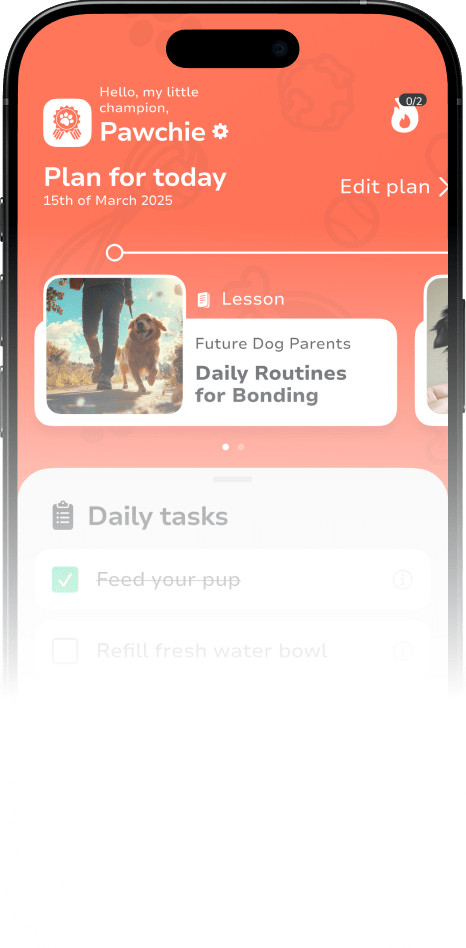
PawChamp gives new puppy owners a structured roadmap through the first months — from potty training to first commands to socialization.
Step-by-step puppy training exercises designed for the critical development window.
Progress tracking so you can see how your puppy's skills and confidence build week by week.
Ask a Dog Expert for those urgent questions at 11pm when your puppy is biting everything.
Age-appropriate training plans that grow with your puppy through each developmental stage.
Set your puppy up for life. Start their training journey with PawChamp today.
Bottom Line
When can puppies go outside? Controlled, low-risk outdoor exposure can start immediately. Public spaces with unknown dogs should wait until the puppy vaccines series is complete around 16 weeks. But puppy training and socialization should begin now.