You call your dog's name. They glance at you — maybe — then trot off to sniff something far more interesting. Sound familiar? A dog that ignores a recall isn't being stubborn or spiteful. There's always a reason recall breaks down, and the good news is that once you understand why it's happening, fixing it is much more straightforward than you might think.
Key Takeaways
- Ignoring a recall is almost never about defiance — it's about training gaps, competing distractions, or a history of negative associations with "come."
- The most common culprits are low reward value, calling too early in distraction training, and using "come" to end fun.
- You can reset recall without starting from scratch by rebuilding the cue in a low-distraction environment and gradually raising criteria.
- Consistency in how every family member uses the recall cue is just as important as the training sessions themselves.
- PawChamp's personalized training plans and in-app expert chats make recall resets structured and achievable for any owner.
The Real Reasons Your Dog Ignores the "Come" Cue
Before you can fix a broken recall, you need to diagnose it honestly. Here are the most common reasons dogs blow off "come" — and they're probably not the ones you'd guess.
"Come" Has Become a Predictor of Bad Things
This is the single biggest recall killer. If your dog has learned that "come" reliably means the leash goes on, the bath starts, or the fun stops, they've made a perfectly logical choice to avoid it. Dogs do what works for them, and ignoring "come" lets them keep playing. Every time you called them over to end something enjoyable without pairing it with a reward first, you accidentally trained the avoidance.
The Reward Isn't Worth Competing With the Environment
A dry piece of kibble versus a squirrel, a patch of fox pee, or a gang of other dogs — your dog is making a cost-benefit calculation in real time. If the reward you're offering doesn't beat the distraction on the table, your dog will pick the distraction. This isn't rudeness; it's just value-based decision-making.
The Cue Was Introduced Too Fast in Too Much Distraction
Many owners teach "come" in the living room, then immediately expect it at the dog park. That's the equivalent of learning to drive in a parking lot and then merging straight onto a highway. Distraction proofing is a separate training stage — one that has to be built incrementally.
The Cue Has Been Poisoned by Repetition Without Success
When a dog hears "come, come, COME, COME HERE" and nothing happens, the word stops meaning anything. This is called a poisoned cue. The dog has been given so many opportunities to ignore the word that it's essentially become background noise. If you recognize this pattern, the fastest fix is to retire the word entirely and introduce a fresh recall cue — more on that below.
Health or Hearing Issues Are in Play
An older dog who used to have a reliable recall but suddenly seems to be ignoring you may have developed hearing loss. Certain breeds, including Dalmatians and some white-coated dogs, are genetically predisposed to deafness. If recall has deteriorated alongside other behavioral changes, a vet check is a sensible first step before any retraining begins.
The Real Reasons Your Dog Ignores the "Come" Cue
🧠 Think About:
Ask yourself honestly: what happens every single time your dog comes to you? If the answer includes "I clip the leash on," "I pick them up," or "I bring them inside," you may be unintentionally punishing the recall. Start pairing every recall with a high-value treat before doing any of those things.
Why Breed and Age Matter for Recall
Not all dogs are wired the same way, and understanding your dog's biology helps set realistic expectations — and a smarter training approach.
Scent hounds like Beagles and Basset Hounds were bred to follow a nose trail to the exclusion of everything else. Once they're locked onto a scent, the "come" cue can feel like someone tapping you on the shoulder mid-sentence. Their recall isn't hopeless, but it does require more management and often a longer investment in distraction work.
Herding breeds like Border Collies and Australian Shepherds tend to respond well to recall training — they're wired to check in with their handler. But they can also become hyper-focused on movement (a running child, a cyclist) and struggle to disengage. The key for these dogs is building a strong "leave it" alongside recall.
Independent breeds like Siberian Huskies, Chow Chows, and Shiba Inus were bred to make decisions without human direction. Their recall requires patience, extraordinary reward value, and a genuine acceptance that off-leash freedom in unfenced areas may never be safe — and that's okay.
Adolescent dogs (roughly 6–18 months, depending on breed) often show a dramatic recall regression as their brains are flooded with hormones and the world suddenly becomes intensely interesting. This is completely normal and temporary. If your puppy's recall has suddenly fallen apart, this is likely why — and you can read more about common behavior problems that appear during this stage and how to handle them.
🐾 Fun Fact:
Adolescent dogs aren't being rebellious — their prefrontal cortex (the brain region responsible for impulse control) is literally still developing. This is why a recall that seemed solid at 5 months can fall apart at 8 months. It will come back with consistent, patient training.
The Recall Reset: A Step-by-Step Plan
If your dog's recall is broken or unreliable, the most effective approach is a structured reset — not punishment, not frustration, just a methodical rebuild. Here's how to do it.
Step 1: Retire the Poisoned Cue
If your dog reliably ignores the word "come," stop using it immediately. Choose a fresh word — "here," "close," or even a whistle pattern — and protect it fiercely. Never use your new recall cue unless you are 90% confident your dog will respond. This new word needs to stay clean.
Step 2: Load the New Cue With Value
Spend one full week doing nothing but calling your dog with the new cue in your home or garden, then immediately delivering your highest-value reward — real meat, cheese, or a toy if your dog is toy-motivated. Do this 10–15 times a day in short bursts. You're not testing the recall; you're building a reflexive, positive emotional response to the sound of that word.
Step 3: Add Distance Before Distraction
Once the cue is solid indoors, move to a larger space — still low distraction. Call from increasing distances, keeping the success rate above 80%. If your dog fails more than 2 times in a session, you've moved too fast. Back up, decrease distance, and rebuild.
Step 4: Introduce Distraction Systematically
This is the stage most owners skip, and it's why recalls fall apart outside. Start with mild distractions — a toy on the ground, a person walking in the distance — and gradually, session by session, increase the difficulty. Every new environment is a new distraction level, so plan to work through this process every time you visit a novel location.
Step 5: Use the "Go Sniff" Release to Undo the "Come Ends Fun" Pattern
One of the most powerful shifts you can make: after your dog comes to you, reward them, give them brief physical contact, and then release them with a "go sniff" or "go play" cue. This teaches them that coming to you doesn't end the fun — it just pauses it. Over time, your dog will actually start volunteering check-ins because being near you has become part of the game, not the end of it.
Step 6: Practice Real-World Proofing
Long lines (a 10–15 m training lead) are your best friend during this phase. They give your dog apparent freedom while ensuring you can prevent a successful escape and avoid poisoning the new cue. Use the long line to create controlled practice scenarios in parks, on trails, and in areas with real-world distractions. This is also the right time to revisit the principles behind structured decompression training, especially if your dog came to you with an existing recall history you can't account for.
📌 Remember:
Never chase your dog if they ignore a recall. Chasing confirms that running away is a fun game. Instead, run in the opposite direction, crouch down, or make an unusual noise to trigger their curiosity. When they come to investigate, reward generously — then practice more in a lower-distraction setting before trying again.
The Household Consistency Problem
One of the most overlooked reasons for unreliable recall is inconsistency within the household. If one person calls "come," another says "here boy," and a third just shouts the dog's name, the dog ends up with a fragmented understanding of what any of it means.
Hold a brief family meeting and agree on:
- One recall cue — the same word or whistle, every time, for everyone.
- One reward protocol — what happens the moment the dog arrives (treat, praise, brief pat — decide together).
- A "never call to punish" rule — if anyone needs the dog for something the dog won't enjoy, they must go and collect the dog rather than use the recall cue.
Children especially need clear guidance here. They tend to use "come" as a general exclamation, which dilutes the cue rapidly. Teaching kids to use the recall cue only when they actually need the dog — and to reward when the dog arrives — transforms them into active contributors to recall training rather than accidental saboteurs.
This kind of communication is also deeply connected to how your dog reads your overall relationship with them. A dog who trusts their owner and feels a strong bond is genuinely more motivated to choose "come back" over "keep running."
💡 Tip:
Put a sticky note on your front door that reads "Reward every recall" as a reminder for every family member before they head outside with the dog. Consistency is the only thing that makes a recall truly reliable under pressure.
How Can PawChamp Help?
PawChamp takes the guesswork out of recall training with a structured, personalized approach that works for real life — not just an empty living room.
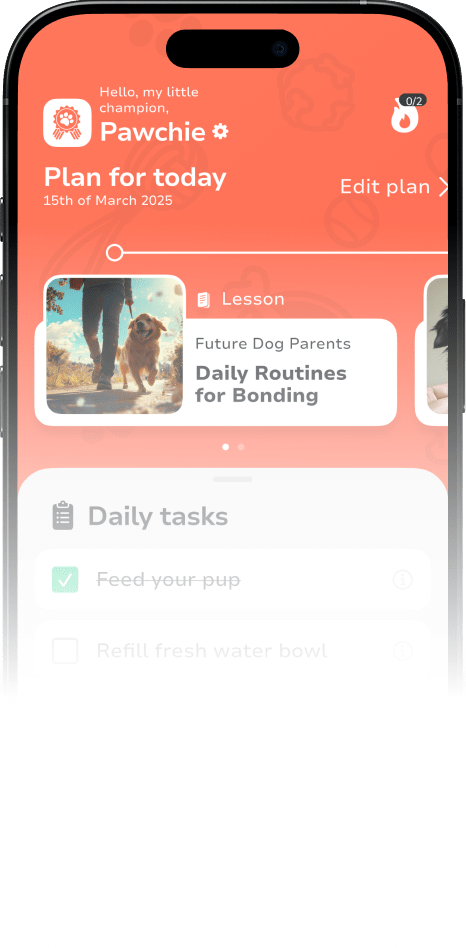
- Personalized training plans: Based on your dog's breed, age, and current recall level, PawChamp builds a step-by-step recall program you can follow session by session — so you always know exactly what to work on next.
- Expert-verified lessons: Every recall technique in the app has been reviewed for accuracy and humane practice, so you can trust that what you're doing is both effective and kind.
- In-app expert chats: If you hit a wall — your dog is making zero progress, or the reset isn't going as planned — you can chat directly with a Dog Training Expert or a Dog Health and Care Expert inside the app for personalized guidance.
Whether you're resetting a poisoned cue or proofing a solid recall against real-world distractions, PawChamp gives you a clear roadmap and expert backup every step of the way.
Bottom Line
A dog that ignores recall isn't a bad dog — it's a dog whose training needs a targeted reset. By identifying the specific reason the cue has broken down, introducing a fresh recall word with high-value rewards, and proofing it systematically against real-world distractions, you can build a recall that holds even when things get exciting. Consistency from every person in the household, combined with the right tools and expert support, is what turns a frustrating problem into a skill your dog genuinely offers willingly.