Przed chwilą Twój pies robił zoomies po ogrodzie, a teraz dramatycznie unosi łapę z bezradną miną. Co się stało? Dlaczego mój pies kuleje? Czy zeskoczył z kanapy? Nadepnął na klocek Lego?
Wygląda na to, że psy mają wyjątkowy talent do kulenia – jakby znikąd.
Na szczęście kulawizna u psów dostarcza cennych wskazówek, o ile wiesz, na co zwracać uwagę.
Najważniejsze wskazówki
- Kulawizna to objaw, a nie diagnoza. Innymi słowy, mówi Ci, że psu coś dolega, ale przyczyna może być bardzo różna – od małej drzazgi po złamany palec.
- Nie każda kulawizna jest nagłym przypadkiem. Niektóre jej formy są mniej niepokojące niż inne.
- Psy potrafią być bardzo wytrzymałe na ból. Kiedy pies wyraźnie kuleje, dyskomfort jest prawdopodobnie większy, niż się wydaje.
- Sprawdzenie łapy to ważny pierwszy krok. Wiele przypadków kulawizny okazuje się być spowodowanych przez ciało obce wbite w łapę.
- Nie podawaj psu ludzkich leków przeciwbólowych. Niektóre z nich są potencjalnie toksyczne dla psów. Stosuj wyłącznie leki zalecone przez weterynarza.
Dlaczego mój pies nagle zaczął kuleć?
Kiedy pies przechodzi od beztroskiej zabawy do nagłego unoszenia łapy, naturalnie pojawia się pytanie: „Dlaczego mój pies nagle zaczął kuleć?” Oto najczęstsze przyczyny nagłej kulawizny u psa:
- Uraz tkanek miękkich. Inaczej mówiąc, kulawizna spowodowana naciągnięciem mięśnia, skręceniem więzadła lub stłuczeniem ścięgna po bieganiu, zabawie lub poślizgnięciu się na gładkiej podłodze.
- Uraz łapy. Może być spowodowany przez kolec, drzazgę, ukąszenie owada, foxtail (ość dzikiej trawy) lub urwany pazur.
- Uraz stawu. Jeśli kulawizna dotyczy tylnej nogi, może być spowodowana częściowym lub całkowitym zerwaniem więzadła krzyżowego czaszkowatego (CCL). Jeśli dotyczy przedniej nogi, przyczyną może być naciągnięcie barku lub urazu łokcia wskutek nagłego skrętu.
- Zaostrzenie artretyzmu. Starsze psy z chorobą zwyrodnieniową stawów mogą miewać lepsze i gorsze dni.
- Bóle wzrostowe. Opiekunowie młodych psów często zadają sobie pytanie: „Dlaczego mój pies kuleje bez wyraźnego powodu?” Jedną z możliwych przyczyn jest panosteitis (tzw. bóle wzrostowe), które mogą powodować przemienną kulawiznę.
- Choroby przenoszone przez kleszcze. W rejonach, gdzie kleszcze są powszechne, u psów może pojawić się kulawizna jako objaw boreliozy.
- Złamania. Mogą być wynikiem urazów lub, wtórnie, niektórych rodzajów raka kości (złamania patologiczne).
Czy psu może „zasnąć” noga, czy to coś innego?
Obserwując kulawego psa wstającego po drzemce, możesz się zastanawiać: czy psom mogą „zasypiać” nogi, tak jak zdarza się to ludziom? Odpowiedź brzmi: tak, psy mogą zasnąć na swojej nodze, ale zazwyczaj tego rodzaju kulawizna szybko mija, gdy wraca prawidłowe czucie i krążenie.
Jeśli kulawizna utrzymuje się lub powraca regularnie, może sygnalizować problem wymagający bliższej uwagi – dlatego kulawizny przedniej nogi bez bólu ani obrzęku nie należy automatycznie bagatelizować.
💡 Wskazówka:
Psy potrafią być niezwykle wytrzymałe i często ukrywają dyskomfort, dopóki nie stanie się on naprawdę dokuczliwy. Opiekunowie psów często się wtedy zastanawiają: „Dlaczego mój pies kuleje, ale nie sprawia wrażenia, jakby go bolało?”
Kulawizna przedniej a tylnej nogi: czy to ma znaczenie?
Tak – zajęta kończyna może dostarczyć wskazówek, które pomogą zawęzić listę możliwych przyczyn kulawizny u psa. Choć wiele przyczyn może dotyczyć zarówno przednich, jak i tylnych nóg, niektóre schorzenia są szczególnie związane z konkretną kończyną.
Na przykład kulawizna tylnej nogi może sugerować problem z biodrem lub kolanem. Z kolei kulawizna przedniej nogi może wskazywać na kłopot z łokciem lub barkiem.
Nagła kulawizna tylnej nogi: najczęstsze przyczyny
„Dlaczego mój pies kuleje bez wyraźnego powodu?” Odpowiedź nie jest łatwa ze względu na wiele możliwości, ale wiedza o tym, która noga jest zajęta, może czasem pomóc zlokalizować konkretną strukturę odpowiedzialną za dolegliwość.
Nagła kulawizna tylnej nogi może budzić podejrzenie problemów dotyczących biodra, kolana, skoku lub tylnej łapy.
Choroba więzadła krzyżowego czaszkowatego jest jedną z najczęstszych przyczyn kulawizny tylnej nogi, szczególnie u większych psów. U małych ras problemem może być natomiast zwichnięcie rzepki.
Schorzenia biodra mogą obejmować dysplazję lub chorobę zwyrodnieniową stawów, które powodują zmiany w chodzie psa, trudności ze wstawaniem lub zmniejszoną aktywność.
Źródło: YamaBSM, Pixabay
Co robić, gdy pies kuleje, ale nie płacze?
Pies skomlący podczas kulawizny może natychmiast zaniepokoić opiekuna i skłonić go do szybkiej wizyty u weterynarza – ale co robić, gdy pies kuleje, lecz nie wydaje żadnych dźwięków?
Jako była asystentka weterynarza wielokrotnie musiałam przypominać opiekunom, że brak wokalizacji nie oznacza braku bólu. Ukrywanie bólu to typowe zachowanie psów.
🔍 Ciekawostka:
Kiedy iść do weterynarza, a kiedy poczekać
Jak już wspomniano, nie każda kulawizna u psa wymaga pilnej wizyty weterynaryjnej. Opiekunowie stający w obliczu kulawizny psa zadają sobie przede wszystkim pytania: „Dlaczego mój pies kuleje? Jak poważna jest ta sytuacja? Czy powinien zostać zbadany jeszcze dziś, czy można poczekać?”
W razie wątpliwości opiekunowie często szukają informacji na temat kulawizny przedniej nogi bez bólu ani obrzęku, bo pies oszczędza przednią kończynę, lecz sprawia wrażenie spokojnego. Czy to oznacza, że problem nie jest poważny?
Pracując jako asystentka weterynarza, byłam uczona, by zadawać opiekunom zaniepokojonym kulawizną psa ważne pytanie: czy pies obciąża tę nogę?
📝 Zastanów się:
Unoszenie nogi jest zazwyczaj związane z bolesnymi stanami, takimi jak złamania, zwichnięcia stawów, zerwania więzadła krzyżowego czaszkowatego (CCL), poważne urazy tkanek miękkich lub znaczny uraz łapy. Takie psy powinny być z reguły zbadane jak najszybciej.
Z drugiej strony pies, który kuleje nieznacznie, ale nadal chodzi, normalnie je i poprawia się w krótkim czasie, może być obserwowany przez 24 do 48 godzin z ograniczeniem aktywności. W tym czasie należy ograniczyć się do spacerów na smyczy i umówić wizytę u weterynarza, jeśli kulawizna utrzymuje się lub nasila – zaleca Blue Pearl Pet Hospital.
Objawy wymagające natychmiastowej pomocy
Oprócz nieobciążania nogi do pilnej pomocy weterynaryjnej skłaniają też inne objawy kulawizny:
- Kulawizna po urazie, np. potrąceniu przez samochód lub upadku z wysokości.
- Noga wyglądająca na zdeformowaną, skręconą lub niestabilną.
- Silny obrzęk lub głęboka rana.
- Objawy silnego bólu (drżenie, skomlenie przy ruchu, dyszenienie lub wyraźne niepokojenie się).
- Nieustające krwawienie, sączenie ropy, nieprzyjemny zapach z rany.
- Nagła niemożność wstania lub normalnego chodzenia.
- Kulawizna u psa towarzysząca osłabieniu, omdleniu, gorączce lub innym objawom choroby.
Jeśli u Twojego psa pojawią się niepokojące objawy kulawizny, jak już wspomniano, ważne jest, by ograniczyć jego aktywność i zapobiec dalszym urazom lub niepotrzebnemu bólowi podczas organizowania transportu do weterynarza. Uspokojenie aktywnego, ale rannego psa może jednak być wyzwaniem. Tu z pomocą może przyjść szkolenie psa.
Jak PawChamp może pomóc
Czy wiesz, że? Psy, które nauczyły się takich umiejętności jak spokojne leżenie na macie, reagowanie na komendy i zachowanie spokoju, są łatwiejsze do opanowania w sytuacjach, gdy aktywność musi być czasowo ograniczona – na przykład podczas rekonwalescencji po urazie, chorobie czy operacji.
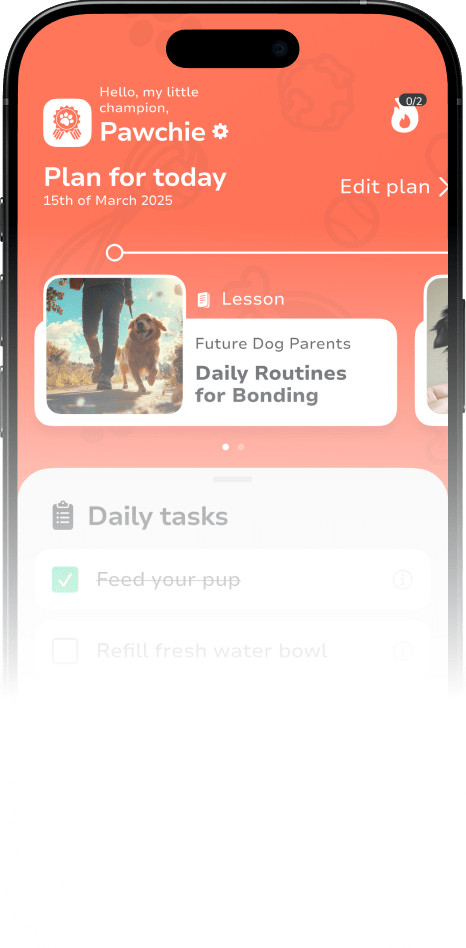
PawChamp pomaga opiekunom psów szkolić swoje czworonogi i radzić sobie z wyzwaniami treningowymi dzięki ustrukturyzowanym wskazówkom bezpośrednio w aplikacji. Dzięki instrukcjom krok po kroku właściciele mogą stopniowo budować ważne umiejętności, postępując według przejrzystych wskazówek opracowanych z myślą o codziennych sytuacjach.
Śledzenie postępów pozwala monitorować poprawę na bieżąco, a funkcja „Zapytaj eksperta” służy pomocą, gdy nie wiadomo, jak zareagować na dane zachowanie lub jak dostosować szkolenie do potrzeb konkretnego psa. Niskowysiłkowa stymulacja umysłowa pomaga również psu z ograniczoną aktywnością wyciszyć się i odpocząć.
Podsumowanie
Jak widać, kulawizna u psów może mieć bardzo różne podłoże – od drobnego urazu łapy po poważny problem ortopedyczny wymagający pilnej pomocy. Pies, który kuleje, ale nadal obciąża nogę, niekoniecznie wymaga natychmiastowej wizyty u weterynarza – jednak kulawizna utrzymująca się, nasilająca się lub ciężka powinna być zawsze oceniona przez specjalistę. Jeśli masz jakiekolwiek wątpliwości, lepiej dmuchać na zimne i zabrać psa do weterynarza w celu postawienia właściwej diagnozy i wdrożenia odpowiedniego leczenia.
Źródła
Cornell College of Veterinary Medicine: Czego się spodziewać, gdy zabierasz kulawego psa do weterynarza.
Blue Pearl Pet Hospital: Kulawizna – nagły przypadek czy można poczekać?