Chaque propriétaire de chien est déjà passé par là. Une minute, votre petit toutou est un ange parfait, et la suivante, il aboie contre le vent, mâchouille vos chaussures ou vous traîne dans la rue comme s’il auditionnait pour une équipe de traîneau. Les chiens ne se comportent pas mal pour nous embêter (même si c’est parfois ce que l’on ressent). La plupart de leurs actions proviennent de besoins non satisfaits, de confusion ou d’un enthousiasme pur pour la vie.
La bonne nouvelle ? Vous pouvez résoudre la plupart des problèmes de comportement avec de la patience, de la régularité et un peu de stratégie.
Points clés :
La plupart des problèmes de comportement viennent de besoins, de stress ou d’habitudes, pas de « méchanceté »
Prévenez la répétition : gérez l’environnement pendant que vous enseignez le nouveau comportement
Récompensez le comportement souhaité dès qu’il se produit (le moment est plus important que de longues sessions)
Une courte pratique quotidienne vaut mieux que des « marathons » d’entraînement occasionnels
Un changement soudain de comportement, des signes de douleur ou des réactions intenses méritent une visite chez le vétérinaire
Si vous êtes bloqué, l’avis d’un expert vous aide à choisir la prochaine étape la plus sûre au lieu d’essayer des solutions au hasard
Si vous souhaitez une méthode simple pour aborder le bon problème en premier (et ne pas courir après les symptômes), le quiz PawChamp vous aide à cartographier le problème et à commencer avec un programme adapté au comportement de votre chien et à votre routine.
1. Aboiements excessifs du chien
Votre chien a beaucoup d’opinions. Que ce soit le facteur, un écureuil qui passe ou son propre reflet, certains chiens aboient sur tout. Bien que les aboiements soient naturels, trop aboyer peut vous rendre fou, vous et vos voisins. Avant de perdre la raison, parlons des raisons pour lesquelles votre chien aboie en premier lieu.
Pourquoi les chiens aboient-ils ?
Les chiens ont besoin de stimulation mentale autant que d’exercice physique.
Ils ont appris que aboyer = une réaction de votre part.
Les bruits forts, les visages inconnus ou être laissés seuls peuvent déclencher les aboiements.
Les chiens de garde prennent leur rôle de protection très au sérieux.
Comment arrêter les aboiements du chien ?
Comprendre comment arrêter un chien d’aboyer commence par jouer au détective.
💡 Pourquoi c'est important :
Au lieu d'essayer simplement de les faire taire, vous devez vraiment découvrir ce qui les déclenche exactement au départ.
Comprenez pourquoi il aboie. Est-ce l’ennui ? L’anxiété ? La recherche d’attention ? Une fois que vous connaissez la raison, vous pouvez agir sur la cause.
Ignorez les aboiements pour attirer l’attention. Si votre chien aboie pour vous faire réagir, ne cédez pas. Attendez qu’il s’arrête avant de le récompenser.
Apprenez-lui l’ordre « silence ». Quand votre chien commence à aboyer, dites « silence » d’une voix calme. Une fois qu’il s’arrête, récompensez-le avec une friandise.
Assurez-vous qu’il fait assez d’exercice. Un chien fatigué est un chien calme. Les promenades, les jeux et l’enrichissement mental peuvent aider à réduire les aboiements excessifs.
Réduisez l’exposition aux déclencheurs. Si votre chien aboie sur les passants à la fenêtre, bloquez leur vue ou créez une association positive avec le déclencheur en utilisant des friandises.
Si votre chien réagit à chaque bruit et que rien ne semble vraiment changer, une approche plus structurée peut aider. PawChamp vous aide à identifier les déclencheurs de votre chien et à suivre un programme clair, étape par étape, pour réduire les aboiements et développer un comportement plus calme au quotidien.
2. Anxiété de séparation chez les chiens
Votre chien agit comme si le monde allait s’effondrer chaque fois que vous quittez la maison. Comportement destructeur, hurlements, aller-retour—l’anxiété de séparation peut être difficile pour vous deux. La clé ? Lui apprendre que rester seul n’est pas un drame.
Pourquoi l’anxiété survient-elle ?
Votre chien est trop attaché à vous et n’a pas appris l’indépendance.
Les changements de routine, comme un nouvel horaire de travail, peuvent déclencher l’anxiété.
Des expériences passées d’abandon peuvent rendre les chiens craintifs d’être seuls.
Identifier précisément quel déclencheur affecte votre chien est la première vraie étape pour l’aider à se détendre enfin quand vous sortez.
Comment résoudre l’anxiété de séparation chez les chiens ?
Voir votre meilleur ami à fourrure paniquer chaque fois que vous prenez vos clés est vraiment difficile pour vous deux. Si vous voulez aider votre petit toutou à se sentir en sécurité quand vous sortez, commencer un programme d’éducation canine pour l’anxiété de séparation cohérent est la meilleure façon de renforcer progressivement sa confiance.
Faites-le progressivement. Commencez par partir pour de courtes périodes et augmentez le temps petit à petit.
Créez un espace sûr. Une cage de transport confortable ou une pièce dédiée avec ses jouets préférés peut le rassurer.
Évitez les adieux dramatiques. Gardez vos départs et retours discrets pour ne pas renforcer l’anxiété.
Utilisez des jouets interactifs. Les puzzles alimentaires, les friandises congelées ou les tapis de fouille peuvent distraire votre chien et rendre le temps seul plus agréable.
Désensibilisez-le aux signes de départ. Prenez vos clés, mettez vos chaussures, puis ne partez pas—cela aide à casser l’association entre ces actions et votre disparition.
Essayez des aides apaisantes. Les diffuseurs, les enveloppes anti-anxiété ou la musique relaxante peuvent calmer votre petit toutou.
Aider un chien nerveux à apprendre à rester seul demande beaucoup de patience, mais célébrer ces petites victoires rend tout le travail difficile totalement gratifiant.
Si vous êtes toujours bloqué et avez besoin d’un programme clair, l’application PawChamp est là pour vous. Êtes-vous prêt à réduire l’anxiété avec des étapes quotidiennes adaptées à votre compagnon à quatre pattes ? Faites un quiz dans l’application dès aujourd’hui pour commencer votre programme personnalisé de calme !
3. Mon chien mâche tout
Ce canapé coûteux ? Une collation. Vos baskets préférées ? Disparues. Les chiens adorent mâcher, mais quand ce sont vos affaires qui en pâtissent, c’est un problème.
Pourquoi mon chien mâche-t-il tout ?
Avant de pouvoir sauver vos meubles, vous devez vraiment comprendre ce qui pousse votre compagnon à ronger tout ce qu’il trouve.
Les chiots mâchent quand ils font leurs dents—c’est leur version de l’appareil dentaire.
L’ennui et l’énergie accumulée peuvent mener à des mâchouillages destructeurs.
Certains chiens trouvent que mâcher est apaisant, surtout s’ils ont de l’anxiété.
💡 La vraie solution :
Une fois que vous avez identifié si votre petit toutou s'ennuie, est stressé ou fait ses dents, vous pouvez aborder le problème de la mastication directement.
Comment arrêter un chien de mâcher ?
Briser cette habitude frustrante demande un bon mélange de gestion, de patience et de proposer à votre chien de bien meilleures alternatives pour dépenser son énergie.
Donnez-lui des jouets à mâcher acceptables. S’il mâche ce qu’il ne faut pas, remplacez-le par quelque chose de mieux.
Protégez votre maison pour le chiot. Gardez les objets tentants hors de portée, surtout pendant la phase de dentition.
Surprenez-le en flagrant délit. Si vous le voyez mâcher quelque chose qu’il ne doit pas, redirigez-le immédiatement.
Utilisez des sprays répulsifs. Les sprays au goût amer peuvent rendre vos meubles beaucoup moins attrayants.
Faites travailler son esprit et son corps. Un chien stimulé mentalement et physiquement est beaucoup moins susceptible de détruire vos affaires.
Essayez les friandises congelées. Une carotte congelée ou un Kong farci peut sauver la vie des chiots en pleine dentition.
Rester régulier avec ces simples habitudes quotidiennes apprend à votre chien ce qui lui appartient vraiment, gardant vos affaires préférées en sécurité et intactes.
4. Mon chien saute sur les gens
Un chien qui vous saute dessus après une longue journée peut être adorable, mais quand il se jette sur les invités, les enfants ou votre café du matin—c’est moins mignon.
Pourquoi les chiens sautent-ils sur les gens ?
Avant de pouvoir corriger cette habitude, il est vraiment utile de comprendre ce qui passe par la tête de votre compagnon à fourrure quand il bondit pour vous saluer.
Les chiens sautent pour dire bonjour et attirer l’attention.
Ils ont appris que sauter = interaction humaine immédiate.
Certaines races sont naturellement plus excitées et enclines à sauter.
Une fois que vous réalisez qu’ils essaient généralement juste de se connecter avec vous, il devient beaucoup plus facile de changer la façon dont ils demandent cette attention tant désirée.
Comment empêcher un chien de sauter sur les gens ?
Apprendre à votre petit toutou à garder les pattes au sol demande un peu de patience, mais quelques ajustements simples dans votre routine quotidienne peuvent faire une énorme différence.
Ignorez le comportement. Pas de contact visuel, pas de caresses—tournez simplement le dos jusqu’à ce qu’il se calme.
Apprenez-lui « assis » comme nouvelle salutation. Récompensez-le pour garder les quatre pattes au sol.
Entraînez un comportement alternatif. Apprenez-lui à vous apporter un jouet au lieu de sauter.
Utilisez des réponses cohérentes. Assurez-vous que tout le monde dans la maison suit la même règle.
Si votre chien continue de sauter malgré tout ce que vous essayez, cela signifie généralement que le comportement est motivé par l’excitation et un manque de structure claire. PawChamp vous aide à réinitialiser ces réactions avec un programme étape par étape, pour que votre chien apprenne des façons plus calmes de saluer les gens sans sauter.
5. Mon chien tire sur la laisse
Si votre chien pense qu’une laisse signifie « on y va à toute vitesse », le promener peut ressembler plus à un entraînement sportif. Apprendre à marcher en laisse détendue rend vos balades bien plus agréables.
Pourquoi le chien tire-t-il sur la laisse ?
Avant de pouvoir corriger cette habitude, vous devez comprendre ce qui pousse votre chien à foncer en avant en premier lieu.
💡 À retenir :
Les chiens tirent rarement juste pour être têtus ; généralement, ils réagissent simplement à leur environnement ou se réfugient dans des expériences passées.
Il est excité à l’idée d’explorer et ne réalise pas que tirer n’est pas idéal.
Il a appris que tirer lui permet d’arriver plus vite à destination.
Il n’a pas été correctement éduqué à la laisse quand il était chiot.
Comprendre exactement pourquoi votre petit toutou est toujours si pressé est la première grande étape pour construire une routine de promenade plus calme et plus sûre.
Comment empêcher un chien de tirer sur la laisse ?
Briser cette habitude épuisante demande beaucoup de patience, mais suivre un programme d’éducation clair transformera complètement vos balades quotidiennes. Si vous vous demandez comment faire pour qu’un chien arrête de tirer sur la laisse, tout se résume à prouver que rester à vos côtés est très gratifiant.
Utilisez la méthode stop-and-go. S’il tire, arrêtez de marcher. Ne reprenez que lorsqu’il revient à vos côtés.
Récompensez la marche calme. Félicitez-le et donnez-lui une friandise quand il reste à côté de vous.
Essayez un harnais à attache frontale. Cela redirige son élan et rend le tirage moins efficace.
Commencez dans des zones peu distrayantes. Maîtrisez la marche dans un endroit calme avant d’aborder les trottoirs animés.
Variez votre rythme. Ralentir et accélérer de façon imprévisible le maintient concentré sur vous.
La régularité est votre meilleur atout ici, alors continuez à pratiquer ces étapes simples et vous profiterez bientôt de balades paisibles, sans être tiré dans tous les sens dans votre quartier.
Si vos promenades restent chaotiques malgré tout ce que vous essayez, cela signifie généralement que votre chien a besoin de plus qu’un simple bricolage—il a besoin d’une approche structurée. PawChamp vous offre un programme d’éducation quotidien clair pour transformer le tirage en marche calme et concentrée, étape par étape.
Comment PawChamp peut aider avec l’éducation ?
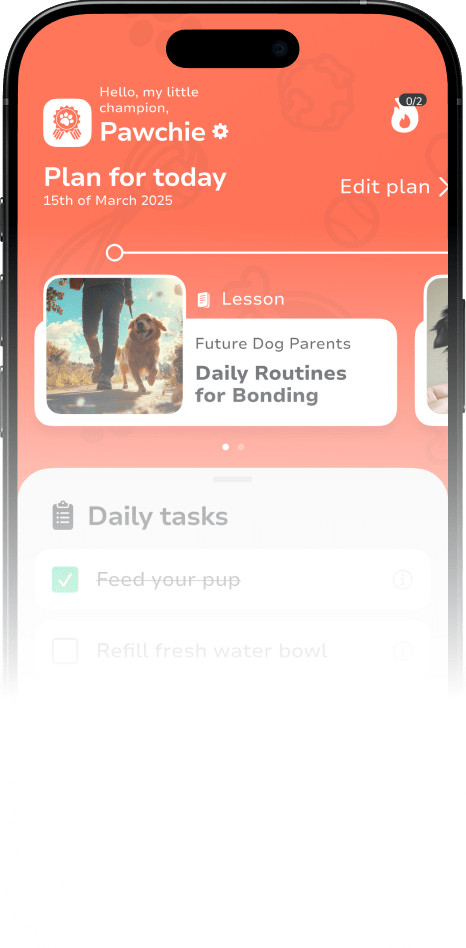
Corriger les problèmes de comportement prend du temps, mais vous n’avez pas à le faire seul. Avec l’application PawChamp, nous rendons l’éducation simple, efficace et sans stress grâce à des programmes dirigés par des experts, adaptés aux besoins de votre chien.
Avec PawChamp, vous obtenez :
Des programmes d’éducation personnalisés pour corriger les comportements problématiques étape par étape.
Des techniques de renforcement positif qui rendent l’apprentissage amusant et gratifiant.
Un accès 24h/24 et 7j/7 à du contenu dirigé par des experts pour que vous puissiez vous entraîner à tout moment, où que vous soyez.
Un soutien de la part d’éducateurs et de comportementalistes chaque fois que vous avez besoin de conseils.
Dernières réflexions
Chaque chien a ses petites manies, mais avec la bonne éducation, vous pouvez transformer ces manies en habitudes bien élevées. Que vous ayez affaire à des aboiements, du mâchouillage ou du tirage en laisse, un peu de patience et de régularité font toute la différence.
Et si vous avez besoin d’un coup de pouce supplémentaire, PawChamp est là pour vous—car un chien bien éduqué signifie un foyer plus heureux (et moins de chaussures mâchées). Prêt à commencer l’éducation ?