There is something special about the love of a dog. It’s arriving home from work, and your dog is there, tail wagging, staring out the window – ready to run to the door to greet you. It’s seeing your dog experience joy then come running to you to share in it! Love will look different for every dog – it’s not always a big sloppy kiss, but it’s all very meaningful and are signs your dog loves you.
While we don’t know exactly what’s going through our dog’s mind, we can look at behaviour and what science has found about our dog’s attachment to us.
Every dog shows love a little differently. The PawChamp quiz can help you discover what your dog’s behaviors say about your bond and how to deepen it.
Key Takeaways
Dogs build real bonds through safety, predictability, and repeated positive experiences.
“Love” in dogs often shows up as proximity, trust, and comfort-seeking, not grand gestures.
Attachment can be secure or anxious, and training can support healthier patterns.
Hormones play a role, but daily habits and interactions matter more than one magic moment.
You can strengthen connection with simple routines and supportive, force-free training.
Can Dogs Experience Love The Same Way Humans Do?
Most people aren’t asking whether dogs love the same way friends or family do when asking can dogs love humans. They’re asking: Is my dog attached to me, do I matter to them, and do they feel safe with me? In a practical sense, yes. Dogs form deep social bonds with the humans they live with and often treat us as a “safe base” when the world feels uncertain.
💡 Do dogs experience love?
Yes, but not quite like us humans do. Humans have language and nuance, while dogs live in the moment, focused on safety, predictability, and connection.
Define “Love” In Dog Terms
Love in dog language often looks like trust plus preference:
Comfort-seeking
Proximity by choice
Relaxation around you
Check-ins
Repair and recovery
Not all dogs are cuddly. A “nearby” dog can be just as attached as a lap dog – sometimes the biggest sign is calm.
How Do Dogs Form Emotional Bonds With Humans?
Bonding with your dog often looks ordinary from the outside, and it’s one of the most natural ways to learn how to bond with your dog. It’s the calm voice when something surprises your dog, the predictable routines that help them settle (even when life is chaotic), and the small choices you make to meet their needs for rest, enrichment, and decompression.
Over time, those moments stack up and your dog learns you’re safe and reliable. Affection can look different too. Some dogs shower you in kisses, while others show love by settling at your feet or staying close by. Pay attention to what your dog actually enjoys, especially around touch.
💡 Pro tip:
Pet for a few seconds, then pause. If they move away, they’re done. If they lean in or stay put, they want more. This is called consent-based handling.
The Role Of Oxytocin And Hormones In Dog Bonding
Did you know that there is a chemical bond between dogs and humans? Bonding happens in your dog’s body too. When you and your dog feel calm and safe together, your bodies can make “feel-good” chemicals, like oxytocin, that help you feel close. But those chemicals don’t create love all by themselves. Trust is still built from the small things you do every day.
You might notice this closeness when your dog looks at you with soft eyes, enjoys gentle pets, or plays calmly with you.
Secure Vs Anxious Attachment In Dogs
When talking about dog attachment styles, there are two main types: secure vs anxious attachment. It is less about your dog being “good” or “dramatic” and more about how safe they feel.
In a secure relationship, you’re a safe base - they can explore because you’re there – and they can come back to you for comfort. I love seeing my dog on a walk, trotting ahead of me, then bounding back for a little check-in. That’s healthy, not needy!
Signs of secure attachment:
Explores, then checks in
Settles after excitement
Recovers from surprises more easily
Signs of anxious attachment:
Follows constantly, struggles to settle
Big greetings that take a long time to come down from
Stress when separated
What helps most is building independence in tiny steps, rewarding calm, keeping routines predictable, and avoiding punishment.
If you’re not sure whether your dog is simply attached or actually distressed, ask a dog expert in the PawChamp app can help you interpret the pattern and choose a safer next step.
Can Rescue And Adult Dogs Form Deep Bonds?
Adults and rescue dogs can form strong attachments to humans and caregivers (fosters, rescuers, etc.). How fast adult dog bonding happens will vary from dog to dog, but my biggest piece of advice as an expert is that trust is earned through patience and consistency.
For these pups, think slow and steady. If your dog is shut down or feeling overwhelmed when you first bring them home, offer lots of decompression time. Start to figure out a daily routine and make their day as predictable as possible.
One great way to learn how to bond with your dog is to introduce simple enrichment and training games that feel safe for your dog. Get them sniffing for hidden treats, practice a simple “give paw” if they’re comfortable being close to you, and practice “consent-based” handling (like my pro tip above).
Common Myths About Dogs And Love
As dog parents, many of us have been left feeling judged or that you’re not connected enough with your dog because they don’t behave perfectly. Well, I’m here to help bust some of these dog love myths!
Myth: “If My Dog Loved Me, They’d Always Want Cuddles”
Fact: Just like in humans, affection preferences vary. If your dog isn’t cuddly, it doesn’t mean they love you less. In fact, you acknowledging and respecting their preferences shows your dog that they are safe with you! That’s a great bond.
Myth: “If My Dog Loved Me, They Would Be Well Behaved (Like The Other Dogs I See!)”
Fact: Dogs can have a strong attachment to their people but still struggle in certain environments or situations. And while it may seem like all the other dogs are perfect out there – this is normal behaviour and very common.
💡 Think about it:
Work with a professional to create a plan to help your dog handle these situations.
Myth: “My Dog Is Stubborn, So We Don’t Have A Bond”
Fact: Stubborn often means an unclear message (us yelling – “come”, “come here”, and “get over here” all at once!) or the environment they’re in is so interesting that their ears tune us out. Practice clear communication and build up to more enticing environments.
How PawChamp Helps Build Healthy Attachment Through Positive Training?
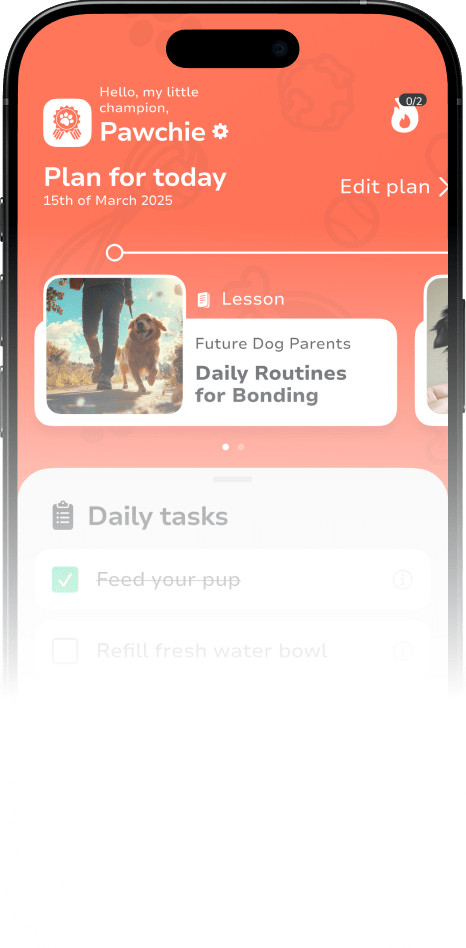
PawChamp dog training app is support, not a shortcut. It helps you build a connection the real way – by helping your dog feel safe and helping you feel confident. Instead of throwing a bunch of “commands” at you, it breaks training into bite-sized steps that are easy to follow, even on busy days.
The PawChamp app also helps you notice the small wins you might miss, which matters because progress is often quiet. You’re creating better patterns together, not trying to “fix” your dog’s personality.
Here’s what you get:
Short, step-by-step training you can actually follow on busy days, so consistency doesn’t depend on motivation
Practical routines that reward calm behavior and help your dog settle, recover, and feel more secure over time
Guidance for real-life moments that strain attachment, like overexcited greetings, clingy behavior, and difficulty being alone
Ask a dog expert support when you’re unsure whether a behavior is “bonding,” stress, or something that needs a different plan
Bottom Line
Dogs can form real attachment, but they show “love” through safety, trust, and choosing to be near you, not grand gestures. The strongest bond is built through small, consistent routines and force-free training that helps your dog feel secure. Check out how PawChamp can help you with it.