Want to give your dog more than just walks around the block? Dog agility is one of the best ways to burn off mental and physical energy, build focus, and have serious fun together — without paying for fancy classes or expensive gear. You don't need a big yard, professional dog agility equipment, or a competition background to get started. With about $30 in basic supplies, you can build a complete agility course for dogs right at home and start training within an afternoon.
Key Takeaways
Dog agility improves coordination, focus, and bond between you and your dog.
A complete DIY agility course for dogs can be built for around $30 using household items.
Basic dog agility equipment includes jumps, tunnels, and weave poles — all easy to recreate.
Most dogs can train safely if you adjust jump heights and intensity to their size and age.
Consistency matters more than equipment quality, especially for beginners.
What Is Dog Agility and Why Should You Try It?
Dog agility is a fast-paced canine sport where a dog navigates an obstacle course — jumps, tunnels, weave poles, ramps — guided by their handler. It started in the late 1970s as halftime entertainment at a UK dog show and quickly grew into a competitive sport recognized worldwide. Today, agility dog training is practiced everywhere from backyards to professional dog agility competition rings.
Beyond competition, agility offers some major everyday benefits. It improves your dog's focus, body awareness, and recall. It also gives high-energy breeds a productive outlet, which often reduces destructive behavior at home.
🔍 Fun fact:
The first official dog agility event was held at the Crufts dog show in 1978 — and it was such a hit that the sport went global within a decade.
You don't need to enter competitions to benefit. Many dog owners train at home purely for fun and bonding, treating it like a backyard sport rather than a serious pursuit. Dog agility at any level builds confidence in both anxious and energetic dogs.
How to Build a DIY Dog Agility Course at Home?
Building a DIY dog agility course is much simpler than it looks. The key is replacing professional gear with everyday items you probably already own or can buy cheaply at hardware stores. A basic agility course for dogs typically includes three core elements — jumps, a tunnel, and weave poles.
Here's what you need for a $30 starter setup:
2 PVC pipes (~$8 total) for poles
4 PVC connectors and stands (~$6)
1 lightweight kids' tunnel (~$10) from a discount store
6 garden stakes for weave poles (~$6)
A few small treats or a favorite toy for rewards
This list covers the basics of dog agility equipment without requiring any specialty stores. Once you have these supplies, the whole course takes about 30 minutes to assemble.
💡 Tip:
Always train on grass, dirt, or rubber mats — never on slick floors or concrete. Hard surfaces increase the risk of joint injuries during jumps and turns.
Dog Agility Jumps and Wing Jumps on a Budget
Dog agility jumps are the easiest piece to build. Two vertical PVC poles act as uprights, and a horizontal bar (also PVC) sits across them at adjustable heights. Use connectors so you can lift or lower the bar based on your dog's size and skill level.
For more advanced setups, wing jumps dog agility style adds decorative side panels — think corrugated cardboard or thin plywood attached to the uprights. These wings make the jump more visually distinct and help your dog read the obstacle from a distance. Adding wings is optional for a basic diy dog agility course, but it makes home setups feel closer to real competition gear.
Start with low heights — around 4–6 inches for small dogs and 8–12 inches for medium breeds. Increase gradually only when your dog clears jumps confidently and lands well.
Dog Agility Tunnel and Weave Poles: DIY Options
A dog agility tunnel is one of the most fun obstacles for dogs but also the trickiest to DIY. The cheapest option is a kids' pop-up play tunnel from a toy store, which works for small to medium dogs. For larger breeds, look for second-hand crawl tunnels online — they're often listed cheaply by families whose kids have outgrown them.
Dog agility weave poles are where you'll see the biggest skill development. To make them, push 6 garden stakes into the ground in a straight line, spaced about 20 inches apart. Your dog learns to weave in and out, which builds incredible coordination and focus.
You can also make dog agility poles taller or shorter depending on your dog's size. Use brightly colored stakes if possible — they're easier for dogs to track visually. Once your dog masters six poles, you can extend the line to 10 or 12.
Weave poles are one of the most mentally demanding obstacles for dogs — start with just 2–3 poles and add more only after each new step is solid.
Dog Agility Training: How to Get Started at Home
Agility dog training at home doesn't require a structured class to start producing results. Most dogs can learn basic obstacle work in just a few weeks with short, daily sessions. Even dog agility classes typically start with the same foundations: targeting, body awareness, and reward timing.
A simple starter routine looks like this:
5 minutes of warm-up — walking, gentle stretching, basic obedience cues
10 minutes of obstacle work — one or two obstacles at a time
5 minutes of cool-down — slow walking and quiet praise
Rest day every other day to prevent burnout
A complete dog agility set doesn't have to live in your yard 24/7. Many home trainers store their equipment between sessions, which also keeps obstacles novel and exciting for the dog.
💡 Tip:
Always end training sessions with success — even if it means going back to an easier obstacle. Dogs remember the last thing they did, so make sure it's a win.
Not sure how to structure your dog's first agility sessions — or what to do when they suddenly lose interest? Chat 24/7 with a PawChamp dog expert for real-time guidance from certified trainers.
Clip and Go Agility: Simple First Steps for Beginners
Clip and go agility refers to portable, foldable dog agility equipment that snaps together in minutes — perfect for owners with limited space or those who travel. Many starter kits include lightweight jumps, fabric tunnels, and weave poles you can pack in a backpack. They're affordable, durable, and ideal for backyard or park use.
If you'd rather start with in-person guidance, search for dog agility training near me to find local instructors or club groups. Many parks now also offer permanent dog park equipment and dog park agility equipment that's free to use during operating hours. Even simple shared community gear gives your dog exposure to real obstacles.
Some city parks now include built-in dog park agility equipment like ramps, weave poles, and balance beams — a free way to introduce your dog to new challenges.
How PawChamp Helps With Dog Agility and Training at Home
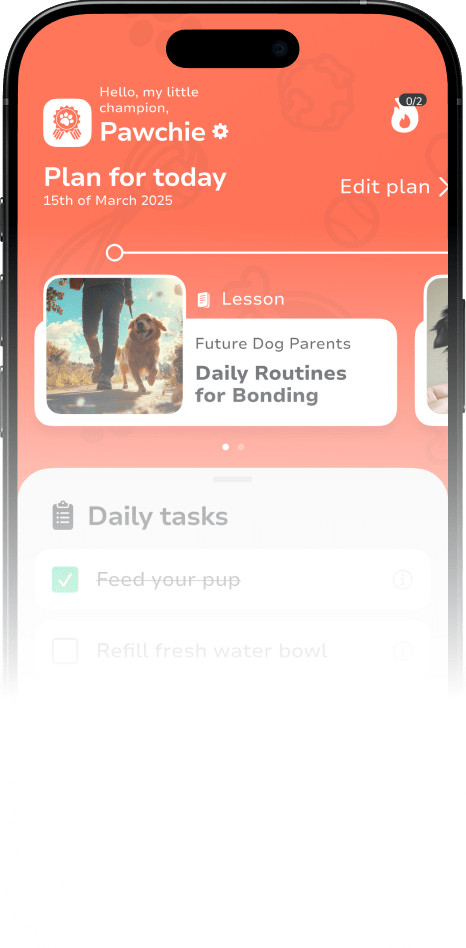
Setting up the course is easy — knowing how to teach each obstacle properly is the harder part. PawChamp gives dog owners a structured, science-based approach to building agility skills safely at home. Here's what you get with PawChamp:
Step-by-step training exercises designed by certified trainers, covering both agility foundations and behavior basics.
Progress tracking so you can see exactly where your dog is improving — and where to slow down.
Personalized daily plans tailored to your dog's age, breed, and skill level.
Ask a Dog Expert chat for moments when your dog hesitates at a new obstacle or gets overwhelmed.
Take a quick quiz today and get a personalized training plan built around your dog's learning style.
Bottom Line
Dog agility is one of the most rewarding ways to spend time with your dog — and you don't need expensive gear or formal classes to start. With about $30 in supplies, a basic backyard setup, and short daily sessions, you can build real coordination, focus, and trust. Adjust difficulty to your dog's age and size, prioritize safe surfaces, and always end training on a win. The bond it builds is worth every minute.