If you've searched how to get an emotional support dog, you've probably hit a wall of sites selling instant “registration” and official-looking certificates. Here's the honest version: an emotional support dog is built on a genuine relationship and a legitimate letter — not a badge you buy online.
The comfort your dog gives is real, and making it official is simpler, and cheaper, than the internet suggests. Let's clear up the myths and cover the one thing most guides skip.
Key Takeaways
An emotional support dog offers comfort simply by being there — no trained tasks required.
There's no official registry; a real ESA letter comes from a licensed mental-health professional.
Paid emotional support dog registration and certification sites are novelties, not legal status.
A service dog vs emotional support dog differ in trained tasks and public-access rights.
Calm, well-mannered behavior is what makes an emotional support dog work in daily life.
What Is an Emotional Support Dog?
An emotional support dog is a pet whose steady presence helps ease a diagnosed mental or emotional condition — anxiety, depression, PTSD, and more. Unlike an assistance dog trained to perform specific tasks, it helps simply by being there. There's no breed requirement and no special skill set.
Picture Millie, a scruffy rescue who does nothing more clever than lean into her owner's legs during a wave of panic. That's the whole point — what matters is the bond and the calm it creates, not a pedigree or a party trick.
Emotional Support Dog vs. Service Dog
This is where most confusion starts, and the service dog vs emotional support dog difference comes down to three things:
Training: a service dog performs trained tasks for a disability; an emotional support dog offers comfort by presence.
Access: a service dog has broad public access; an ESA mainly gets housing considerations.
Proof: a service dog needs no registration, and neither does an ESA — just a letter, never a paid certificate.
So before you spend a cent, be clear about what is a service dog versus what you actually need.
How Do You “Register” or Certify an Emotional Support Dog?
Short answer: you don't. There's no government database, no official emotional support dog registration, and no recognized emotional support dog certification you can buy. Those “certified in minutes” offers exist to take your money.
The legitimate path runs through a person, not a payment page. If a mental-health professional decides an ESA genuinely helps your condition, they can write an ESA letter — the only thing landlords or airlines may reasonably ask to see.
🌟 Did you know?
No law recognizes online “ESA registries.” A genuine ESA letter is simply written documentation from a licensed professional — there's no database, ID card, or vest that makes it more official.
How to Make Your Dog an Emotional Support Dog
When people ask how to make my dog an emotional support dog, they're surprised how short the real process is:
Talk with a licensed therapist, counselor, or psychiatrist about whether an ESA fits your care.
If they agree, ask them for an ESA letter on their letterhead.
Skip every paid site — there's nothing to register your dog as an emotional support animal beyond that letter.
That's also the honest answer to how to make your dog an emotional support dog for free: the “registration” was never a real cost, and how to register my dog as an emotional support animal — or how to register your dog as an emotional support animal — simply isn't a step that exists.
Do Emotional Support Dogs Need Training?
Here's the part the certificate sellers skip. An emotional support dog needs no task training, but it does need to be calm and manageable — the moment your dog lunges at a neighbor or can't settle in a rental, the support role falls apart.
In practice, emotional support dog training just means the everyday manners that keep life easy:
Polite, calm greetings instead of jumping.
Settling on cue in cafés, lobbies, and rentals.
Staying relaxed in new places and around strangers.
Learning to cope calmly when you're apart, since an over-attached dog struggles in the moments an ESA is meant to ease.
Get those right — a few essential obedience commands go a long way — and your dog can support you anywhere. And if you truly need a dog trained to perform tasks, that's a service dog, a separate and more demanding path.
💡 Tip
Practice “settle” on a mat in easy rooms first, then in cafés and lobbies. A dog who can switch off anywhere makes no-pet housing conversations far smoother.
How PawChamp Helps You Raise a Calm, Confident Support Dog
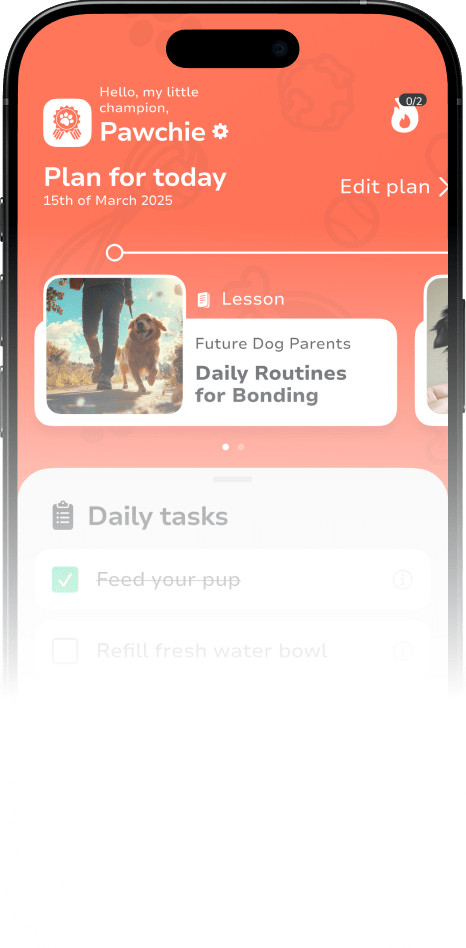
Here's the honest split. Your ESA letter comes from a licensed professional — PawChamp doesn't touch that side. What it owns is the other half: the calm, well-mannered dog that keeps housing, travel, and everyday life low-stress, because an emotional support dog only helps when it's genuinely easy to have around.
Through short, positive daily sessions and the Ask a Dog Expert chat, PawChamp builds the settle-on-cue calm and steady bond behind that comforting presence — turning “officially my ESA” into “actually the support I needed.”
The steadier and more connected your dog feels, the better they can steady you — and that bond is something you can build, one calm session at a time.
Bottom Line
An emotional support dog isn't a certificate or an online badge — it's a genuine letter from a professional plus a dog calm enough to support you anywhere. Skip the “registration” traps, focus on the relationship, and let the bond do the heavy lifting.