One of the first questions every new puppy owner asks: how much should I feed my puppy? Get it wrong in either direction and you're either raising a chunky overachiever or worrying about whether they're getting enough. Using a puppy feeding chart as your guide — along with your vet's input — is the most reliable way to hit the right target.
Key Takeaways
How much should I feed my puppy depends on age, breed, weight, and food type — there's no universal answer.
Puppy feeding chart guidelines are a starting point; adjust based on your individual dog's body condition.
Puppies need more frequent meals than adult dogs — typically 3–4 times daily.
Dog food quality matters: puppy-formulated foods have the right nutrient ratios for growth.
Track body condition, not just weight — you should feel ribs without pressing hard, not see them.
How Much to Feed a Puppy by Age and Weight?
How much to feed a puppy by age follows a general pattern: younger puppies need more meals per day (their stomachs are tiny), while the amount per meal increases as they grow. Here's a general framework:
8–12 weeks: 3–4 meals per day. Typically 1/3 to 1/2 cup per meal for medium breeds, based on your food's feeding guide.
3–6 months: 3 meals per day. Appetite increases significantly as growth accelerates.
6–12 months: Transition to 2 meals per day. Amounts vary widely by breed size.
How much should I feed my puppy? Always cross-reference with the feeding guide on your specific food — calorie density varies significantly between brands.
Weigh your puppy every two weeks and compare against growth charts for their breed. More informative than eyeballing portion sizes alone.
Using a Puppy Feeding Calculator the Right Way
How much should I feed my puppy calculator tools ask for current weight, expected adult weight, and age to generate a daily calorie target. These dog calorie calculator tools are a starting point — always check body condition weekly and adjust.
Puppy feeding chart guidance from calculators is a starting point. Ribs should be palpable with gentle pressure but not visible. Adjust regardless of what the calculator says if the condition tells a different story.
🌟 Fun fact
A puppy's caloric needs per pound of body weight are roughly double those of an adult dog of the same breed — growth requires serious fuel.
Feeding an 8-Week-Old vs. a 6-Month-Old Puppy
How much should I feed my 8 week old puppy? At 8 weeks, most puppies eat 3–4 small meals of puppy dog food daily. The total daily amount for a medium breed is often about 1–1.5 cups, divided across meals.
How much should I feed my 6 month old puppy? By 6 months, most puppies have shifted to 2–3 meals per day and the daily amount has increased substantially. Large and giant breeds may need a 'large breed puppy' formula to prevent joint issues from growing too fast.
Emma, a first-time dog owner, was feeding her golden retriever puppy at the top of the bag's recommended range. By 5 months, her vet flagged the puppy as slightly overweight. A small reduction and an extra play session daily sorted it within a month.
Are you feeding at the top or bottom of the recommended range? The range accounts for activity level — a highly active puppy needs more; a low-energy one needs less.
Not sure which food actually fits your puppy's breed, age, and size? PawChamp matches you with a personalized feeding guide — built by nutritionists, specific to your dog.
Choosing the Right Puppy Food
Best puppy food is puppy-formulated, from a reputable brand, and appropriate for your dog's expected adult size. Look for an AAFCO statement confirming the food is 'complete and balanced for growth.'
Dog food quality isn't just about ingredients — it's about whether the food has been tested and proven to support puppy development. Brands that conduct feeding trials offer an extra layer of confidence.
Homemade dog food for puppies is risky without veterinary nutritionist guidance. Meeting the exact calcium-to-phosphorus ratio needed for bone development is extremely difficult without professional formulation.
🌟 Fun fact
Large breed puppies actually need LESS calcium than small breeds during growth — over-supplementing calcium in large breeds is linked to developmental bone disease.
How PawChamp Helps?
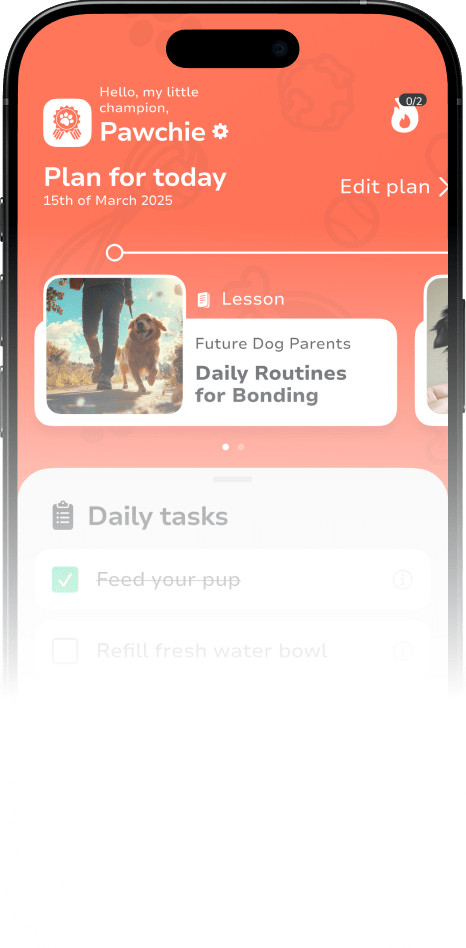
PawChamp gives puppy owners structured support for the whole first year — not just training, but the full picture of raising a healthy, happy dog.
Training sessions integrated into feeding times for easy routine building from day one.
Progress tracking to monitor your puppy's milestones and skill development week by week.
Ask a Dog Expert for feeding questions, behavior questions, and all the other 2am puppy panic moments.
Age-appropriate training plans that grow with your puppy through each stage.
Your puppy's best start begins here. Join PawChamp today.
Bottom Line
How much should I feed my puppy? Use a puppy feeding chart as your starting point, check body condition regularly, and adjust as your puppy grows. Dog food properly formulated for puppies does the nutritional heavy lifting — your job is to get the quantity right and keep your vet in the loop.