Alcuni cani nascono con l'istinto del riporto. Altri ti guardano come se avessi perso la testa quando lanci una palla. In ogni caso, sapere come insegnare a un cane a fare il riporto è una competenza davvero utile — è un esercizio mentale e fisico racchiuso in un solo gioco. Il riporto fa bruciare energia, sviluppa la concentrazione e rafforza il legame con il tuo cane. E sì, puoi davvero insegnarlo — anche al cane che attualmente considera la palla lanciata un tuo problema.
Consigli chiave
Come insegnare a un cane a fare il riporto — inizia con lanci brevi, premia ogni ritorno, aumenta gradualmente.
Come insegnare a un cane a giocare al riporto inizia rendendo il riporto gratificante, non solo il lancio.
I comandi 'lascialo' e 'prendilo' sono le basi del riporto.
Consigli per l'addestramento canino: sessioni brevi, premi di alto valore e mai punizioni se non torna.
Anche cani più anziani o testardi possono imparare il riporto con pazienza e il giusto approccio.
Come insegnare a un cane a giocare al riporto in 5 passi?
Il segreto per insegnare a un cane a giocare al riporto è scomporre il gioco in piccoli pezzi. La maggior parte dei cani che 'non riportano' semplicemente non hanno mai imparato cosa fare con l'oggetto dopo averlo preso.
Passo 1 — Stimola l'interesse per il giocattolo: Rendi il giocattolo interessante prima di lanciarlo. Muovilo, stuzzicalo, festeggia quando il tuo cane lo afferra.
Passo 2 — Lancio corto, grande ricompensa: Lancia solo a un paio di passi. Quando il tuo cane lo prende, chiamalo con gioia. Nel momento in cui torna, premialo generosamente.
Passo 3 — Insegna 'lascialo': Offri un premio in cambio dell'oggetto. Appena lo lascia, contrassegna il comportamento con un 'sì!' e premia. Ripeti finché non diventa affidabile.
Passo 4 — Aumenta la distanza gradualmente: Una volta che il ritorno e il lascia sono solidi, allunga lentamente la distanza del lancio. Affrettare questo passaggio è la causa più comune del fallimento del riporto.
Passo 5 — Aggiungi il comando verbale: Quando il comportamento è costante, aggiungi 'riporto' proprio mentre lanci. Il tuo cane assocerà la parola all'azione.
💡 Consiglio
Usa due giocattoli identici. Quando il tuo cane torna con uno, mostra con entusiasmo il secondo: lascerà automaticamente il primo. Niente più lotte per la palla.
Insegnare al tuo cane a riportare una palla
Come insegnare a un cane a riportare una palla in modo specifico? Inizia con una palla della dimensione giusta per la bocca del tuo cane — troppo grande o troppo piccola rende scomodo portarla in bocca.
Come insegnare a un cane a riportare e tornare riguarda davvero il ritorno, non solo l'afferrare. Non inseguire mai il tuo cane se prende la palla e scappa — questo insegna involontariamente che scappare fa parte del gioco. Voltati, abbassati e chiamalo con gioia invece.
I border collie e i Labrador Retriever sono tipicamente cani naturalmente portati per il riporto per via della selezione, ma anche terrier e levrieri possono imparare con il giusto approccio.
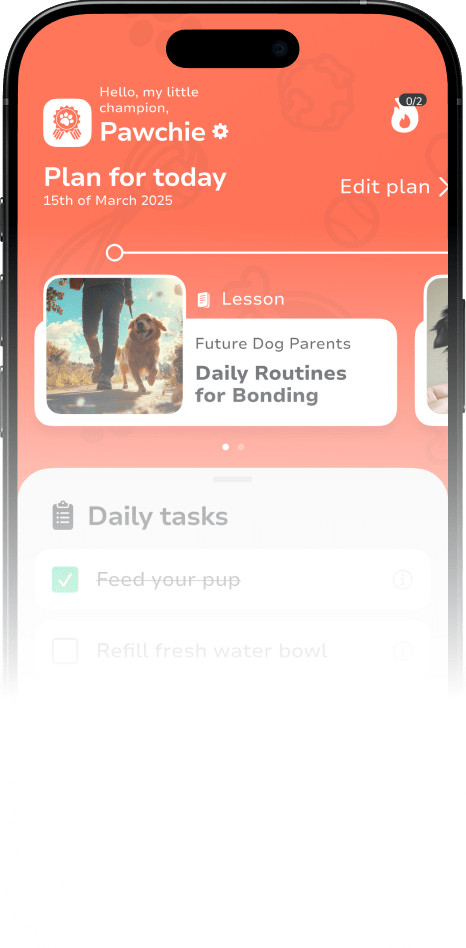
Il riporto sembra semplice, ma il ritorno è un comportamento che va insegnato, non scontato. PawChamp ti offre un piano passo-passo affinché il tuo cane impari a riportare la palla ogni volta, non solo quando ne ha voglia.
Comandi di base che rendono il riporto più semplice
Alcuni solidi comandi comuni per cani rendono il riporto molto più semplice. Prima ancora di iniziare a lanciare, costruisci questi:
'Lascialo' — il comando singolo più importante per il riporto.
'Lascia' — utile se il tuo cane si fissa su qualcos'altro nell'ambiente.
'Vieni' — un richiamo affidabile rende il ritorno parte costante del riporto.
Questi comandi di addestramento canino si trasferiscono facilmente anche nel gioco quando praticati in altri contesti.
Usare segnali manuali e una tabella dei comandi per cani
I segnali manuali per cani sono molto utili nel riporto — specialmente all'aperto dove i comandi verbali possono non essere percepiti chiaramente nel vento o nella distanza. Un dito puntato verso il giocattolo può indicare 'prendilo', un palmo aperto può indicare 'lascialo'. Usa sempre lo stesso segnale.
Una tabella dei comandi per cani aiuta tutti i membri della famiglia a usare gli stessi segnali con costanza — fondamentale quando più persone sono coinvolte nell'addestramento.
Il tuo cane scappa via con la palla invece di tornare? Significa che il ritorno non è ancora stato abbastanza gratificante. Torna a lanci molto brevi e grandi premi per il ritorno.
Come insegnare a un cane anziano a fare il riporto?
Insegnare a un cane anziano a fare il riporto è assolutamente possibile. L'adattamento chiave è fisico: i cani più anziani possono avere problemi articolari, quindi sessioni più brevi e superfici più morbide sono più importanti.
Segui gli stessi passi, ma riduci le distanze e aggiungi pause tra i lanci. Osserva il linguaggio del corpo del cane — rallentamenti o riluttanza a prendere il giocattolo dopo il gioco sono segnali per ridurre l'intensità. Il riporto deve sempre essere percepito come un gioco, non come un lavoro.
Come PawChamp ti aiuta?
PawChamp porta un addestramento strutturato basato sul rinforzo positivo nella tua routine quotidiana — incluse le abilità ludiche che rendono la vita con un cane davvero divertente.
Esercizi passo-passo per 'lascialo', 'vieni' e 'lascia' che fanno funzionare il riporto.
Monitoraggio dei progressi così puoi vedere i miglioramenti del tuo cane sessione dopo sessione.
Chiedi a un esperto di cani consigli personalizzati quando l'addestramento al riporto non va come previsto.
Piani di addestramento adatti all'età che tengono conto di cuccioli, adulti e cani anziani.
Costruisci un cane che riporta, risponde al richiamo e ascolta. Inizia con PawChamp oggi.
Conclusione
Insegnare a un cane a riportare richiede pazienza, sessioni brevi e rendere il ritorno la parte più gratificante. Il riporto è uno dei modi migliori per stancare il tuo cane mentalmente e fisicamente in poco tempo.