Im Gegensatz zu Menschen können Hunde keine Nachrichten schreiben, keine Emojis verwenden oder Updates posten, um mitzuteilen, wie sie sich fühlen. Stattdessen verlassen sie sich hauptsächlich auf ihre Körpersprache und gelegentliche Lautäußerungen. Das macht es für uns schwierig, sie zu verstehen.
Die gute Nachricht? Sobald Sie wissen, worauf Sie achten müssen, können Sie Anzeichen von Stress bei Hunden erkennen und von den Zeichen eines glücklichen Hundes unterscheiden.
Wichtige Erkenntnisse:
Verhaltensweisen, die einen Hund kleiner erscheinen lassen, werden häufig mit Angst oder Stress in Verbindung gebracht.
Wie beim Menschen äußert sich Stress durch Muskelverspannungen.
Achten Sie auf Verhaltensweisen, die aus dem Zusammenhang fallen.
Der Wunsch eines Hundes, Abstand zu gewinnen, sollte immer respektiert werden.
Viele Hundebisse entstehen, weil Stresssignale ignoriert werden.
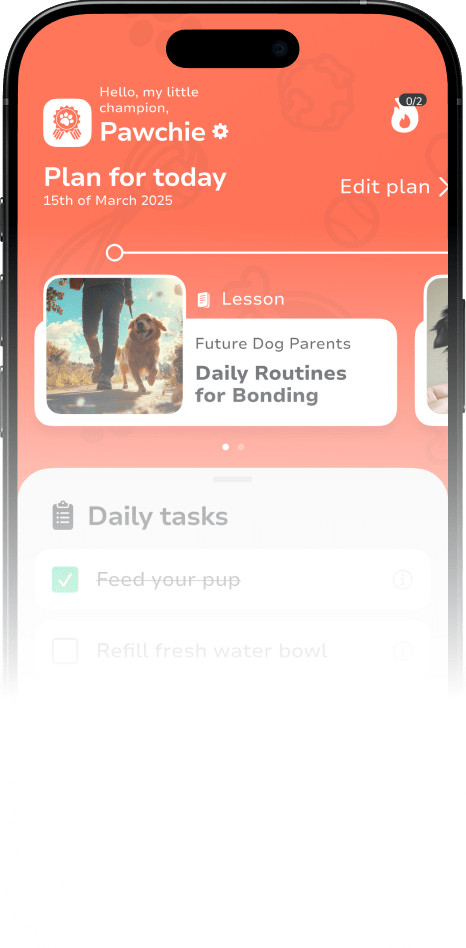
Wenn Sie Hilfe dabei möchten, diese Signale in einen klaren „Was mache ich als Nächstes?“ Plan umzusetzen, bietet die PawChamp-App trainergeführte Anleitungen zu Stresssignalen, ruhigen Routinen und dem Aufbau von Selbstvertrauen – plus eine Funktion, um einen Hundeexperten zu fragen, wenn Sie unsicher sind, was Sie sehen.
Wie erkenne ich, ob mein Hund glücklich oder gestresst ist?
Ist mein Hund glücklich? Oder ist er gestresst? Wenn es darum geht, die Körpersprache eines Hundes zu deuten, die auf Stress hindeutet, ist es wichtig, sich nicht nur auf einzelne Körperteile zu konzentrieren.
Die Beachtung nur einzelner Körperteile kann tatsächlich mehrdeutig sein. Stattdessen liefert der Fokus auf Cluster von Körpersprache ein vollständigeres Bild des emotionalen Zustands des Hundes.
💡 Tipp:
Körperteile, auf die Sie achten sollten, um Hinweise auf die Emotionen des Hundes zu erhalten, sind das Gesicht des Hundes, wie die Augen, der Mund, die Zunge, die Lippen, die Ohren, der Schwanz, der Muskeltonus und das Fell.
Zusätzlich zur Beobachtung der Körpersprache des Hundes können weitere Stressanzeichen durch das Beobachten des Gesamtverhaltens, des Kontextes, in dem das Verhalten auftritt, und der Reaktion des Hundes auf Interaktionen abgeleitet werden. In PawChamp können Sie mit einem Hundeexperten chatten, um die Situation zu beschreiben, die Situation beschreiben und sicherere nächste Schritte basierend auf Kontext und Körpersprache erhalten.
Verstehen der Körpersprache und Emotionen von Hunden
Die Körpersprache eines Hundes ist eng mit dem emotionalen Zustand des Tieres verbunden. Was wir als „Hundekörpersprache“ definieren, ist tatsächlich die beobachtbare, äußere Manifestation eines inneren emotionalen Zustands.
Wenn Hunde Emotionen erleben, verändern sich ihre Körper, da das autonome Nervensystem aktiviert wird, was sich dann durch Körpersprache nach außen zeigt.
Diese inneren Veränderungen beeinflussen die Haltung, Bewegung, Mimik und sogar Atmung oder Muskelspannung des Hundes. Das Verstehen der Hundekörpersprache erlaubt uns daher einen Einblick in die emotionalen Zustände des Hundes.
Kann mein Hund meine Emotionen fühlen?
Ja, Hunde sind durchaus in der Lage, die emotionalen Zustände eines Menschen zu lesen. Die nächste Frage lautet: „Wie kann mein Hund meine Emotionen fühlen?“ Als aufmerksame Wesen sind Hunde sehr feinfühlig gegenüber ihren Hundehaltern, was sie natürlich befähigt, subtile Veränderungen in unserer Körpersprache, Gesichtsspannung und Haltung zu erkennen. Beispiele sind:
Hochgezogene Schultern, eng am Körper anliegende Arme, Hin- und Hergehen im Raum.
Schnelles Vorbeugen oder sich über Ihren Hund beugen (kann als Druck wahrgenommen werden).
Ein angespannter Kiefer, zusammengebissene Zähne, gespannte Lippen oder eine gerunzelte Stirn.
Schnelle, ruckartige Bewegungen vs. langsame, entspannte Bewegungen.
Vermeidung von Blickkontakt oder intensives Starren bei Stress.
Hunde sind auch sehr aufmerksam gegenüber Veränderungen im Stimmton. Veränderungen in Tonhöhe und Intensität geben einen Einblick, wie wir uns fühlen. Hier ist, was Ihre Stimme für den Hund bedeutet:
Höherer Ton, schnelles Sprechen, wenn Sie ängstlich oder aufgeregt sind.
Ein scharfes „Nein!“ oder ein abgehackter Ton, der Frustration signalisiert.
Seufzen, zitternde Stimme oder atemloses Sprechen bei Stress.
Leiser, flacher Ton und langsameres Sprechen, wenn Sie traurig oder erschöpft sind.
Lachen oder „Babysprache“, die auf Spiel und soziale Bindung hinweist.
Außerdem gibt es immer mehr Belege, dass Hunde dank ihres überlegenen Geruchssinns physiologische Veränderungen erkennen können, die mit der Ausschüttung stressbedingter Hormone verbunden sind.
💡 Tipp:
Ja, es gibt tatsächlich Hunde, die „unseren Stress riechen“, obwohl es korrekter wäre zu sagen, dass sie die Nebenprodukte unseres Stresses riechen.
Hier sind einige Beispielsituationen, in denen Ihr Hund Ihren Stress riecht:
Nach einem Streit oder einem stressigen Telefonat (Schweiß- und stressbedingte Körpergeruchsveränderungen).
Vor einem großen Ereignis wie einer Präsentation (erhöhter Stressschweiß).
Nach Kombination von Bewegung und Stress (anderes Schweißprofil als bei ruhiger Aktivität).
Während Angst- oder Panikmomenten (stärkere Geruchsveränderungen, schnellere Atmung).
Und dann sollten wir das Phänomen der emotionalen Ansteckung betrachten. Studien zeigen, dass Hunde in der Lage sind, die emotionalen Zustände ihrer Hundehalter zu spiegeln:
Sie sind nervös beim Spaziergang, und Ihr Hund wird wachsamer und reaktiver.
Sie sind energiegeladen und aufgedreht, und Ihr Hund steigert sich in wilde Spiele oder Bellen.
Sie sind zu Hause ruhig und entspannt, und Ihr Hund beruhigt sich schneller und schläft mehr.
Sie sind angespannt in Gegenwart von Fremden, und Ihr Hund beginnt ebenfalls, sie zu beobachten oder zu meiden.
Alles in allem ist das Schöne daran, dass Hunde und Menschen eine artübergreifende soziale Bezugnahme eingehen: Hunde lesen menschliche Signale (Haltung, Blick, Ton, Bewegung), und Menschen lesen emotionale Zeichen des Hundes durch Körpersprache (Ohrenstellung, Schwanzhaltung, Muskelspannung usw.). Diese gegenseitige Sensibilität ist in gut verbundenen Beziehungen am stärksten.
Warum werden Hunde gestresst?
Auch wenn Hunde keine Scheidungen durchmachen oder ihre Konten ausgleichen müssen, können sie dennoch erheblichen Stress erleben. Was verursacht Stress bei Hunden? Es gibt tatsächlich viele Gründe.
Zum Beispiel mag ein grundlos bellender Hund so erscheinen, aber in Wirklichkeit bellt der Hund vielleicht, weil der Hundehalter das Haus verlassen hat und der Hund in Not ist, oder weil der Hund auf entfernte Geräusche reagiert, die für Menschen nicht hörbar sind. Weitere Ursachen für Angst bei Hunden sind der Besuch beim Hundefriseur oder Tierarzt, der Besuch von Gästen, ein Umzug oder die Aufnahme eines neuen Haustiers im Haushalt.
Manche Hunde können auch durch scheinbar kleine Dinge gestresst werden, wie umgestellte Möbel, neue Gegenstände im Haus oder ein Nachbar, der ein neues Haustier bekommt.
💡 Bitte beachten Sie:
Ein gestresster Hund zeigt typischerweise eine Vielzahl von Anzeichen, die von durchschnittlichen Tierhaltern nicht immer sofort erkannt werden.
Wenn Sie unsicher sind, was Ihren Hund tatsächlich auslöst, kann PawChamp Ihnen helfen, dies anhand von realen Kontexten und Verhaltensmustern zu analysieren. Sie erhalten klare, praktische Anleitungen, die auf Ihren Hund zugeschnitten sind – damit Sie wissen, was als Nächstes zu tun ist.
Anzeichen von Stress und Angst bei Hunden
Obwohl die Begriffe Stress und Angst oft synonym verwendet werden, gibt es einige grundlegende Unterschiede, und diese zu unterscheiden ist klinisch wichtig.
Stress beschreibt die physiologischen und Verhaltensreaktionen auf Umweltreize. Das können Geräusche, unbekannte Menschen oder Hunde oder das Festhalten beim Tierarzt sein.
Angst hingegen ist ein Zustand der Besorgnis über zukünftige, drohende Situationen. Eine häufige Form von Angst bei Hunden ist die Furcht, dass der Hundehalter das Haus verlässt, was bereits vor der Abfahrt eine erhöhte Wachsamkeit auslösen kann.
Stress und Angst können sich überschneiden. Ein gestresster Hund kann Angststörungen entwickeln, und ängstliche Hunde zeigen eher Stressanzeichen.
Viele Symptome von Stress und Angst bei Hunden ähneln sich, da beide dieselben physiologischen Systeme aktivieren. Zum Beispiel können sowohl gestresste als auch ängstliche Hunde hecheln, hin- und hergehen, zittern, die Lippen lecken und gähnen. Diese sind häufige Stressanzeichen, die aus dem Zusammenhang fallen und in beiden Zuständen auftreten können.
Körpersprache bei Stress, auf die Sie achten sollten
Durch sorgfältige Beobachtung der Körpersprache eines Hundes ist es möglich, frühe Anzeichen emotionaler Belastung zu erkennen. Das gibt uns die Möglichkeit, einzugreifen und dem Hund zu helfen, zu einem entspannten Grundzustand zurückzukehren.
Subtile Stressanzeichen bei Hunden sind unter anderem übermäßiges Lecken der Lippen, Wegdrehen des Kopfes, Gähnen und Erstarren. Mit zunehmendem Stress entwickeln sich diese subtilen Zeichen oft zu deutlicheren Verhaltensweisen, die weniger leicht übersehen werden.
Deutlichere Anzeichen von Angst sind Zittern, Hin- und Hergehen, Winseln und das Suchen von Nähe zum Hundehalter.
Wenn Sie einige dieser Zeichen bemerken, aber unsicher sind, wie ernst sie sind, kann PawChamp Ihnen helfen, sie Schritt für Schritt zu verstehen. Machen Sie ein kurzes Quiz, um das Stresslevel Ihres Hundes einzuschätzen und zu erfahren, was als Nächstes zu tun ist.
6 häufige Anzeichen eines glücklichen Hundes
Unsere vierbeinigen Begleiter lächeln zwar nicht für Selfies und kichern nicht über unsere Witze, aber sie haben ihre eigenen Signale, die einen glücklichen Hund anzeigen.
Wie sehen glückliche Hunde also aus? Meistens suchen Sie nach einem Muster aus entspannter Physiologie und sozialer Offenheit. Hier sind einige Anzeichen eines glücklichen Hundes:
Lockere Körpersprache.
Entspannte Gesichtsmuskeln.
Offener Mund mit entspannter Zunge.
Sanfter Blickkontakt.
Schwanzwedeln in weiten, schwungvollen Bewegungen.
Wackelnder Körper und Hüften.
Die Anzeichen eines glücklichen Hundes hören hier jedoch nicht auf, das Verhalten vervollständigt das Bild. Glückliche Hunde suchen Ihre Nähe, fordern Interaktionen ein, halten während Spaziergängen Sichtkontakt und laden Sie zum Spielen ein.
Entspannte Körpersprache bei glücklichen Hunden
Hunde praktizieren zwar kein Yoga oder Meditation wie Menschen, aber sie können denselben physiologischen Zustand erreichen: ein Nervensystem im Gleichgewicht.
Kurz gesagt: Entspannte Hunde sind weder vor Angst erstarrt noch auf Kampf oder Flucht vorbereitet. Sie sind einfach gelassen und zeigen daher einige typische Zeichen entspannter Körpersprache. Dazu gehören:
Gleichmäßig verteiltes Gewicht.
Ungehetzte Bewegungen.
Keine Muskelverspannungen.
Entspannte Ohren in natürlicher Position.
Regelmäßige Atmung.
Glückliche Hunde zeigen außerdem einen gesunden Appetit, regelmäßige Schlafmuster und die Fähigkeit, sich zu beruhigen. Ihr Nervensystem ist nicht auf Alarmbereitschaft, sodass sie in Ihrer Gegenwart entspannen können, seufzen, sich strecken und vielleicht mit dem Kopf auf Ihrem Schoß schlafen.
Schwanzwedeln und verspieltes Verhalten
Schwanzwedeln wird oft als universelles Zeichen für einen glücklichen Hund interpretiert, doch dieser Glaube hat sich als eine häufige Ursache für Bissvorfälle erwiesen. Ich habe es oft erlebt, dass Kunden mir erzählen, der Hund habe sich gefreut, sie zu sehen, wedelte eifrig mit dem Schwanz und biss dann plötzlich zu!
Im Grunde ist es korrekter zu sagen, dass Hunde ihren Schwanz wedeln, weil sie erregt sind, nicht nur wegen positiver Emotionen. Hunde wedeln also auch aus Enthusiasmus, Wachsamkeit, Frustration, Unsicherheit und manchmal sogar aus Unruhe.
Beim Spielen kann das Schwanzwedeln dominieren. Beim Spiel zeigt der Hund oft die typische „Spielverbeugung“, bei der der Vorderkörper gesenkt, das Hinterteil angehoben und der Schwanz locker und schwungvoll wedelt.
Schwanzwedeln kann auch während des Spiels auftreten, wenn der Hund sozial engagiert ist. Aber nicht jedes Wedeln ist gleich.
Wenn der Schwanz hoch und steif gehalten wird und schnell wedelt, kann das ein Warnsignal sein, besonders wenn der Hund eine steife Haltung zeigt oder starr blickt. Also ist Schwanzwedeln kein universelles Zeichen für glückliches Hundeverhalten.
Vokale und soziale Zeichen eines glücklichen Hundes
Hunde können Glück nicht verbal ausdrücken. Sie können natürlich nicht „Juchu“, „Hurra“ oder „Prost“ rufen, aber sie kommunizieren positive emotionale Zustände durch verschiedene vokale und soziale Signale.
Wenn Sie gesunde Mensch-Hund-Interaktionen anstreben, ist es wichtig, Hundebellen zusammen mit diesen Signalen zu verstehen. Hier sind einige glückliche Hundegeräusche:
Hohe Belllaute.
Verspielte Juchzer.
Leises, sanftes Knurren.
Leises Winseln, um Aufmerksamkeit zu erlangen.
Hecheln mit entspanntem Maul.
Seufzen nach dem Hinlegen.
Hunde kombinieren oft glückliche Lautäußerungen mit einladenden Gesten. Im Rahmen der Hundekommunikation zeigen Hunde daher Spielverbeugungen, lockere Körperhaltungen und sanfte Stupser. Der Blickkontakt ist weich, mit gelegentlichem Blinzeln, und der Mund wirkt entspannt oder leicht geöffnet, was wie ein „Lächeln“ aussieht.
Erklärung der Signale von Ohren, Schwanz und Körperhaltung bei Hunden
Ich erkläre meinen Kunden oft, dass Hunde zu einem großen Teil über Körpersprache kommunizieren und dass ihre Ohren, ihr Schwanz und ihre gesamte Körperhaltung wie Puzzleteile sind, bei denen jedes Element Hinweise auf den emotionalen Zustand des Hundes gibt. Bereit, etwas Hundekörpersprache zu entschlüsseln?
Was sagen die Ohren eines Hundes über seine Emotionen aus?
Ein großer Irrtum ist, dass angelegte Ohren ein Zeichen von „Schuld“ bei Hunden sind. Studien haben gezeigt, dass das, was wir als Schuld empfinden, tatsächlich ein Verhalten ist, bei dem der Hund Beschwichtigungssignale zeigt als Reaktion auf einschüchternde menschliche Signale wie harsche Tonlagen, Körperhaltungen oder Gesichtsausdrücke.
Wenn es also um die Emotionen der Hundeohren geht, sind angelegte Ohren eher mit Gefühlen von Unsicherheit oder leichter Angst verbunden als mit einem Verständnis von Fehlverhalten.
💡 Interessante Tatsache:
Indem Hunde die Ohren anlegen, den Körper senken und den Schwanz einklemmen, wirken sie kleiner und weniger bedrohlich. Hunde nehmen diese Positionen ein, um die Wahrscheinlichkeit von Konflikten zu verringern.
Im Gegensatz dazu sitzen entspannte Hundeohren natürlich und bewegen sich gelegentlich als Reaktion auf kleine Umweltreize – ein Zeichen von Komfort und Stressfreiheit –, während aufmerksame Ohren sich wiederholt in verschiedene Richtungen neigen.
Hundeschwanzpositionen und ihre emotionale Bedeutung
Ähnlich kommuniziert die Schwanzhaltung wichtige Informationen. Ein Hund mit eingeklemmtem Schwanz, der eng am Körper anliegt, signalisiert oft Angst oder Unsicherheit, während ein neutral getragener Schwanz oft Entspannung oder Glück anzeigt, besonders wenn er in weiten Schwüngen wedelt.
Ein erhobener Schwanz kann Erregung oder Aufregung anzeigen, aber der Kontext und die begleitende Körpersprache sind entscheidend. Wenn der Schwanz hoch und schnell wedelt und der Hund eine steife Körperhaltung zeigt, kann das Aggression oder Wachsamkeit signalisieren.
Die Beobachtung der Schwanzbewegungen in Kombination mit Ohrenstellung, Körperhaltung und Gesichtsausdruck liefert ein umfassenderes Verständnis des emotionalen Zustands eines Hundes.
Das ist entscheidend, denn das Verstehen dieser Signale hilft Fehlinterpretationen zu vermeiden und fördert sichere, positive Interaktionen.
Quelle: Alkhaine, Pixabay
Wie helfen Sie einem gestressten Hund, sich sicher und glücklich zu fühlen?
Zeigt Ihr Hund verschiedene Anzeichen von Angst oder Stress? Dann ist es Zeit, ihm zu helfen – aber wie hilft man einem gestressten Hund?
Um zu lernen, wie man einen Hund glücklich macht, sollten Sie Apps wie PawChamp in Betracht ziehen, wo Sie tief in das Thema eintauchen können, wie Sie einem Hund, der dringend Selbstvertrauen braucht, helfen können.
Ein guter Anfang ist, eine ruhige Umgebung zu schaffen, konsistente Routinen anzubieten und sanfte Beruhigung zu geben. Sichere Rückzugsorte, beruhigende Geräusche und interaktives Spielzeug können die Angst des Hundes reduzieren.
Training mit positiver Verstärkung kann ebenfalls helfen, Vertrauen und Selbstbewusstsein zu stärken, sodass sich Ihr Hund sicherer und geborgener fühlt.
Mentale Stimulation und Gehirntraining für Hunde
Mentale Stimulation ist für Hunde essenziell, um glückliche und ausgeglichene Begleiter zu sein. Bieten Sie Gehirntraining in Form von Intelligenzspielzeug, Suchspielen und spaßigem Training an, um das Gehirn zu fordern, Langeweile zu reduzieren und ängstliche Energie umzulenken.
Wie hilft PawChamp?
PawChamp kann Hunden und ihren Hundehaltern helfen, ihr volles Potenzial zu erreichen, indem es strukturierte Spiele, Bereicherungstools und Trainingsressourcen bietet, die mentale Stimulation fördern und Entspannung unterstützen.
Folgendes können Sie in der App nutzen:
Trainergeführte Anleitungen zu Stresssignalen bei Hunden, ruhiger Körpersprache und wie Sie reagieren, ohne die Situation zu verschärfen.
Einfache Routinen, die Entspannung, sichere Begrüßungen und Selbstvertrauen bei alltäglichen Auslösern fördern.
Ideen zur mentalen Stimulation, die vielen Hunden helfen, sich durch Gehirnarbeit auf entspannte Weise zu beruhigen.
Fragen Sie einen Hundeexperten, wenn Sie unsicher sind, ob ein Verhalten Stress, Überstimulation oder etwas anderes ist, das einen anderen Plan erfordert.
Verstehen von Hundeverhalten und Körpersprache
Die Fähigkeit, Hunde richtig zu „lesen“, spielt eine zentrale Rolle bei der Verhinderung von Hundebissen, da sie uns die Möglichkeit gibt, einzugreifen, bevor der Stresslevel eines Hundes eskaliert. Außerdem können Sie durch das Erkennen von Stress bei Ihrem Hund dessen körperliches und geistiges Wohlbefinden verbessern. Einen glücklichen und sicheren Hund großzuziehen, erfordert konsequente Routinen, sichere Rückzugsorte sowie den Einsatz von mentaler Stimulation und positiver Verstärkung.
Fazit
PawChamp kann Tierhaltern helfen, motiviert zu bleiben, indem es strukturierte Aktivitäten anbietet, die Spaß mit Bereicherung verbinden und so das Verhaltenswohl und das emotionale Wohlbefinden unterstützen. Indem Sie lernen, die Körpersprache Ihres Hundes zu lesen, Stress anzugehen und positive Interaktionen zu fördern, können Sie Ihrem Hund endlich helfen, sich sicher, glücklich und jeden Tag mehr mit Ihnen verbunden zu fühlen.
Quellen
Ostojic, Ljerka & Tkalčić, Mladenka & Clayton, Nicola. (2015). Beeinflussen die Berichte der Besitzer über den „schuldigen Blick“ ihrer Hunde die Wahrnehmung der Handlung und des Beweises des Fehlverhaltens?. Behavioral Processes.
Wilson C, Campbell K, Petzel Z, Reeve C. Hunde können zwischen menschlichen Baseline- und psychologischen Stressgerüchen unterscheiden. PLoS One. 2022
Katayama M, Kubo T, Yamakawa T, Fujiwara K, Nomoto K, Ikeda K, Mogi K, Nagasawa M und Kikusui T (2019) Emotionale Ansteckung von Menschen auf Hunde wird durch die Dauer des Besitzes erleichtert. Front. Psychol. 10:1678. doi: 10.3389/fpsyg.2019.01678