Sei entusiasta all’idea che la tua famiglia accolga un nuovo cucciolo, ma ti rendi subito conto che c’è molto da fare per essere pronto! Portare a casa un cucciolo può essere un momento abbastanza frenetico, quindi abbiamo creato una guida, così non dovrai chiederti se ti sei dimenticato qualcosa.
Concetti chiave:
Una checklist ti aiuta a concentrarti sui veri bisogni del tuo cucciolo e a filtrare i consigli contrastanti degli “esperti”
Gli elementi essenziali da acquistare per primi: alimentazione, premi sicuri, guinzaglio/pettorina/collare con identificazione, qualche gioco intelligente e forniture base per la toelettatura
Come mettere in sicurezza la casa per il cucciolo e allestire postazioni semplici e coerenti per il cibo, il riposo e il contenimento (kennel/recinto/cancelletti)
Cosa dare priorità nei primi giorni e notti: riposo, legame e molte pause per i bisogni (l’addestramento può aspettare un attimo)
Come costruire una routine facile e aggiungere piccole sessioni di addestramento divertenti come seduto, giù e vieni una volta che il cucciolo si è ambientato
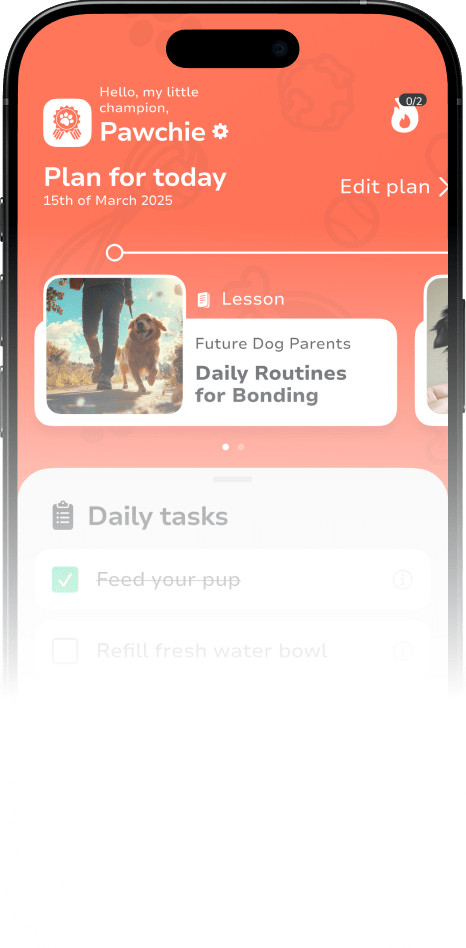
Se vuoi un modo semplice per trasformare questa checklist in una routine della prima settimana (pause per i bisogni, riposo, tempo nel kennel/recinto e piccoli giochi di addestramento), l’app PawChamp ti aiuta a seguire un Piano chiaro senza dover pensare troppo a ogni passo.
Perché ti serve una checklist per l’arrivo del cucciolo
Ti starai chiedendo – a parte guinzagli, collari e ciotole – di cosa ha bisogno un cucciolo e perché ti serve una guida per prepararti all’arrivo?
Il motivo principale per cui consiglio una checklist ai nuovi proprietari di cuccioli è che appena dici al tuo collega, zio o vicino che stai per accogliere un cucciolo in casa, tutti avranno qualche consiglio o raccomandazione.
Prendili se vuoi, ma se ti ritrovi a dubitare della saggezza di qualcuno che esclama di aver “cresciuto cani per 30 anni”, affidati semplicemente alla tua checklist.
💡 Pensaci:
Se hai coperto le tue priorità e stai soddisfacendo i bisogni del tuo cane, non c’è nient’altro che devi comprare o fare!
Cosa comprare per un nuovo cucciolo
Potresti decidere di aggiungere qualche extra, ma questi sono gli elementi base che consiglio per ogni kit iniziale per cuccioli:
Cibo, premi e allestimento per l’alimentazione
Inizia con le basi che sosterranno la crescita, l’addestramento e le abitudini alimentari sane del tuo cucciolo fin dal primo giorno.
Cibo per cuccioli di alta qualità (chiedi al veterinario o all’allevatore per consigli)
Premi sicuri per cuccioli (a ingrediente singolo, a basso contenuto calorico) come polmone o fegato di manzo
Premi di alto valore che puoi spezzare in piccoli pezzi (il formaggio liofilizzato funziona bene)
Borsa porta-snack
Postazione rialzata per la pappa adatta al tuo cucciolo (le gambe regolabili sono un vantaggio)
Ciotola o inserto a mangiatoia lenta per cuccioli che mangiano troppo in fretta
Avere questi elementi essenziali per l’alimentazione rende i pasti più fluidi e aiuta a stabilire routine sane fin dall’inizio. Quando vuoi maggiore chiarezza, il quiz sull’alimentazione di PawChamp può aiutarti ad abbinare con sicurezza il cibo al tuo cucciolo in crescita.
Guinzaglio, collare, identificazione e basi per i viaggi
Questi elementi essenziali quotidiani per il cucciolo mantengono il tuo cane sicuro, protetto e pronto per avventure oltre la porta di casa.
Guinzaglio standard per cuccioli lungo 6 piedi (2 metri)
Linea lunga, almeno 20 piedi (6 metri)
Collare piatto (preferibilmente a sgancio rapido)
Tag identificative e di registrazione, tag microchip per cucciolo
Pettorina ben aderente con buona libertà di movimento per le spalle (aderente, con due dita sotto le cinghie)
Ciotole pieghevoli per cibo e acqua da viaggio
Trasporto sicuro: kennel o pettorina con cintura di sicurezza
💡 Ti consiglio:
I guinzagli in Biothane o rivestiti in PVC sono impermeabili e facili da pulire dopo le avventure.
I migliori giochi per cuccioli
I giochi giusti aiutano con la dentizione, la stimolazione mentale e a prevenire la masticazione indesiderata in casa.
Giochi da masticare sicuri per cuccioli (la masticazione di solito aumenta durante la dentizione)
Snuggle Puppy (gioco comfort con battito cardiaco per supporto al sonno)
Alimentatori puzzle facili (possono anche rallentare il pasto)
Giocattoli imbottiti usati per sostituzioni economiche se il tuo cucciolo li distrugge
Tieni il tuo cucciolo impegnato ruotando una piccola selezione di giochi. Questa strategia aiuta a prevenire che morda i mobili.
Forniture per toelettatura e igiene
Introdurre presto gli strumenti per la toelettatura rende più facili le visite future dal veterinario e gli appuntamenti dal toelettatore.
Spazzola e/o pettine adatti al tuo cucciolo (chiedi al toelettatore o al personale del negozio per animali)
Shampoo sicuro per cuccioli
Salviette sicure per cuccioli per piccoli sporchi
Dentifricio e spazzolino per cuccioli
Sacchetti per le feci
Iniziare presto abitudini di toelettatura delicate aiuta il tuo cucciolo a sentirsi a suo agio con la manipolazione e costruisce routine positive per tutta la vita.
Allestimento della casa per il cucciolo
Ora che hai le forniture, parliamo di come mettere in sicurezza la casa per il cucciolo. Per creare un ambiente sicuro e pratico, segui questi passaggi:
Fai un giro nelle stanze che usi di più e metti via tutto ciò che il tuo cucciolo potrebbe mordere.
Conserva i giochi in cesti, sposta i telecomandi fuori portata e rimetti gli occhiali nella custodia.
Chiudi le porte o usa cancelli per cuccioli per bloccare le aree dove non vuoi che entri (come le camere dei bambini).
Se hai altri animali, crea per loro uno spazio tranquillo dove possano rilassarsi.
Allestisci la postazione per cibo e acqua del cucciolo vicino a una fonte d’acqua, di solito in cucina.
Scegli un posto coerente per cibo e premi così tutti li trovano facilmente.
Se usi un kennel o un recinto per cuccioli, scegli ora una posizione pratica e mantienila costante.
Se non sei sicuro che la tua casa sia completamente pronta per il cucciolo, puoi usare la funzione Chiedi agli esperti in PawChamp per ricevere consigli personalizzati.
Primo giorno e prima notte con il tuo cucciolo
Potresti pensare che, come addestratore, la prima cosa che consiglierei portando a casa un cucciolo sia l’addestramento. Ma non è così! Voglio semplicemente che tu goda i primi giorni e le prime notti a casa con il tuo nuovo cucciolo. Sono momenti importanti per iniziare a creare un legame duraturo con tutta la famiglia.
Lascia che il tuo cucciolo riposi quanto vuole e interagisci con lui quando è sveglio. Festeggia i primi successi con i bisogni. Trova una routine per i pasti e inizia a conoscere la personalità del tuo cucciolo.
Ah, e cerca di dormire anche tu un po’! PawChamp può guidarti attraverso routine prevedibili per il tuo cane.
Basi di addestramento e routine per cuccioli
Dopo i primi giorni e aver iniziato a capire una routine, ora puoi cominciare a inserire un addestramento molto semplice. Alcuni elementi essenziali dell’addestramento per cuccioli sono l’addestramento ad andare in bagno, l’addestramento al kennel e la manipolazione del corpo (per aiutare con la toelettatura e le visite veterinarie).
Puoi dedicare qualche minuto alla volta a praticare “seduto”, “giù” e “vieni”. Rendilo divertente per tutti e trasforma l’addestramento in piccoli giochi. “Vieni” può essere un semplice gioco di nascondino!
Come PawChamp ti aiuta nella prima settimana con il tuo cucciolo
La prima settimana con un cucciolo è praticamente un ciclo di pause per i bisogni, pisolini e “cosa stai mordendo adesso?” PawChamp ti aiuta a rimanere calmo e costante trasformando le basi in una routine semplice da seguire giorno per giorno.
Ecco cosa ottieni:
Una struttura chiara per i primi giorni, inclusi orari per i bisogni, riposo e routine di sistemazione dolce
Basi pratiche di addestramento per cuccioli una volta che il tuo cucciolo è pronto, come comfort nel kennel, manipolazione e comandi semplici
Passi rapidi e realistici che si adattano a giornate impegnate, così non devi affidarti a consigli casuali
Accesso a una chat con un esperto di cani se sei bloccato su problemi comuni come incidenti, morsi, lamenti o difficoltà con il kennel
In sintesi
Portare a casa un nuovo cucciolo è un momento importante, ed è normale sentirsi sopraffatti da mille dettagli da sistemare. La buona notizia è che non devi fare tutto in una volta. Se hai coperto le basi, creato uno spazio sicuro e stabilito una routine semplice, stai già preparando il tuo cucciolo al successo. Concentrati sul riposo, le pause per andare in bagno e costruire fiducia in questi primi giorni. L’addestramento può avvenire in piccole sessioni giocose mentre il cucciolo si ambienta. Ce la farai — un giorno alla volta.