You've got a dog, thinking you are ready for all the challenges that come with it. But let's be honest: cleaning up your third puddle of the day can really test your patience and undermine that whole "let's get a puppy!" decision in the first place. The good news is that you are not alone.
Puppy bathroom training (even for an adult dog) is a real deal that takes strategy, patience, and a lot of paper towels. But here's us out: it's absolutely doable. With the proper routine and a little help from PawChamp step-by-step potty training tips for dogs, you'll set your Pawsome friend up for clean, stress-free success.
Key takeaways:
Potty training is about routine, timing, and patience
Use a consistent daily schedule to prevent accidents
Take puppies out often: morning, after meals, after naps, after play, before bed, and sometimes at night
Crate training helps if the crate is the right size and breaks are frequent
Feed at the same times daily to predict potty needs
Reward immediately after your dog goes in the right spot
Accidents happen: redirect calmly and clean with an enzymatic cleaner
The Science Behind Puppy Potty Training
Potty training is based on a dog's biology and physiology. Simply put, there's a cap on how long your pup can hold it based on its age.
💡 The rule of thumb is:
Number of months of age = hours of holding pee, up to 8.
This means a 3-month-old pup can't "wait until you get home from work"—their bladder is simply not big enough. Add on the excitement of seeing you come back from work, and a potty accident will happen. You shouldn't think your dog is stubborn or evil; it just can't overpower biology.
💡 Fun fact:
It is scientifically proven that, on average, any mammal weighing over 2.2kg, regardless of size, empties its bladder in about 20 seconds.
Set Yourself and Your Dog Up for Success with PawChamp
Let's be clear: puppy training is not about perfection but about being prepared.
Before you commence, take a moment to get your space (and your mindset) ready. Trust us—starting with the right tools and expectations saves frustration and a ton of paper towels down the road.
Tools You'll Need For Successful Potty Training
Here’s what you’ll want on hand before you start, so you can stay consistent and make progress faster.
A crate or playpen to create a safe space and support bladder control
A leash to guide your dog to their potty spot consistently
High-value treats to reinforce good habits right after they happen
An enzymatic cleaner to thoroughly remove smells and prevent repeat accidents
A bit of patience (okay—a lot of patience, especially in the early days)
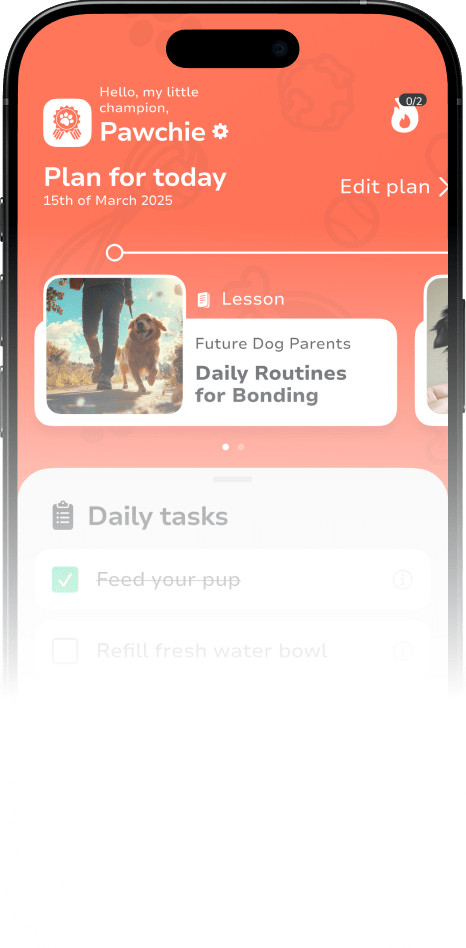
As a bonus, PawChamp app can help you stay organized with daily training tips, potty schedules, checklists, and expert-backed advice.
Why Routine Matters To Avoid Potty Accidents
Dogs really like their routines. It's a good idea to stick to by-hour feeding, potty breaks, and playtime every day. If you commit to it, your dog will pick things up faster.
Knowing that dogs' bodies respond to patterns makes it easier for you. A consistent routine with exact times for feeding, play, naps, and potty breaks will be your biggest helper in training not just behavior but also your dog's internal clock.
So, while the early days may feel messy and chaotic, you're really teaching your dog a healthy, predictable rhythm. Once that clicks, potty training gets a whole lot easier.
How to Potty Train a Puppy: Smart Training That Works
Potty training starts with timing. Everything gets easier once your dog knows what to expect and when to go out. A regular schedule helps the body learn the rhythm, and that's what leads to real progress.
When to Take Your Dog Out
Puppies under 6 months need lots of breaks throughout the day—about once an hour during active times. You'll also want to take them out:
First thing in the morning
After every meal
After naps
After play
Before bedtime
And for very young puppies up to 3 months, once or twice during the night
Crate training for potty training is one of the most effective ways to teach bladder control. Puppies don't like to go where they sleep, so an appropriately sized crate encourages them to hold it until it's time for a break. Just be sure you're giving them a chance to go out often enough.
💡 How often should a puppy go potty?
At least every 1–2 hours to start.
If you're using puppy pad training, place the pad near the door to help your dog connect "I need to go" and "I should head outside." Later, you can remove the pads altogether and go fully outdoors. And remember, the best time to take a puppy outside is before they seem desperate. Stay ahead of their needs, and you'll see faster results.
If you want to help build a custom schedule, PawChamp ask a dog expert feature allows you to talk to a professional to build a personalized schedule that fits your dog’s needs. You can try it on the web or in the app.
How Feeding Affects Potty Timing
Feeding your dog at the same time each day gives you the upper hand. It makes their bathroom needs more predictable, resulting in fewer surprises and faster training.
Most dogs need to go out about 5 to 30 minutes after eating, so line up potty breaks around those meals. Don't leave food out all day (free feeding), or you'll lose that predictability.
Teaching Your Dog Where to Go Potty
Pick a spot outside and take your dog there every time. Stick with it, even if they wander around at first. Leash training for bathroom breaks helps more than people expect. It keeps your dog focused, especially in new or distracting environments. It also helps them understand the difference between potty time and playtime.
Once you are at the right spot, use the same phrase each time—like "go potty"—and reward your dog right after they finish. Quick feedback is key here. They may not connect the dots if you wait too long to praise or give a treat.
Don't interrupt with excited praise while your dog is still going. Wait until it's done, then calmly reward. If you're using the PawChamp dog training, you'll get personalized tips for rewarding at the right time and building the habit consistently.
The Signals Your Dog Needs to Go
Dogs usually give you clues before they have an accident—you just have to learn what they look like. Keep an eye out for:
Sniffing in circles
Pacing or whining
Walking toward the door
Suddenly disappearing into another room
If you're not sure… take them out. It's better to overdo it in the beginning than clean up another mess on the carpet.
Puppy housebreaking methods always include observation. Even if you're using puppy pad training, you'll want to stay alert and help your dog build the habit of heading to one spot when nature calls.
What If You Work Full Time? PawChamp Training Solutions
Potty training becomes more challenging when you're gone for 6–8 hours a day, but it's still totally doable. You can even become a pro puppy parent if you plan for support and set your dog up for success.
Here are some practical options:
Hire a midday dog walker to take your pup out for a quick break.
Ask a neighbor or friend to step in during the early training phase.
Use a playpen with a puppy pad area so your dog has a designated spot, because it will not hold it all day.
Crate your puppy for shorter stretches, then gradually build up time as they grow and gain control.
Use Paw Champ to track training progress and make adjustments based on your dog's everyday behavior. Use promo BLOGDOG to get 30% off any subscription plan. Cancel anytime.
It's also helpful to front-load potty training on weekends or days off. The more practice you give your puppy early on, the more confident and reliable they'll be when you're away.
What to Do When Accidents Happen
Even with a solid schedule and some structure in place, puppy accidents are just part of the deal—especially during those first few days. Rather than feeling down, try to see these moments as part of your learning journey. Here's how to react without reversing your progress.
Redirect with Positive Reinforcement Dog Training
If you see your dog doing it, gently stop it with a gentle clap or a calm "uh-uh" and lead it out. There's no need to scold or punish it if it's already walked away. It won't know why you're unhappy, and it can even become nervous about using the restroom in front of people.
At PawChamp, we focus on positive dog training in everything we teach. It's all about concentrating on what you want your dog to learn rather than punishing it for what it hasn't quite mastered yet. Accidents happen; it's just part of the journey. What really counts is keeping a cool head, sticking to good habits, and adjusting your routine if something isn't quite right.
Over time, with some consistency and a little positive reinforcement, your dog will progress—and you'll strengthen your bond.
Clean It Right
Cleaning goes beyond just looking good—it's really about tackling those persistent smells, too. Dogs tend to go back to places that still have that urine scent, even if we can't smell it ourselves. Use an enzymatic cleanser that eliminates scents at their source.
If your puppy keeps doing its business in the same spot, instead of just cleaning it up, think about blocking off that area or taking them outside more often. PawChamp puppy training can help you figure out how to stop those repeat accidents by changing your setup and routine.
Common Puppy Potty Training Challenges (And How to Handle Them)
Every dog has a few rough spots during potty training. Here are some of the owners' most common challenges—and practical, positive ways to fix them.
Peeing Right After Coming Inside
Some dogs get distracted while outside, forget to potty, and only remember once they're back in the house. It's frustrating, but it's fixable.
Stay outside a little longer and limit distractions. Use a clear potty cue like "go potty." Don't start playtime until they've gone—consistently reward outside, and only outside, to reinforce the habit.
Peeing in the Crate
This usually comes down to one of three things:
a crate that's too big,
too much time between breaks,
or a puppy who isn't ready to hold it yet.
Make sure the crate is just big enough for your dog to lie down and turn around—not enough space to pee in one corner and sleep in the other. Avoid crating right after meals or water; always take it out before bedtime. These are key elements in crate training for potty training.
Regression After Progress
It can feel disheartening when your puppy starts having accidents after weeks of success—but don't panic. Regression is a normal part of development, especially during growth spurts, stress, or changes in routine.
The fix? Go back to basics. Reintroduce more frequent potty breaks, tighten your schedule, and celebrate every win. This is where positive dog training really shines: instead of punishing setbacks, we respond with consistency and patience.
Potty Training an Older Dog
Just because a dog is older doesn't mean they can't learn new habits. In fact, many adult dogs catch on faster than puppies once they understand what's expected.
The method is nearly identical: clear routines, praise after every success, and smart crate use when appropriate. Crate training for potty training works just as well for adults—it just might take a bit of unlearning if they've never had a consistent routine before.
Outdoor potty training is ideal, but if you're transitioning from puppy pad training, take things slowly and reward heavily for using the right spot. With tools like Paw Champ training, you can tailor your potty training plan based on your dog's age, history, and current habits.
How PawChamp Dog Training Makes Puppy Potty Training Easier
Potty training can feel like a full-time job—but you don't have to handle it solo. PawChamp gives you the tools and support to make the process smoother, less stressful, and (dare we say) even rewarding.
Here's how we make it easier:
Structured daily routines that fit your dog's age and potty needs
Trainer-approved guidance for crate use, puppy pads, and outdoor potty training
Practical tips that work—even if you're juggling work, kids, or a busy schedule
A kind, positive training approach that helps your dog feel confident and safe
From the first accident to that big "aha moment," PawChamp is here to help you and your dog succeed—step by step.
Bottom Line
Just keep in mind that you don't need to figure it out on your own. Having Paw Champ by your side means you have expert advice, practical solutions, and the comfort of knowing you're on the right track.