The tiny dog who lunges at a Great Dane, guards the sofa like a fortress, and barks at every doorbell — small dog syndrome is real to anyone who's lived with it. But here's the twist: it isn't a personality your dog was born with. It's a set of learned habits, often accidentally encouraged, which means it can be unlearned. Let's unpack the signs, the surprising causes, and a kind, practical way to bring the calm back.
Key Takeaways
Small dog syndrome is a set of learned habits, not a fixed personality.
Common small dog syndrome signs include barking, guarding, and pushiness.
It's usually caused by how we handle small dogs, not by their size.
The “Napoleon complex” is more myth than science.
Positive, consistent training reliably turns the behavior around.
What Is Small Dog Syndrome?
Small dog syndrome, sometimes called little dog syndrome, is a cluster of pushy, over-the-top behaviors seen in some small breed dogs. It isn't a medical diagnosis — it's a behavior pattern we describe when a little dog acts like the boss of everything.
Crucially, it's learned. That's good news, because anything learned can be reshaped.
Signs of Small Dog Syndrome
The small dog syndrome symptoms owners notice most tend to cluster together:
Nonstop alarm barking — the reason why small dogs bark so much comes up so often.
Growling, snapping, or guarding to get their way, a form of small dog aggression.
Refusing to walk, demanding laps, and ignoring cues.
Wired, can't-settle energy that explains why small dogs are so hyper.
Seen together, these are small dog syndrome signs — not a personality your dog is stuck with.
🐾 Trainer's insight
Watch what gets rewarded. If a bark or a growl reliably makes the scary thing go away — or earns a cuddle — your dog learns it works. Small dog behavior problems are usually just habits we accidentally paid for.
Why Do Small Dogs Act Big?
Here's the honest answer to why small dogs are so aggressive: it's rarely the dog, and mostly us. Without meaning to, we tend to train it in:
Scooping them up mid-tantrum instead of letting them cope.
Laughing off growls we'd never allow from a Labrador.
Skipping the socialization big dogs get by default.
Skipping the training and rules, so small dogs are harder to train becomes a self-fulfilling worry.
In fact, a large 2021 study tied small body size to a higher chance of aggression toward people — and found owners tend to train and socialize small dogs far less than big ones.
Do Small Dogs Have a Napoleon Complex?
It's tempting to blame attitude and leave it there. But science doesn't back a tiny-dog ego.
So do small dogs think they're big, or do small dogs have napoleon complex energy? Not really — the napoleon complex in dogs is mostly a myth. Little dogs react to fear and to habits we've reinforced, and the same goes for why are chihuahuas so aggressive: it's handling and history, not delusions of grandeur.
If your pocket-sized dog runs the household, the answer isn't a firmer hand — it's a plan built for small dogs and their big feelings.
Take a quick quiz and get a positive plan tailored to small breeds — built to replace barking and bossiness with calm confidence.
How to Fix Small Dog Syndrome
Here's how to stop small dog syndrome — and how to fix small dog syndrome that's already set in — without a single harsh method:
Treat them like a dog, not an accessory: four paws on the floor, walking on their own feet.
Socialize gently and often, so the world feels smaller and safer.
Teach the basics — how to train a small dog is the same as any dog: small dog training and small dog obedience training with rewards.
Stop rewarding the pushy stuff, and reward calm instead.
Keep the rules identical for everyone in the house.
Fold in a few core essential obedience commands, stay consistent, and the bossiness fades faster than you'd expect.
🤔 Think about
We'd never let a 40-kilo dog jump on guests or guard the couch, yet we laugh it off in a five-kilo one. Holding little dogs to the same kind, clear standards isn't strict — it's the fairest thing you can do for them.
How PawChamp Right-Sizes Training for Small Dogs
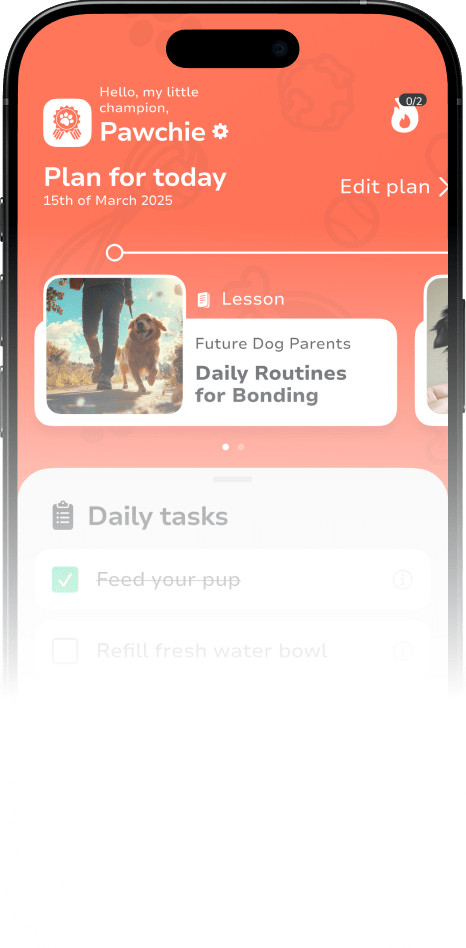
Small dogs don't need less training — they need training built for them, and that's what PawChamp delivers. Instead of long drills, it leans on short daily routines that teach one clear message: calm behavior pays.
You'll start at home, learn to catch the early signs of escalation, and build a take-anywhere plan that swaps barking, lunging, and pulling for confidence — all with positive reinforcement, never intimidation.
Bottom Line
Small dog syndrome isn't destiny, and it isn't a Napoleon complex — it's a bundle of learned habits you can gently rewrite. Treat your little dog like a dog, stay consistent, and reward calm. The confident, easy companion under all that bluster is very much there.