Nothing embarrasses more than your dog suddenly deciding your friend's leg is the love of their life. As awkward as dog humping can be, it's actually one of the most common and misunderstood canine behaviors. Contrary to popular belief, dogs don't just hump because they're "horny." In many cases, humping is linked to excitement, stress, frustration, overstimulation, or simply not knowing how to regulate big feelings.
Puppies, neutered dogs, females - everyone does it! It can also happen to anyone and everyone. Sometimes, your leg just becomes an unfortunate target. Understanding why it happens is the first step toward addressing it without panic, punishment, or outdated dominance myths.
Is Dog Humping Harmless or a Habit You Should Stop?
Short answer: occasional humping isn't dangerous. Especially when the behavior doesn't pair with other undesirable behaviors like obsession, aggression, etc. However, letting it continue can turn it into a deeply rehearsed habit, which may be harder to stop. In dogs, any behavior that is difficult to stop when needed can be problematic.
When left unchecked, the behavior may escalate around kids, guests, or other animals. You know you have a problem at hand when your dog starts humping so obsessively that they stop responding to cues and corrections.
As long as you're able to distinguish between harmless silliness and compulsive overstimulation, you're good!
| Behavior | Usually okay? | What to do |
|---|---|---|
| Occasional humping during play or greetings | Yes | Interrupt gently if needed and monitor patterns |
| Humping that stops when redirected | Usually | Teach a calm alternative like “place,” “sit,” or “get a toy” |
| Humping around guests or kids | Needs management | Create space, interrupt early, and prevent rehearsal |
| Humping that is frantic or hard to stop | No | Reduce arousal and start structured training |
| Sudden obsessive humping | No | Rule out medical causes with your vet |
| Humping paired with aggression or fixation | No | Get professional support before it escalates |
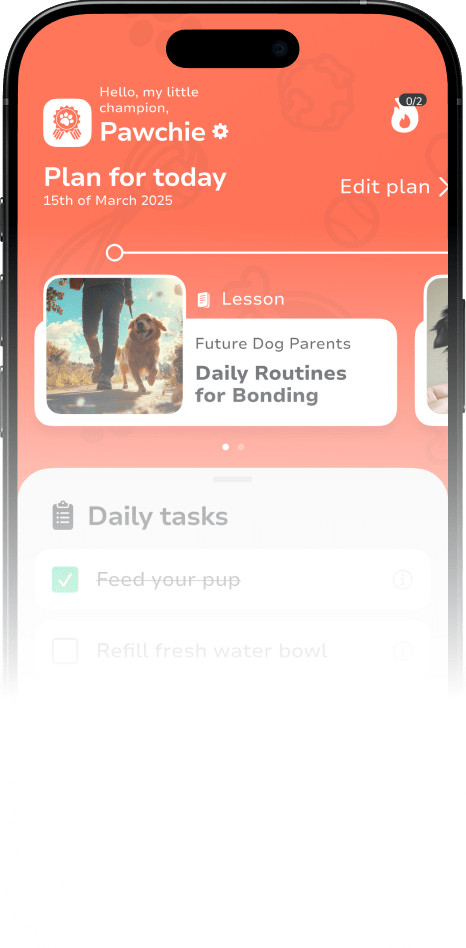
If the same trigger keeps showing up — guests, play, kids, leash frustration, or chaotic environments — that pattern is useful information. PawChamp can help you turn that pattern into a training routine instead of reacting only after the humping starts.
5 Reasons Your Dog’s Humping Your Leg
While humping can look ridiculous and deeply inconvenient during family gatherings, the behavior actually reveals a lot about your dog's emotional state. Before you try to stop the behavior, ask one question: what changed right before the humping started?
Was there a guest, loud noise, rough play, a barrier, a dog in heat, or a sudden burst of excitement? That moment usually tells you more than the humping itself.
Here are some of the most common reasons human legs may become unfortunate victims.
Overstimulation And Excitement
This is one of the most common reasons why dogs resort to humping human legs. Experiences like greeting someone, zoomies, playtime etc are highly exciting for dogs. Many of them get so excited that they don't understand where to put all of that excitement. Hence, humping becomes an outlet. Ever seen a toddler get overstimulated after a sugar rush? Sort of like that.
Trainer's tip:
Watch for buildup signs BEFORE humping starts. Frantic movement, barking, inability to settle are common tell tale signs.
What to do instead:
Call your dog away before they make contact
Scatter a few treats on the floor to shift them into sniffing
Cue "place," "sit," or "get your toy"
End chaotic play before your dog tips into overarousal
Stress And Anxiety As a Trigger
Humping can be a way for many dogs to relieve stress. Conflict, tension, loud environments, or uncertainty may end up leaving a dog stressed. This is when they resort to displacement behaviors (such as humping, holding something in their mouth, etc) as a way to self soothe.
💡 Tip:
Remember: your dog may appear excited while humping. Don't let that confuse you.
What to do instead:
Lower the intensity of the situation
Give your dog space from the trigger
Use a calm voice and predictable movement
Redirect to chewing, sniffing, or a quiet resting area
Frustration And Impulse Control In Dogs
Some dogs hump as a way to release pent-up frustration, especially when they have no other outlet to do so. If you notice your dog resorting to humping anytime there is a barrier, leash frustration, or they're unable to access play (with a toy, human, or dog), it may very well be out of frustration.
There are 3 things you could do to prevent frustration-based humping:
Teach them how to regulate their impulses better
Impulse control games outside triggering moments matter more than corrections during the behavior
Recognize what causes frustration and have a plan ready
Sexual Motivation: The Common Cause
This is the most commonly assumed reason yet the least common root cause.
"Arousal" in dogs just means their nervous system is highly activated. Excitement, stress, frustration, chaos, overstimulation, nervous energy, all fall under that umbrella.
A truly sexually motivated dog also comes with some context along with the behavior, such as excessive licking, pelvic thrusting that looks focused, intact, presence of a dog in heat and in rare cases, menstruating women (although this usually just contributes to clinginess).
Habit: Why Fixed Dogs Still Hump
This is the primary reason why some dogs, even after being spayed or neutered, continue humping. In several cases, rehearsed behavior becomes automatic. Some dogs also develop compulsive arousal loops. Eg, dogs crated with pillows and plushies may get habituated to humping those as soon as they're crated.
🌟 Trainer tip:
Always rule out medical issues if a behavior suddenly spikes or becomes obsessively compulsive.
Call your vet if humping starts suddenly or appears with:
Frequent licking of the genital area
Changes in urination
Restlessness or discomfort
Skin irritation
Pain when touched
A sudden increase in obsessive or repetitive behavior
How to Interrupt the Behavior Before It Gets Weird
The number one step to discouraging any behavior is to find the root cause. Yelling or firm corrections with a dog that is humping out of stress will only make the behavior worse. On the other hand, comforting a dog that is humping to seek attention will only encourage the dog to continue.
Boundary setting is crucial. How it’s done depends entirely on the reason for humping, the dog’s personality, previous training, and the relationship you share with your dog. Use leash guidance, call-away cues, scatter feeding, toys, and sniffing. A method will work depending on the situation and what motivates the dog.
Focus on reducing arousal levels through decompression walks. Many humpy dogs are chronically overstimulated. Ask yourself, “How much sleep did my dog get?” If the answer is not “Ample”, you have another potential reason. Place training, settle work, mat training, and impulse control games are all ways to teach, reward, and reinforce calmness heavily.
🌟 Tip:
You can’t just fix or eliminate a behavior. You need to replace it with a better coping strategy.
How PawChamp Helps?
Humping usually improves when you stop treating it as one embarrassing behavior and start treating it as a pattern: trigger, arousal, rehearsal, response. PawChamp helps you work through that pattern with structured, reward-based training you can use at home.
In the app, you can practice:
Impulse-control skills for dogs who hump when excited
Calm greeting routines for guests and family members
Mat settling or “place” work for dogs who need an off switch
Redirection skills like toy retrieval, hand target, or calm reset
Ask a Dog Expert support if you’re unsure whether the behavior is stress, habit, hormones, or something else
PawChamp does not replace a vet check if the behavior is sudden, obsessive, or paired with signs of discomfort. But it can help you build the daily structure that prevents humping from becoming your dog’s default coping strategy.
In Conclusion
Dog humping is usually not dominance, disrespect, or “bad behavior.” It is often a sign of excitement, stress, frustration, habit, or emotional overload. The best fix is to identify the trigger, interrupt early, and replace humping with a calmer coping skill your dog can repeat. Calm redirection, better emotional regulation, enrichment, and impulse-control training work better than punishment. A dog who can settle, disengage, and respond to cues is not just easier to live with — they are also more comfortable in their own body.