Un minuto tu perro está durmiendo feliz; al siguiente, está pegado a tus tobillos como una sombra peluda. Si sigues preguntándote, “¿por qué mi perro está tan pegajoso de repente?”, estás en buena compañía. Un perro pegajoso usualmente te está diciendo algo — no está portándose mal. Aquí te contamos qué está pasando realmente y cómo ayudar a tu perro a sentirse seguro otra vez.
Consejos clave y aprendizajes
La versión rápida antes de profundizar:
Un perro tipo velcro que te sigue a todas partes usualmente busca consuelo, no está siendo difícil a propósito.
El comportamiento pegajoso repentino en perros casi siempre tiene un disparador — un cambio, un sentimiento o una necesidad de seguridad.
La pegajosidad y la ansiedad por separación no son lo mismo, y diferenciarlas cambia cómo respondes.
La edad, la salud y grandes cambios en la vida pueden ser el detonante.
La solución es suave: construir seguridad y confianza tranquila — nunca castigar la necesidad de atención.
Perros tipo velcro y comportamiento necesitado: qué significa realmente “pegajoso”
No toda cercanía es un problema. Los perros son animales sociales, y muchos fueron moldeados para estar cerca de nosotros.
El término perro velcro describe a un perro que quiere estar en la misma habitación que tú todo el tiempo — siguiéndote de la cocina al sofá y hasta la puerta del baño.
Se vuelve un comportamiento necesitado cuando esa cercanía se convierte en angustia: lloriquea cuando te alejas, bloquea las puertas o tiene problemas para calmarse aunque no haya nada malo. Un poco de seguimiento es normal y tierno; es la versión ansiosa la que merece una mirada más profunda.
¿Por qué mi perro está tan pegajoso de repente?
Cuando el cambio es rápido, casi siempre hay una razón. Así que si te preguntas por qué mi perro está tan pegajoso de repente, empieza por lo que ha cambiado — en su mundo o en el tuyo.
Los perros leen nuestras rutinas y estados de ánimo con atención, y el comportamiento pegajoso repentino suele ser su forma de decir, “algo se siente diferente — quédate cerca.” Es el clásico momento de “mi perro no me deja solo”, y usualmente tiene una causa clara.
Después de una mudanza o un bebé nuevo: pegajosidad por grandes cambios
Pocas cosas alteran tanto a un perro como un cambio en casa. La pegajosidad después de una mudanza es muy común — olores nuevos, sonidos nuevos y no tener un mapa familiar puede hacer que un perro busque la única constante en la que confía: tú.
De igual forma, la pegajosidad después de la llegada de un bebé suele tomar por sorpresa a los dueños; la rutina cambia de la noche a la mañana, y tu perro busca seguridad mientras todos se adaptan. Dale estructura y paciencia, y la mayoría de los perros se calman a medida que lo nuevo se vuelve normal.
Edad y pegajosidad en perros mayores
A veces la causa es simplemente el tiempo. La pegajosidad en perros mayores puede venir de la pérdida de vista o audición, articulaciones doloridas o la ligera confusión que puede llegar con la edad — todas razones por las que un perro senior puede quedarse más cerca por seguridad.
Si un perro que antes era independiente se vuelve hiperpegajoso de repente, vale la pena hacer un chequeo tranquilo de su comodidad y bienestar. Atender esa necesidad con tranquilidad es mejor que ignorarla.
Pegajosidad vs. ansiedad por separación: cómo diferenciarlas
Aquí está la diferencia que lo cambia todo. La esencia de la ansiedad por separación en perros frente a la pegajosidad es lo que pasa cuando realmente te vas: un perro pegajoso prefiere tu compañía pero se las arregla cuando te vas, mientras que un perro con ansiedad por separación entra en pánico.
Los verdaderos problemas de apego se muestran como angustia genuina al quedarse solo — no solo preferir compañía. Si tu perro está tranquilo una vez que sales por la puerta, probablemente estás lidiando con pegajosidad: el extremo más suave y solucionable del espectro.
🐾 Consejo
Graba a tu perro durante diez minutos después de que te vayas. Que se calme en pocos minutos indica apego; el pánico continuo señala que se necesita un plan más lento y dedicado.
Cómo corregir el comportamiento pegajoso del perro — con suavidad
El objetivo no es querer menos a tu perro — es ayudarlo a sentirse seguro solo. Aquí te decimos cómo corregir el comportamiento pegajoso sin añadir estrés:
Recompensa la independencia tranquila: cuando tu perro se calme a unos pasos de distancia, elógialo o dale un premio en silencio por esa elección.
Crea un lugar de “calma” — un tapete o cama que signifique “pasan cosas buenas cuando me relajo aquí.”
Practica salidas cortas: sal de su vista por segundos, luego regresa antes de que empiece a preocuparse, y poco a poco alarga el tiempo.
Añade enriquecimiento — paseos para olfatear, comederos de rompecabezas, entrenamiento suave — para que el cerebro de tu perro tenga una tarea más allá de vigilarte.
Mantén los saludos y despedidas tranquilos, para que ir y venir sea aburrido, no dramático.
Para un cachorro pegajoso, empieza estos hábitos temprano; la independencia que construyas ahora previene preocupaciones mayores después.
Si la pegajosidad es realmente por conexión, la solución no es menos cariño — es el tipo correcto. Unas preguntas rápidas pueden mostrarte exactamente dónde está el problema.
Responde unas preguntas rápidas y PawChamp crea un plan de vínculo suave y basado en la ciencia que ayuda a tu perro a sentirse seguro para calmarse — sin quitar el amor.
¿Cómo ayuda PawChamp?
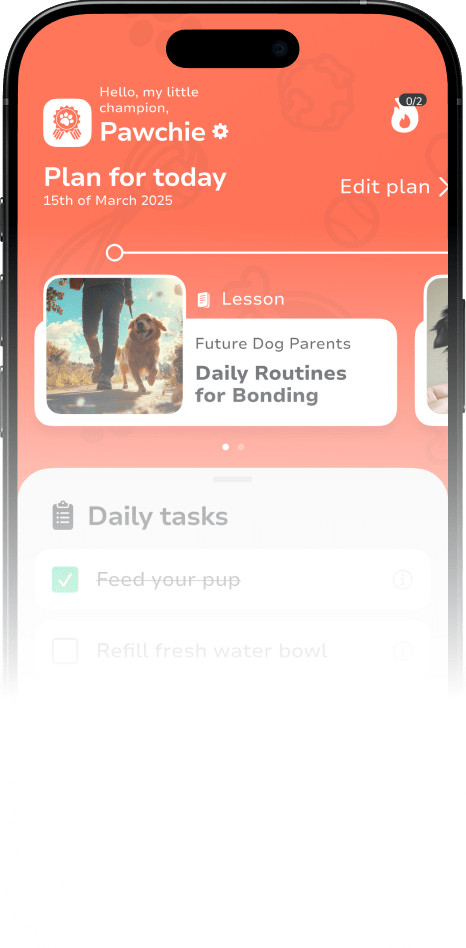
PawChamp trata la pegajosidad como una cuestión de conexión, no de disciplina. Comienza con un breve cuestionario sobre cómo tu perro busca atención y cómo tú respondes, luego crea un plan personalizado: ejercicios paso a paso para fortalecer el vínculo y la confianza, seguimiento del progreso para que puedas ver cómo tu perro se relaja semana a semana, y un chat de Pregunta a un experto en perros para los momentos en que tengas dudas.
Cada paso usa métodos suaves basados en recompensas — para que tu perro aprenda que está seguro incluso cuando no estás a su alcance.
Todo lo anterior está en un solo lugar — listo cuando tú lo estés.
Conclusión
Una sombra repentina generalmente no es un problema para regañar — es una señal para entender. Encuentra el disparador, descarta el pánico de una verdadera ansiedad por separación y construye confianza tranquila con pequeñas victorias diarias. Tu perro pegajoso no necesita menos amor; necesita el tipo que le ayude a sentirse lo suficientemente seguro para relajarse. Comienza hoy con un paso calmado y tranquilizador.