If you've ever wondered why some dogs learn new cues in days while others take weeks, the answer often comes down to timing — and that's exactly where clicker training changes the game. A simple dog training clicker marks the precise second your dog does something right, making learning faster, clearer, and a lot more fun for both of you. It's used by professional trainers, service dog programs, and zoos worldwide for a reason. Here's everything you need to know about clicker training and how to start using it with your own dog today.
Key Takeaways
Clicker training uses a small handheld device that makes a "click" sound to mark correct behavior at the exact moment it happens.
It's a form of positive reinforcement — fast, science-backed, and welfare-friendly.
A dog training clicker works for puppies, adult dogs, and seniors, and across breeds.
It's not magic — it works because of timing, consistency, and clear reward delivery.
Most dogs grasp the basics within a single 10-minute session.
What Is Clicker Training for Dogs?
What is clicker training? At its simplest, it's a method where you use a small mechanical device — a dog clicker — that produces a sharp, consistent click sound. That sound becomes a marker, telling your dog "yes, that's the exact thing I wanted." A treat follows every click, which is what gives the sound its meaning.
The method has its roots in behavioral science from the 1940s and was popularized in dog training by trainer Karen Pryor in the 1980s. What is clicker training for dogs in practice? It's a clear communication system between you and your dog, replacing vague verbal praise with precise feedback.
🔍 Fun fact:
Clicker training was originally developed for marine mammals — dolphins and orcas at SeaWorld and similar facilities. Trainers needed a way to mark behavior from a distance, since they couldn't physically reach the animals to reward them.
The clicker itself isn't magic. It's the precision it gives you. Clicker training for dogs removes the lag between behavior and reward, which makes learning dramatically faster and reduces confusion.
How Does Clicker Training Work?
So how does clicker training work on a practical level? It works through a process called classical conditioning — pairing a neutral sound (the click) with something your dog already values (a treat). After enough repetitions, the click alone becomes meaningful, and your dog understands that the click predicts a reward.
The structure is simple: behavior happens → click the exact second it occurs → deliver the treat within 2–3 seconds. Clicker training dogs works because the click is faster and more consistent than human voice, which naturally varies in tone, volume, and timing.
💡 Tip:
Always click first, then reach for the treat — never click and grab the treat at the same time. The click must be the clear marker, separate from the reward delivery.
Once your dog associates the dog training clicker with reward, you can start shaping more complex behaviors. The click marks tiny pieces of progress along the way, which is why this method is so effective for teaching tricks, agility, and even service dog tasks.
How to Start Training a Dog With a Clicker?
The first step in training a dog with a clicker is called "charging the clicker." This is where you teach your dog that the click sound means a treat is coming. It usually takes a single 5–10 minute session.
Here's how to do it:
Sit somewhere quiet with your dog and a handful of small, high-value treats.
Click once, then immediately give a treat.
Wait 3–5 seconds. Click again, treat again.
Repeat 15–20 times, varying your position so your dog doesn't expect the treat to come from one spot.
End the session when your dog reacts to the click by looking at you expectantly.
That's it — your dog now understands what the clicker for dog training means. Clicker training dogs for beginners can start applying it to real behaviors after this single foundation session.
The click is information, not pressure. It tells your dog "you got it right" — never a command or correction.
Tired of training methods that rely on correction or punishment? PawChamp builds your dog's plan around science-based, force-free techniques.
Is Clicker Training Good for Dogs and Is It for Every Dog?
Is clicker training good for dogs? For the vast majority, yes. It's a force-free, science-backed method that works with how dogs naturally learn. The American Veterinary Society of Animal Behavior and most modern trainers strongly recommend reward-based methods like this one.
There are a few situations where adjustments are needed. Aggressive dog training is one of them — clicker work can be used, but only as part of a broader behavior modification plan run by a certified behaviorist. Highly sound-sensitive dogs may also need a softer marker, like a verbal "yes" or a quieter click.
💡 Tip:
If your dog flinches at the click sound, muffle the clicker inside a pocket or use a quieter clicker model — many come with adjustable volume.
For most dogs, including puppies, seniors, and rescues with unknown histories, clicker training offers a clear, low-stress way to learn new behaviors.
Clicker Training for Puppies: Where to Begin
Clicker training puppy sessions should be short, fun, and frequent. Puppies have short attention spans, so 3–5 minute sessions 2–3 times a day work much better than one long session. Start with the basics: sit, look at me, name response, and recall.
Good dog training tips for puppies include keeping sessions before meals when treats feel more valuable, using soft treats they can swallow quickly, and ending each session before they lose focus. Clicker training dogs for beginners with a puppy is one of the most effective ways to build a confident, attentive adult dog.
Puppies between 8–16 weeks old are in their primary learning window — clicker training during this period produces some of the fastest results you'll ever see in a dog.
Why Clicker Training Is Bad: Addressing the Myths
Despite its strong reputation, you'll occasionally see articles claiming why clicker training is bad. Most of these arguments come from misunderstandings rather than actual flaws in the method.
The most common myths are:
"Dogs become dependent on the clicker." False — clickers are used to teach new behaviors, then phased out once the behavior is reliable.
"It only works with treats." False — once behaviors are learned, you can rotate rewards (toys, play, real-life rewards).
"Clickers are gimmicks." False — peer-reviewed research has shown that marker training produces faster and more durable learning than verbal markers alone.
So is clicker training good for dogs? Yes, when applied correctly. The dog training clicker is simply a precision tool — and like any tool, the value depends on how well it's used.
Clicker Training Tools and Tips for Beginners
The good news: dog training tools for clicker work are cheap and minimal. You only need a clicker, treats, and a quiet space to start. Most basic clickers cost under $5 and last for years.
Here's a quick beginner toolkit:
A standard box dog clicker or button clicker with adjustable volume
A treat pouch or apron with easy-access pockets
Small, soft, high-value treats (about pea-sized)
A short, low-distraction training space for first sessions
Clicker training dogs for beginners doesn't require a class, app, or expensive gear. What it does require is consistency — short, daily sessions beat long, occasional ones every time.
💡 Tip:
Keep your clicker on a wristband or lanyard so it's always ready. The biggest reason beginners fail is being unprepared when the perfect moment to click happens.
How PawChamp Helps With Clicker Training Your Dog?
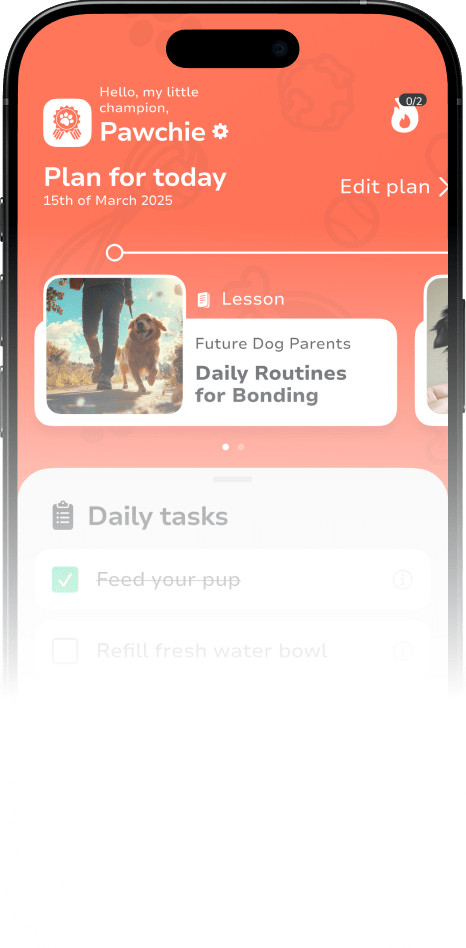
Knowing the theory is one thing — applying it in real-time, with the right timing and structure, is what separates good training from frustrating training. PawChamp gives you a step-by-step guide, designed by certified trainers. Here's what you get with PawChamp:
Progress tracking so you can see how quickly your dog masters each new behavior.
Daily training plans tailored to your dog's age, breed, and skill level.
Ask a Dog Expert chat for those moments when your dog stops responding or you're not sure what to click for next.
Take a quick quiz today and get a personalized training plan built around your dog's learning style.
Bottom Line
Clicker training is one of the fastest, clearest, and most science-backed ways to teach your dog new behaviors. It works because of precise timing — not because the clicker itself is magic. Whether you're training a puppy, a rescue, or a senior dog, this method builds clear communication and trust. Start with a single charging session, keep your sessions short, and stay consistent. Most dogs grasp the basics within days.