Inteligente, leal y lleno de energía — un pastor alemán te dará todo, si le das estructura. Si buscas consejos para el entrenamiento de pastor alemán y te preguntas cómo disciplinar a un perro de la manera correcta, aquí está el cambio de mentalidad que lo cambia todo: la disciplina no es castigo. Para las razas de trabajo, es claridad, consistencia y liderazgo tranquilo — y es así como se forman los perros excelentes.
Consejos clave y aprendizajes
Disciplina significa estructura y consistencia — nunca castigo o intimidación.
Las razas con alta energía prosperan con reglas claras, tareas diarias y liderazgo tranquilo.
El entrenamiento basado en premios desarrolla la concentración más rápido que la fuerza.
El trabajo mental cansa a un perro de trabajo tanto como el ejercicio físico.
Un perro protector puede ser confiado y tranquilo — no reactivo — con el plan adecuado.
Lo que realmente significa “disciplina” para las razas de trabajo
Olvídate del viejo consejo de “muéstrale quién manda”. La guía moderna sobre cómo disciplinar a un perro se trata de enseñar, no de castigar — establecer expectativas claras y premiar las elecciones correctas hasta que se vuelvan hábito.
Y cómo establecer liderazgo con tu perro no tiene nada que ver con la dominancia; se trata de ser la fuente tranquila y constante de cosas buenas y dirección clara en la que tu perro pueda confiar. Para una raza poderosa e inteligente, esa claridad es un regalo — les dice exactamente cómo tener éxito.
Entrenamiento de pastor alemán: construyendo concentración y obediencia
Pocas razas son tan gratificantes para enseñar. ¿Son fáciles de entrenar los pastores alemanes? En general, sí — son muy inteligentes y tienen muchas ganas de trabajar, por eso un buen entrenamiento de pastor alemán canaliza esa inteligencia en lugar de dejarla ociosa.
¿Cómo entrenar a un cachorro de pastor alemán?
Empieza temprano, empieza con suavidad. Cómo entrenar a un cachorro de pastor alemán se basa en la socialización, sesiones cortas basadas en premios y juegos de control de impulsos desde el primer día.
Las primeras victorias son las que más importan para construir concentración en perros con alta energía: un cachorro que aprende a hacer contacto visual contigo se convierte en un adulto que se enfoca bajo presión.
Entrenamiento de otras razas de trabajo y guardianes
Los mismos principios aplican para las razas de gran tamaño y carácter fuerte. La mayoría de los consejos para entrenar rottweiler siguen la misma estrategia que se utiliza con el pastor alemán — socialización temprana, consistencia y mucho trabajo mental.
Lo mismo aplica para el entrenamiento de cane corso y cualquier guía sólida para pitbulls: liderazgo tranquilo y estructura basada en premios ganan siempre. Cuando se trata de cómo entrenar a un perro guardián, el objetivo es un perro confiado y selectivo, no desconfiado de todo lo que se mueve.
Una rutina diaria estructurada para perros de trabajo
Las razas de trabajo no solo toleran la rutina — la anhelan. Una rutina estructurada de entrenamiento canino le da forma al día de tu perro: comidas predecibles, entrenamiento, ejercicio y descanso.
Construye una rutina diaria para perros de trabajo y verás cómo los comportamientos “problemáticos” desaparecen, porque un perro con un trabajo tiene menos razones para inventar uno.
Los mejores comandos y estimulación mental
El cuerpo y la mente necesitan trabajo. Los mejores comandos para perros de trabajo van más allá de sentarse y quedarse — piensa en lugar, junto, llamado y un alto de emergencia.
Combínalos con estimulación mental para razas de trabajo como juegos de olfato, comederos de rompecabezas y entrenamiento de trucos para cansar realmente esa mente activa.
Canalizando energía y construyendo calma
La energía no es el enemigo — la energía no gastada sí lo es. Aprender a canalizar la energía de un perro en salidas estructuradas (traer con reglas, tira y afloja con la orden "suelta", paseos de olfateo) convierte el caos en concentración.
Luego enseña el lado opuesto: cómo entrenar a un perro para que esté tranquilo premiando el comportamiento calmado, para que tu perro aprenda que "suelta" también es una habilidad.
La estructura vence a la fuerza siempre — especialmente con un perro inteligente y con mucha energía. Unas pocas preguntas rápidas lo convierten en un plan día a día.
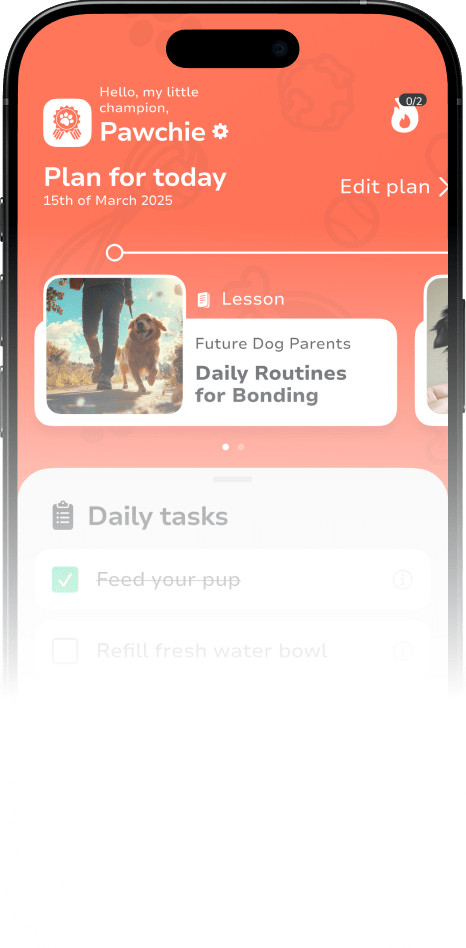
Responde unas preguntas rápidas y PawChamp crea un plan estructurado, día a día, que convierte la energía de tu perro en concentración y calma — basado en premios, nunca en fuerza.
Entrenando a un perro protector sin fomentar la agresión
La protección es una característica, no un defecto — si se maneja bien. La clave es la confianza sobre la sospecha: mucha socialización, exposición tranquila a nuevas personas y lugares, y premiar el comportamiento relajado, para que tu perro aprenda que el mundo es mayormente seguro y que puede buscar señales en ti.
La clave para cómo entrenar a un perro protector se reduce a unos hábitos consistentes:
Socializa temprano y con frecuencia — exposición tranquila y positiva a nuevas personas, perros y lugares construye un guardián estable y confiado.
Premia la calma, no la reactividad — marca y premia el comportamiento relajado cerca de los desencadenantes, para que la estabilidad sea la norma.
Construye un llamado confiable y una orden de “lugar” sólidas — un perro protector que hace contacto visual contigo es uno que puedes redirigir.
Mantente tranquilo y claro — tu energía estable le dice a tu perro que no hay nada que escalar.
Nunca practiques la agresión — evita juegos de “guardia”; un perro confiado y bien socializado es el protector más confiable.
Nunca entrenes la agresión a propósito; un perro estable y bien socializado es mejor compañero y protector más confiable.
¿Cómo ayuda PawChamp?
PawChamp ofrece a los dueños de razas de trabajo la estructura que buscan — sin tener que adivinar qué hacer. Un breve cuestionario sobre la raza, edad y energía de tu perro crea un plan personalizado, día a día: ejercicios paso a paso que aumentan la concentración y el control de impulsos, seguimiento del progreso para mantener la rutina constante, y un chat de Pregunta a un experto en perros para esos momentos de alta energía en los que no sabes cómo redirigir.
Es estructura, no fuerza — disciplina tranquila basada en premios que tu perro realmente puede seguir.
Todo lo que tu perro de trabajo necesita, en un solo lugar.
Conclusión
Los perros de trabajo excelentes no nacen obedientes — se forman con estructura, claridad y liderazgo tranquilo. Olvida el castigo, apuesta por la rutina y el adiestramiento canino para pastor alemán basado en recompensas, y dale a ese cerebro brillante un trabajo. Haz eso, y tu perro con alta energía se convierte en el compañero constante y enfocado por el que la raza es famosa. Comienza hoy con una sesión estructurada.