A golden retriever puppy is equal parts sunshine and chaos. All that friendliness comes wrapped in big energy, a mouth that wants to hold everything, and a body that keeps growing long after the brain catches up. If you've ever been knocked flat by a golden who just wanted to say hi, you already know the real challenge isn't “sit.” The good news? Goldens are eager to please, so learning how to train a golden retriever is genuinely fun — in the right order. Here's the step-by-step.
Key Takeaways
Golden retriever training works best when you channel the breed's energy, not fight it.
Start with connection and name focus before piling on commands.
Keep sessions short and rewards small — five good minutes beats twenty frustrating ones.
Potty and crate routines prevent most early-life stress and accidents.
The real challenge is big-dog manners, and that's where a structured routine pays off.
Understanding Golden Retriever Behavior
Before the how-to, it helps to know why your puppy acts the way they do. A few breed traits shape your whole golden retriever training plan:
Boundless energy that needs a real daily outlet.
A soft retriever mouth that wants to carry — and nibble — everything.
Deep people-focus that makes them eager to please.
Slow maturity, staying puppy-brained until two or three years old.
Read these as strengths to channel rather than problems to suppress, and much of the work does itself.
Golden Retriever Puppy Training, Step by Step
Start with connection, not commands — teach your puppy that checking in with you pays off, then layer skills in this order:
Name and focus: say the name, reward eye contact.
Core cues: sit, down, and a happy recall.
Loose-leash basics and gentle, calm handling.
Keep sessions short and rewards small. The best training treats for golden retriever puppies are pea-sized, low-calorie, and irresistible, so you can repeat often without overfeeding. Learning how to train a golden retriever puppy is really about stacking tiny wins.
Potty and Crate Training Basics
Two setups make daily life smooth. For potty, go out on a predictable rhythm — after sleeping, eating, and playing — and reward the second they finish outside; that's the fast track to how to potty train a golden retriever puppy.
For rest, golden retriever puppy crate training works best when the crate is a cozy den, never a punishment. A simple golden retriever crate training schedule — nap, potty, play, repeat — prevents accidents, and our new puppy checklist covers the gear that helps.
🐾 Trainer's insight
Goldens hit a “teenage” phase around 6–18 months when the recall you nailed as a baby suddenly evaporates. Don't panic and don't get tough — go back to easy wins, keep rewards high-value, and it comes back stronger.
Raising a Well-Mannered Big Dog
Here's the part new owners underestimate. Sit and down are the easy bit; the real test comes at full size. Because goldens are big dog breeds, small habits become big ones fast — and among the best dog breeds for training though they are, size means manners matter more, not less.
At full size, the everyday stuff is what trips owners up:
Launching at guests instead of greeting calmly.
Towing you down the street on the leash.
Struggling to settle and switch off indoors.
Over-arousal or mouthing that can send worried owners searching for dog aggression training.
In a happy, well-raised golden that last one is almost always play, not true aggression — though loop in a professional if it ever worries you, and head off the usual puppy behavior problems early. None of this needs a dozen random fixes; it needs one structured manners routine that turns big energy into calm, reliable behavior.
🌟 Fun fact
That soft golden mouth isn't a flaw — it's the breed's retrieving heritage. With a little training you can turn it into a party trick, like carrying the mail or fetching a toy on cue, instead of a chewed-shoe collection.
How PawChamp Turns a Bouncy Golden Into an Easy Companion
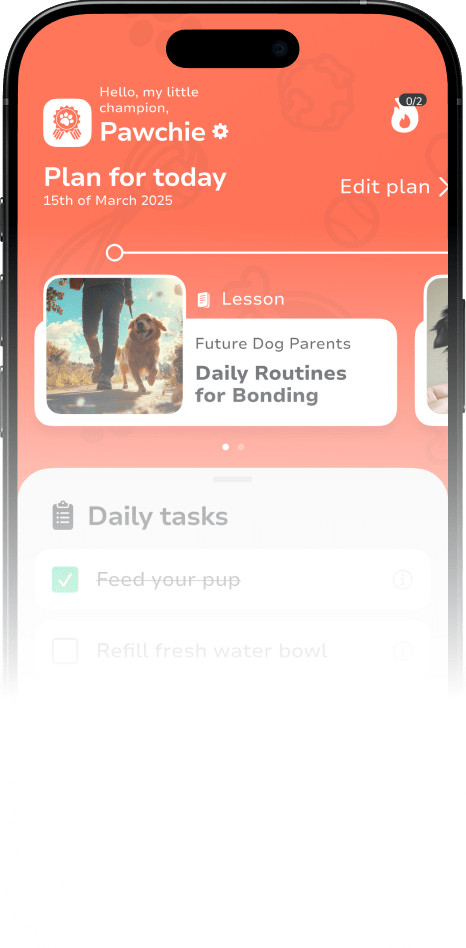
A golden's size is exactly why structure beats scattered fixes, and the Big Dog Manners Routine inside PawChamp turns the whole plan into short daily sessions you'll actually finish:
Door manners and calm greetings, so guests aren't met by a flying 30-kilo hug.
Loose-leash and focus work that ends the tug-of-war on walks.
Settling on cue — the off-switch that makes a big dog genuinely easy to live with.
Progress tracking, plus the Ask a Dog Expert chat for when your pup throws a curveball.
It's positive, paced, and built to grow with your dog — so the bouncy puppy becomes the easy adult everyone assumes goldens simply are.
If you want that calm, easy-to-live-with adult dog without inventing a plan from scratch, this is exactly what PawChamp's Big Dog Manners Routine was built to do.