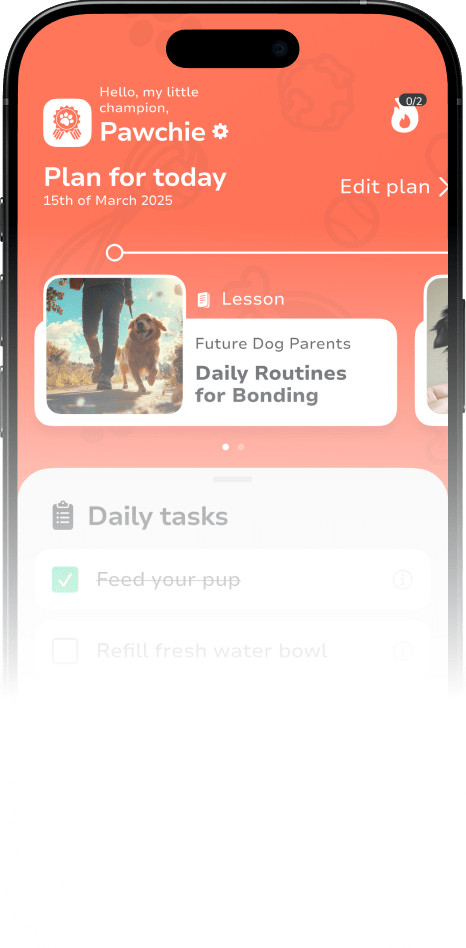
As the temperatures heat up, getting in the pool is starting to look more and more tempting. But wouldn’t it be fun if our dogs could join us in the water? Would they even want to join us in the water? This article discusses the different factors we should consider when introducing our dogs to swimming. As with anything in this world, there are many not-so-safe protocols people use to do this. But we want to provide a few considerations that can make this process less stressful for everyone.
Key Takeaways
Swimming can be a really fun activity to do with our dogs, but it’s imperative that they want to participate.
Before exposing our dogs to water, we want to make sure they know where and are able to use the entrance/exit is.
Trying to lead a dog directly to the water may create more hesitation than just moving and playing around the water.
The PawChamp app offers a variety of games that can be really helpful to build before going on the trip. Once there, encouraging our dogs to play these games (instead of focusing on the water) can help show them they don’t need to be afraid.
When trying to teach our dogs to swim, it’s helpful to remember that there’s no set of rules we must follow. The most important factor is that we’re (both us and our dogs) having fun together!
Can All Dogs Swim? What to Know Before You Start
Can all people swim? Swimming is a skill, very much like riding a bike. While everyone’s style may look different, if someone is physically capable of swimming and wants to learn, they absolutely could.
The same applies to dogs, but it’s essential that we understand what it looks like when they want to learn. And it’s also essential, especially if they are afraid of water, that we allow them to leave at any time while we are teaching them.
Breeds That Naturally Swim vs. Breeds That Need Extra Support
Some dogs are bred to be the best swimmers with their webbed toes and water-resistant coats, such as the Portuguese Water Dog and the Newfoundland. Other dogs may not look very water-dynamic. Although my corgi did love to swim, watching those short stubs paddle in the water was the best therapy. Regardless of whether you have a naturally bred swimmer or not, it’s never a bad idea to get your dogs used to wearing a dog life jacket.
How to Teach a Dog to Swim Step by Step
Swimming is a very dynamic activity. It’s much easier to guide our dogs to the water and let their bodies do the work, instead of trying to teach them exactly how to extend each leg in a doggy paddle. When introducing our dogs to water, it’s important that they know where the ramp, stairs, or entry is located and know how to use it. The feeling of water can be jarring, especially if their only exposure has been baths. This experience could quickly become unsafe for everyone if our dogs didn’t know how to or were prevented from escaping this really weird experience.
Introducing Your Dog to Shallow Water
There’s no textbook procedure that is taught to introduce our dogs to swimming, because every dog is different. Some dogs might want to run straight towards the water without any hesitation. Others might need a little encouragement. For those who need encouragement, progress can happen quicker if you play or hang out near the water, versus putting effort directly into getting them in the water.
💡For example:
Playing fun treat games next to the pool entrance might pique their curiosity more than making a treat path straight into the pool.
Building Confidence with Positive Reinforcement
A 2021 study by Casey et al. confirms what trainers have been saying since the 1990s. Dogs that are trained with positive reinforcement are a lot more willing to make attempts to participate in training sessions than dogs that are trained aversively.
What this means when it comes to teaching a dog to swim is that they are more likely to learn and want to continue to participate when they have the choice to enter the water at their own pace. Even though we know swimming is fun and can be really helpful to cool down the body on a hot day, our dogs will avoid water at all costs if they have a history of being forced into the water.
This is the same principle every game in the PawChamp app is built on. Nothing is forced, everything is choice-based, and your dog sets the pace — which is exactly what builds the kind of willing participation that makes swimming click.
How to Help a Dog Scared of Water Feel Safe
One of my favorite techniques to help dogs feel less fearful about their environment is playing games. It helps to know what games that particular dog likes to play, whether it’s more fetch-based, tug-based, or even chase. I start by playing near the water to gauge if the dog is even concerned, which is evident by how many times they look at the water instead of the game we’re playing. If the dog I’m playing with avoids the water more than once while we’re playing, then I might add distance so avoidance doesn’t become part of the game.
Not sure which games your dog lights up for? This is where a little prep pays off. The PawChamp app can help you figure out whether your dog is more of a fetch, tug, or chase player, and build those games up at home first — so when you're near the water, you already have a fun, familiar activity in your back pocket.
There are a few reasons I’m not rushing into swimming lessons, especially with a fearful dog. Swimming comes with risks, and I need my dog to trust that I will listen to their concerns. Using peer pressure to urge them to go into the scary water doesn’t create the trust I’m looking for.
Dog Swimming Safety: Life Jackets, Beaches, and Pools
The process I just described is a lot easier to do with the local creek on your nature walk. Or even a small stationary body of water can be less overwhelming than a beach with waves. It’s hard to describe the vastness of the ocean without being there to see the endless horizon. Such a foreign environment can make it really difficult for our dogs to want to listen or even play with us. When our dogs are so overwhelmed by the information from their surroundings that they aren’t able to hear us, my typical response (if it’s safe to do so) is to just be there with them as they take everything in.
For this reason, it can be beneficial to prepare for a beach trip by training our dogs to comfortably wear their life jacket before we go. The options are endless when it comes to what kind of life jacket we’d like for our dog. Some qualities to consider when choosing a life jacket are buoyancy (more buoyant for rougher waters), location of emergency handles and D-ring for leashes, and how it fits. Just like with harnesses, we want to make sure our dog’s life jacket doesn’t impede their movements at all.
Train Calm Water Behavior With the PawChamp App
There are so many games on the PawChamp App that can be helpful in building communication we’d be able to use on a beach or pool trip. The “Green Light, Red Light” game gets our dog used to moving with us, which could be really helpful when playing parallel to the water! Teaching our dogs the “Go Back and Find It” or “Retrieve” games could be really fun with floating objects. Asking our dogs to go back and get an object out of very shallow water can create the gradual exposure we’re looking for. As long as our dogs are happily participating in a controlled manner (whatever that means for our dog), we can bring any skills practiced at home on the trip with us.
How PawChamp Helps?
When we go to a public area, it’s really difficult to give our dogs 110% of our focus. To make the experience easier, we can let PawChamp’s 24/7 expert assistance walk us through a preparation plan designed around how much mental bandwidth we have. If we only have the bandwidth for five-minute life jacket training sessions 2 to 3 times a week, they can help us with that plan. If we have a baby pool where we can practice, they can help us create a plan to get our dogs used to water before we even leave for the trip!
Bottom Line
Any activity we can do with our dogs is more fun than an activity without our dogs. Although we’ve all experienced how annoying activities that our dogs don’t want to participate can be. All of these activities can be stress-free with just a little bit of preparation. If you are in the process of preparing for a trip and you’re exhausted, let the PawChamp app do some of the thinking and planning for you. Instead of worrying about how our dogs are going to handle a new experience on top of everything else we’re planning, let’s let PawChamp help us direct that energy into making it easier for everyone.
Reference
1. “Dogs are more pessimistic if their owners use two or more aversive training methods | Scientific Reports”. 2021. https://www.nature.com/articles/s41598-021-97743-0