Humping is one of the most misunderstood dog behaviors. It’s right up there with “he did it because he feels guilty.” And yet, a dog would confidently perform it without a thought in front of, or on, your guests.
Dogs hump for a variety of reasons: hormones, excitement, frustration, arousal, stress, and so on. Naturally, if a behavior has so many potential root causes, there have to be multiple ways to deal with it.
This article will help you with practical management. PS: we don’t do outdated “alpha dog” tips.
Key Takeaways
More often than not, dogs hump based on who is more exciting in the moment rather than who they like the most.
Humping can be a coping mechanism in dogs.
When it comes to stopping a dog from humping another dog, your best bet is to intervene right before the dog is about to hump.
A simple, clear “No” that interrupts the interaction is often enough. If that doesn’t work, physically separate the dog with a leash.
Training and management are your two main ways to deal with this issue around kids.
Spaying or neutering won’t do much if the humping is driven by excitement, arousal, stress, or frustration.
How Does A Dog Choose Who To Hump?
Dogs never randomly choose their targets. They pick them based on opportunity, excitement, or their emotional state. If they’re playing with a high-energy dog, they may choose to hump because movement triggers arousal. On the other hand, some dogs may target more submissive or nervous dogs because there is less pushback.
When it comes to people, dogs are more observant than we give them credit for. At times, they may go for people who unknowingly encourage excitement through high-pitched voices, exaggerated hand movements, or intense play. Kids can also become an easy target because they move unpredictably and don’t enforce boundaries consistently.
More often than not, dogs hump based on who is more exciting in the moment rather than who they like the most.
What Triggers Dogs To Hump?
Dogs typically hump when their emotions are running high and they have no idea what to do with that energy. Some common triggers include:
Stress or anxiety
Excitement during greetings
Frustration during play
Overstimulation during play
Hormones/sexual maturity
Habitual behavior
Zoomies, rough play, and chaotic environments can also cause emotional overload in dogs, which may further make them want to hump. It’s a coping mechanism some dogs use, also widely known as displacement behavior.
Dica para o treinador:
If you’re googling “how to stop my dog from humping” before you know “why my dog is humping?,” the change needs to start with you!
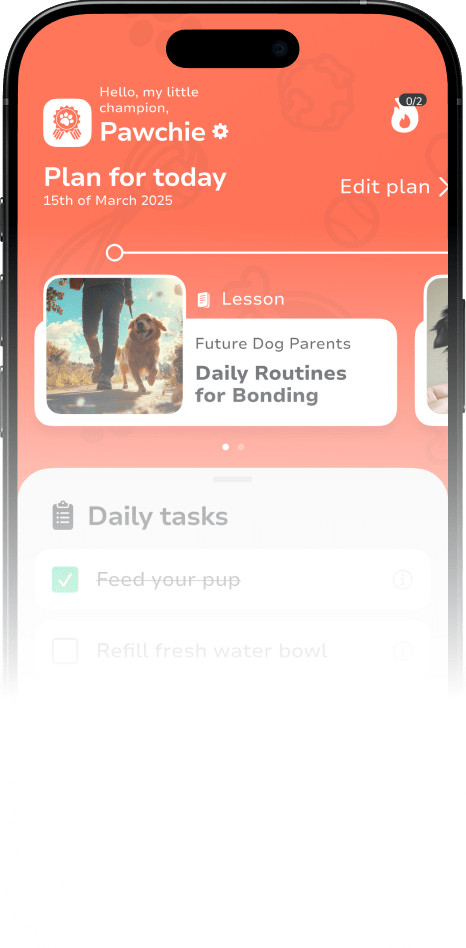
If you’re not sure which trigger is driving your dog’s humping, don’t guess. In the PawChamp app, you can follow a short, step-by-step plan that helps you identify the most likely cause (arousal, stress, frustration, hormones, habit) and shows you what to do before the behavior starts, not after it escalates.
Is Dog Mounting A Sign Of Dominance?
The alpha and dominance theory belongs exactly where it was relevant: in the past. Modern canine behaviorists have largely moved away from the idea that dogs hump to dominate. While social tension may play a role once in a while, humping is far more likely to happen due to arousal, stress, excitement, habit, or sexual behavior.
Furthermore, “dominance” as a concept is very fluid in dogs. One dog may appear more assertive during a certain kind of play, while the same dog may back off during another kind of interaction. Trying to show your dog who’s the boss through harsh corrections often backfires because it can increase stress and confusion, which may worsen the behavior.
♨️ Hot take:
Dogs are usually not plotting social takeovers. Most are just emotionally dysregulated in that moment.
How Do I Stop My Dog From Humping Other Dogs?
When it comes to stopping a dog from humping another dog, your best bet is to intervene right before the dog is about to hump. Watch your dog’s body language closely during play. If you see any of these signs, be ready to intervene:
excessive fixation
stalking
over-arousal
nonstop chasing
ignoring social cues
In general, dogs are excellent at giving social cues that signal to other dogs to back off. These signals include moving away, growling, lip-lifting, turning away, and barking. If the humping dog respects those signals, intervention may not be necessary. However, if the dog keeps pursuing despite warnings, step in immediately because repeated pressure can escalate into a fight in no time. Use the leash to separate the dogs or completely remove your dog from the situation.
Dog-on-dog humping can escalate fast when one dog keeps ignoring “back off” signals. PawChamp experts help you spot the early pre-hump pattern and practice interrupters + replacement behaviors so you can step in earlier and keep play safe.
How Do I Stop My Dog From Humping Other People?
Most dogs exhibit predictable behaviors before humping, such as:
intense sniffing
pawing
rubbing
circling
overexcitement during greetings
The key is to interrupt the predecessor and not the actual behavior itself. A simple and clear “No,” interrupting the interaction, is usually enough. If that doesn’t work, physically separate the dog with a leash.
Once you’ve successfully stopped or prevented the behavior, redirect them to a Sit, down, place, and have them retrieve a toy or engage in any other incompatible behavior.
Waiting for the person’s reaction to correct or stop the behavior is a rookie mistake. Some people may laugh, while some may get annoyed. Remember that repeated repetition of humping strengthens the habit.
How Do I Stop My Dog From Humping Kids?
Kids are a goldmine of excitement and unpredictable movements. Dogs learn quickly that kids are easier to get away with humping because children don’t always stop the behavior effectively.
💡 Tip:
Training and management are your only two ways to deal with this issue around kids.
Here are five tips to remember when supervising interaction between kids and dogs that are likely to hump:
supervise interactions closely
interrupt arousal early
avoid chaotic play
train neutrality around excitement
teach the dog and kids to respect each other’s boundaries
Correction alone won’t solve the problem if the dog continues to stay in a hyped up state around kids.
How Do I Stop My Dog From Humping Me?
When dealing with a dog that humps you, consistency matters more than intensity. If you scold and yell one time and laugh out loud the next time, your dog ends up learning that the outcome of the behavior is exciting and unpredictable. This, in turn, will worsen the behavior.
The second the dog attempts to hump, interrupt immediately and enforce a clear boundary in a way that comes naturally to you. A firm No is what works best for me. If the behavior persists, I use a leash to create distance or remove access.
Avoid laughing, pushing playfully, or turning it into a game because many dogs interpret that as engagement.
At the end of the day, dogs repeat behaviors that are reinforcing to them in some way. If your reaction fuels excitement, play, or arousal, the humping may continue.
Does Spaying Or Neutering Stop Humping?
Some dogs’ humping behavior is driven primarily by hormones and sexual needs. This is the only time spaying/ neutering may help curb the behavior. That too, only if the behavior has not turned habitual yet. If a dog has rehearsed humping for several months, regardless of the reason, the dog is likely to continue humping even post surgery.
Spaying or neutering won’t do much if the humping is driven by excitement, arousal, stress, or frustration. Training and management are still important.
☝️ Remember:
Hormones may start the behavior, but repetition is often what keeps it alive long after the hormones are gone. Make sure to consult a behavioral vet before spaying or neutering your canine.
How PawChamp Helps&
Humping is rarely a “one fix” problem because the trigger changes with context: greetings, play, kids, stress, or simple overstimulation. PawChamp helps you reduce the guesswork by turning it into a clear routine you can follow in real life.
Inside the app, you can work through short, step-by-step training that builds impulse control, teaches compatible behaviors like “place” and “calm settle,” and shows you how to interrupt early without escalating your dog.
In Сonclusion
Um cão que se enrosca não está a ser maroto ou mau. Está apenas a tentar comunicar. Tentar resolver o problema das carícias sem perceber porque é que o seu cão o faz é como colocar um penso rápido sobre o problema. Observe os padrões, os estímulos emocionais e as situações sociais antes de reagir. Com consistência e consciência, a maioria dos cães pode aprender melhores formas de lidar e interagir.