Você vai até a cozinha pegar uma bebida e acaba com a meia molhada. O cachorro fez xixi no chão... de novo.
Definir expectativas adequadas para as necessidades de banheiro do nosso cachorro — incluindo quanto tempo ele pode segurar o xixi — significa considerar alguns fatores, sendo a idade um dos principais. Lembre-se, porém, que um pequeno Yorkshire tem necessidades de banheiro diferentes de um Dogue Alemão, não importa a idade.
Outros fatores que influenciam as pausas são o nível de atividade do seu cachorro, a ingestão de água, se ele fica animado ou estressado em ambientes novos/diferentes e, é claro, questões médicas ou efeitos colaterais de medicamentos.
Principais conclusões
A maioria dos cães adultos saudáveis consegue segurar o xixi por cerca de 4-6 horas durante o dia
Filhotes precisam de pausas frequentes: "idade em meses + 1" é o tempo máximo aproximado, mas quando estão acordados, normalmente é a cada 30-90 minutos
Cachorros de porte pequeno geralmente precisam sair com mais frequência do que cachorros de porte grande
Cães sênior podem precisar de pausas extras à noite e, às vezes, de uma ida ao banheiro durante a madrugada
Xixis muito longos podem indicar que estão segurando por tempo demais. Aumente as pausas e depois estenda o intervalo de 5-15 minutos
Não restrinja a água para evitar acidentes, a menos que o veterinário recomende
Por quanto tempo os cachorros podem segurar o xixi: Cães adultos
Muitos cães adultos saudáveis podem ser treinados para segurar a bexiga de forma confortável por 4-6 horas durante o dia, mas o controle da bexiga pode variar.
Muitos problemas de xixi dentro de casa começam quando a rotina é tecnicamente possível, mas não realista para o cachorro. Se você quer uma rotina que se encaixe com dias de trabalho, espaço físico e níveis de energia reais, o Curso de Eliminação Inadequada da PawChamp orienta você pelos básicos do treino de banheiro para cada ambiente e pelas ferramentas de prevenção que reduzem acidentes enquanto você retoma a consistência.
Mas só porque seu cachorro pode segurar por 12 horas, não significa que ele deva segurar todo dia, o dia todo, enquanto está acordado. Assim como a gente, o organismo dos cachorros desacelera durante o sono (digestão, respiração etc.), então as necessidades mudam quando estão mais ativos.
Se você tem dúvida sobre quantas vezes os cachorros fazem xixi por dia, muitos adultos urinam diversas vezes — a frequência no banheiro depende da ingestão de água, rotina e saúde.
💡 Dica:
Conforme seu cachorro se torna adulto, ele pode conseguir dormir a noite inteira sem precisar acordar às 3h da manhã (ufa!).
Para garantir que o cão adulto continue bem, inclua pausas para banheiro nos cachorros assim que possível após:
hora de acordar de manhã
soneca
brincadeiras ou exercícios vigorosos
refeições
grandes goles de água
Treino de banheiro para filhotes: por quanto tempo eles conseguem segurar o xixi?
Cachorros jovens são bem diferentes e, dependendo de como foram criados na ninhada e de sua raça, alguns filhotes terão mais facilidade que outros.
💡 Aqui está um guia rápido para treino de banheiro de filhotes para lembrar:
A idade do seu filhote em meses + 1 = # de horas que ele pode segurar a bexiga
Assim, um filhote de 3 meses geralmente deve conseguir segurar por até 4 horas. (3+1 = 4)
No entanto, quando estiverem acordados, filhotes devem sair a cada 30-90 minutos (melhor manter os sapatos por perto!), especialmente nas primeiras semanas em casa com você. O sono vai estender esse tempo, mas prepare-se para algumas noites sem dormir, levando seu filhote para fora uma ou duas vezes durante a noite.
Aqui está um quadro que você pode colar na geladeira e usar como guia conforme seu filhote cresce:
Pausas de banheiro para cães sênior: qual é o máximo?
À medida que nossos grandes companheiros começam a ficar com o focinho grisalho, é importante considerar que suas necessidades de banheiro podem mudar, especialmente conforme envelhecem ou caso tenham problemas de saúde.
O envelhecimento, em geral, pode reduzir o tônus muscular e a mobilidade, o que afeta o controle da bexiga do seu cachorro e a rapidez para chegar ao lado de fora. Medicamentos e problemas de saúde podem influenciar o quanto seu cachorro bebe de água, fazendo com que precise de mais pausas para banheiro.
Veja alguns ajustes que você pode fazer para garantir que seu cão sênior continue indo para fora de maneira confortável:
1. Mais pausas para banheiro — principalmente à noite e, assim como filhotes, podem precisar de uma saída extra durante a madrugada.
2. Facilite o caminho para fora — pense em rampas e em deixar seu cão mais perto da porta durante o dia.
3. Tapetes antiderrapantes — nada de pisos escorregadios para atrapalhar os peludos de prata no caminho para o banheiro!
Se seu cão sênior começou a precisar de mais pausas para o banheiro, geralmente não é "esquecendo o treino". Na maioria das vezes, são mudanças na mobilidade, desconforto ou alteração no padrão de sono. O Curso de cuidados com cães sênior da PawChamp ajuda você a entender as mudanças, identificar sinais de dor cedo e ajustar a rotina para que as idas ao banheiro fiquem mais fáceis e as noites mais tranquilas.
Sinais de que seu cachorro está segurando xixi por tempo demais (e o que fazer a respeito)
Se você leva o cachorro para o banheiro e percebe que ele faz um xixi muito demorado, isso pode ser sinal de que ele está segurando por tempo demais. A solução simples para isso é aumentar a frequência das pausas para banheiro. Com o sucesso, você pode começar a aumentar o intervalo entre as saídas de 5 a 15 minutos até voltar ao normal.
Procure um veterinário se perceber sinais como:
O cachorro tenta urinar, mas sai bem pouco (diferente do comportamento de marcação) — geralmente junto com inquietação, andar de um lado para o outro ou choramingar durante o passeio ou em casa.
Se seu cachorro já está treinado há tempos, mas você percebeu mudanças ou acidentes recentes.
Qualquer gotejamento ou vazamento no chão ou na caminha enquanto eles dormem.
Rotinas saudáveis de banheiro
Aqui está uma rotina simples de banheiro que promove a consistência para o seu cachorro.
Lembre-se: se você tem um cachorro jovem ou sênior, ele pode precisar de pausas muito mais frequentes. Filhotes e cães mais velhos se beneficiam de alguém checando-os durante o seu expediente, sempre que possível.
Caso isso não seja possível, talvez seja necessário criar uma estação de banheiro para o seu cachorro. Isso pode ser tão simples quanto um local com tapete higiênico em um cômodo de fácil limpeza, ou até mesmo aqueles sistemas de grama sintética disponíveis no mercado!
Mitos comuns sobre o comportamento de banheiro
Existe muita gente bem-intencionada dando conselhos por aí. Aqui estão as três frases que mais ouço quando o assunto é pausas e treino de banheiro.
Mito # 1:
Se conseguem segurar o dia inteiro, está tudo bem.
Fato: Talvez consigam, mas será que é confortável? Além disso, forçar regularmente o limite de tempo que seu cachorro pode segurar pode ter efeito contrário.
Mito # 2:
Fazer xixi mais vezes significa que não estão treinados
Fato: Esse pode ser o ritmo normal, a quantidade de água consumida, idade, empolgação, estresse ou questão de saúde.
Mito # 3:
Restringir água para evitar acidentes
Fato: Restringir a água pode ser perigoso. A menos que indicado pelo veterinário, cachorros devem ter acesso livre à água limpa.
Como a PawChamp ajuda no treino de banheiro e acidentes dentro de casa
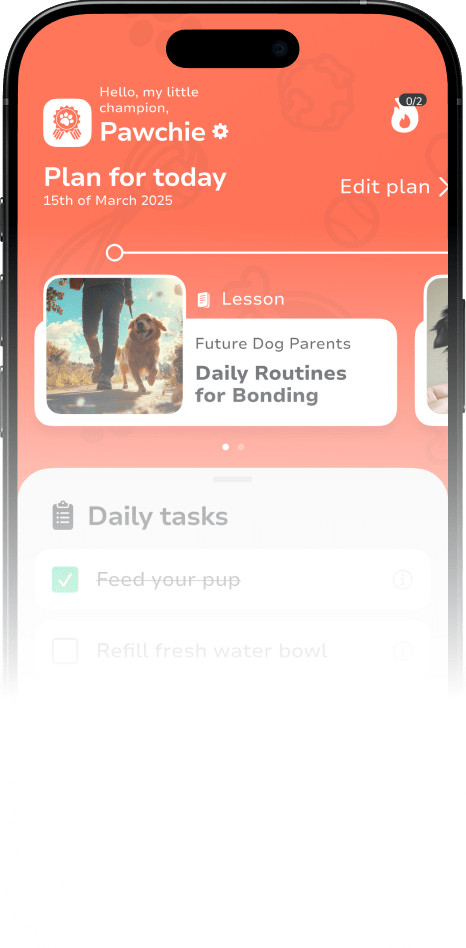
Treino de banheiro pode ser frustrante porque o progresso parece aleatório. Um dia dá tudo certo, no outro aparece uma poça surpresa. O PawChamp ajuda o transformando os intervalos para uso do penico, as rotinas e a prevenção de acidentes em um plano simples e personalizado que pode ser seguido sem suposições, quer você esteja criando um filhote, gerenciando uma agenda de trabalho agitada ou ajustando-se às necessidades variáveis de um cão idoso.
Veja como fazer:
Um plano de treino de banheiro estruturado para ajudar você a programar as pausas em torno de gatilhos do dia a dia, como acordar, cochilos, refeições e brincadeiras
Dicas por faixa etária para filhotes, cães adultos e cães sênior, para que suas expectativas correspondam ao controle de bexiga do cachorro
Soluções claras para acidentes de eliminação inadequada, incluindo orientações sobre o que fazer após os acidentes e o que evitar para não reforçá-los sem querer
Ideias práticas de prevenção para quando não for possível sair com frequência, incluindo adaptações de banheiro interno e manutenção do progresso ao longo do tempo
Suporte de especialistas por meio de consulte especialistas em cães quando você não souber o motivo dos acidentes ou quiser ajuda para ajustar a rotina
Minhas considerações finais sobre pausas para banheiro e treino de banheiro como especialista
Lembre-se: nossos cachorros não fazem xixi dentro de casa de propósito e têm poucas formas de comunicar que precisam ir ao banheiro. O treino de banheiro dos cachorros é, na verdade, nossa responsabilidade em nos esforçarmos para ajudá-los a ter sucesso.
Quando houver um acidente, apenas limpe, leve o cachorro para fora e tente ajudá-lo a ter sucesso da próxima vez.
💡 Dica:
Cachorros não sentem culpa (essa não é uma emoção deles).
Então, se seu cachorro está se escondendo ou "com cara de culpa", é porque percebeu seu tom de voz ou linguagem corporal indicando que você está bravo. Como broncas, silêncio excessivo ou fazer barulho ao limpar com o rodo e os produtos de limpeza. Eu sei que treino de banheiro e acidentes dentro de casa podem ser muito frustrantes e você pode até achar que o cachorro "já deveria saber".
Cachorros precisam de consistência, então tente encontrar uma rotina geral que funcione para sua família e para o cachorro como parte dos cuidados diários. Conte com a ajuda de amigo, vizinho, familiar ou passeador para garantir os passeios (frequência de caminhadas) e as pausas para banheiro quando você não puder.