If you’ve ever rushed through the door after work, praying you won’t find a surprise waiting on the floor, you should know that you’re not alone. Most dog owners are caught in the loop of wondering whether their schedule is really working for their dog and quietly, guiltily hoping their dog will just “adjust” instead of having accidents, feeling uncomfortable, or developing health issues.
Before you start blaming your training or “bad habits,” it helps to know what’s actually realistic for canine bladders. PawChamp’s guide on how long can dogs hold their pee breaks it down clearly.
Now, let’s get you to make smarter choices and avoid turning every workday into a guessing game.
Key Takeaways
Most healthy adult dogs can hold their pee for 6-7 hours during the day, but regularly pushing beyond that increases stress and health risks
Puppies typically need to take bio breaks every 2-3 hours. Expecting them to handle a full workday sets them up for accidents
Senior dogs often struggle beyond 4-6 hours due to weaker bladder control and age-related health changes
Daytime holding capacity differs from overnight because activity, food, and water access increase urine production
Diet, water intake, heat, stress, separation anxiety, body size, and breed all affect how long a dog can realistically hold it
If your dog is having accidents, it could very well be a system issue and not stubbornness
Midday support (dog walkers, daycare, routine adjustments) is a necessity when you’re gone 8+ hours
How long is too long?
How long can puppies hold their pee? is generally the question that pops into our heads when that last-minute meeting pops up at 4.45 pm or if we miss the usual train back home. The most common mistake is assuming that if your dog once held it in for 8 hours, they can every single time. This is the mindset that pushes dogs past their comfort zone, slowly creating stress and health risks.
Most healthy adult dogs have great bladder control, but anything beyond 7-8 hours on a regular basis is already stretching it. When it comes to puppies and seniors, I'd say divide that number in half.
What’s the Realistic Holding Time During a Workday?
Before you rely on a number, understand that daytime holding capacity is different from overnight and far less forgiving. The acceptable number of hours varies significantly between puppies, adult dogs, and seniors; and that difference should always guide your decisions.
Adult Dogs and the 8-Hour Workday Reality Check
Healthy adult dogs are capable of mastering their bladder way better than puppies or senior dogs. While their overnight pee-holding capacity is anywhere between 8 and 9 hours, daytime duration works a little differently.
This is because, unlike nighttime, when they’re mostly asleep, during the day, your dog is active. Not only are they engaging in activities dictated by free will, but they also have abundant access to food and water throughout the day. This makes the urge to pee every couple of hours stronger.
💡 Tip:
Generally speaking, healthy adult dogs can hold their pee for 6-7 hours when they’re potty trained. Some may be able to go longer. But just because they can, doesn’t mean they should.
Puppies and Why Full Workdays Can Be a Setup for Accidents
Puppies are not designed to master their bladder at that age. They are naturally more curious than older dogs and tend to move around quite a bit. This tendency not only stimulates their bladder, but also makes holding it far more difficult. Combine that with the fact that they’re just in the midst of being potty-trained.
No matter how hydrated or dehydrated your puppy is, they need to be taken out to pee every 2-3 hours. Increase frequency and shorten durations when they’re physically active.
💡 Remember
Leaving a puppy at home for 8 hours with pee pads everywhere and expecting them to “figure it out” is a recipe for disaster.
Senior Dogs and When Long Gaps Become Risky
As adult dogs transition into their senior years, bladder control often becomes less reliable. Aging brings natural changes, including weaker bladder muscles, reduced kidney efficiency, and increased risk of medical conditions that affect urine control.
How often do dogs need to pee? What used to be an easy 7–8 hour stretch may suddenly become uncomfortable or even painful. For most senior dogs, long gaps between potty breaks become risky beyond 4–6 hours, making more frequent outings or midday breaks essential for their comfort and long-term health.
For a potty-training routine that fits real-world schedules, living situations, and your dog's energy levels, the PawChamp's Potty Reset Challenge offers essential basics for any home. It includes prevention tools to minimize accidents while you establish consistent habits.
Why Some Dogs Struggle More Than Others
A dog’s bladder endurance varies widely based on body size, kidney efficiency, diet, nervous system sensitivity, and daily routine. These biological differences explain why some dogs cope easily while others cannot.
Water Intake, Diet, and Midday Urgency
Your dog’s diet affects their bodies in more ways than we can even think of. A high-protein diet, while it may be ideal for active dogs, may result in increased urine output. The same can be said about moisture-rich meals and foods high in sodium.
Your dog’s water intake is also a big deciding factor. Hot weather days may call for midday urgencies. Puppies, seniors, and dogs with sensitive kidneys are especially affected because their bladder control and filtration systems aren’t as efficient. As a result, they reach their limit sooner and have a harder time holding urine for long periods.
Stress, Separation Anxiety, and Stress-Triggered Urination
When raising an anxious dog, we often come home to pee-soaked couches, beds, or clothes. This is not your dog “being angry at you” but a natural bodily response to stress.
💡 Important
Stress affects dogs’ nervous system and hormones, which makes the body release cortisol and adrenaline.
These hormones spike up heart rate and stimulate kidney function, thereby speeding up urine production. In these cases, the problem isn’t poor training - it’s a nervous system stuck in survival mode.
Small Bladders, Fast Metabolisms, and Breed Differences
It’s a no-brainer that a dog’s breed, body size, and metabolism highly influence your dog’s ability to hold pee while you’re at work. A Chihuahua processes food and water faster and reaches their limit sooner as compared to a Weimaraner. Training has nothing to do with this. If you’re comparing your tiny pupper to your friend’s Labrador, who comfortably holds his pee for 6 hours, you’re setting yourself and your dog up for failure.
3 Solutions for Dogs Who Can’t Make It Through the Workday
If your dog keeps having accidents, it’s not because they’re “being stubborn” - it’s usually because the system isn’t working.
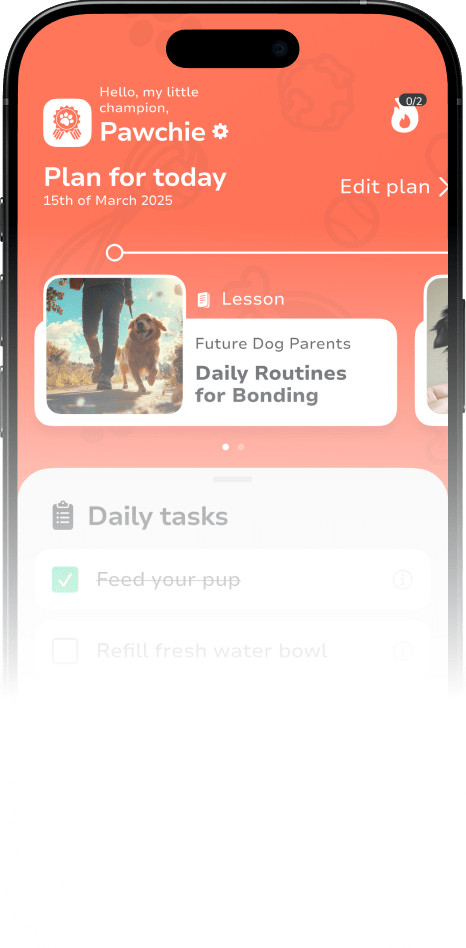
When your system is flawed, all you need is a little help to get it back on track. PawChamp has a track record of helping hundreds of dog owners by showing exactly what to do before, during, and after potty breaks so dogs clearly understand which behavior earns rewards. We remove guesswork from the picture. While training is in progress, we help you focus on smart management to prevent setbacks. And if you’re stuck? The in-app Ask a Dog Expert chat gives you unlimited, 24/7 personalized guidance - yes, even at 2 a.m.
Dog Walkers, Daycare, and Midday Potty Relief
If you’re gone 8+ hours, a midday break isn’t “extra” or “privilege.” It’s basic bladder kindness for your dog. A quick walker visit can save you from daily cleanup duty.
Adjusting Feeding and Water Timing (Without Restricting Water)
Never restrict water, but do avoid salty snacks and late-night feasts. Timing matters more than most people realize.
Indoor Potty Options as Temporary Support, Not Long-Term Fixes
Grass pads and trays are training wheels. They are great for puppies who are in the process of mastering their bladder. Do not treat them as permanent solutions. Don’t let them become a lifestyle.
They will not “get used to it.”
I had once heard a quote on dog training which stuck with me – “Dogs don’t grow out of issues. They grow INTO them.”
Living with and raising a healthy dog for years sometimes feels like a well-oiled machine. They’re highly attuned to your routine and learn to adjust their body clocks accordingly.
But if you’re coming home to pee puddles around the house, expecting them to “get used” to the routine you’re trying to set them up for is not a viable solution. It is wishful thinking that ignores basic biology.
Some dogs may stop signaling or having obvious accidents, but that doesn’t mean they’re coping wel - it often means they’ve learned to suppress the urge. Over time, this can lead to anxiety, health problems, and sudden setbacks. Real solutions come from better routines, support, and management, not forcing a dog to tolerate discomfort silently.