It takes time to learn how to live with a roommate, regardless of if that person is a partner, friend, or stranger who agreed to split the monthly rent. Roommates (who agree to continue living together) learn their own form of communication and compromises that can make life less stressful.
Living with a dog isn't all that different. Except we do have a lot more responsibilities, such as feeding them, making sure they can use the restroom in the appropriate place, and providing activities so they aren't bored.
Key Takeaways
The ways we can help our dogs through emotional times aren't all that different from the ways we would help a human roommate through emotional times. But this does look different in every relationship.
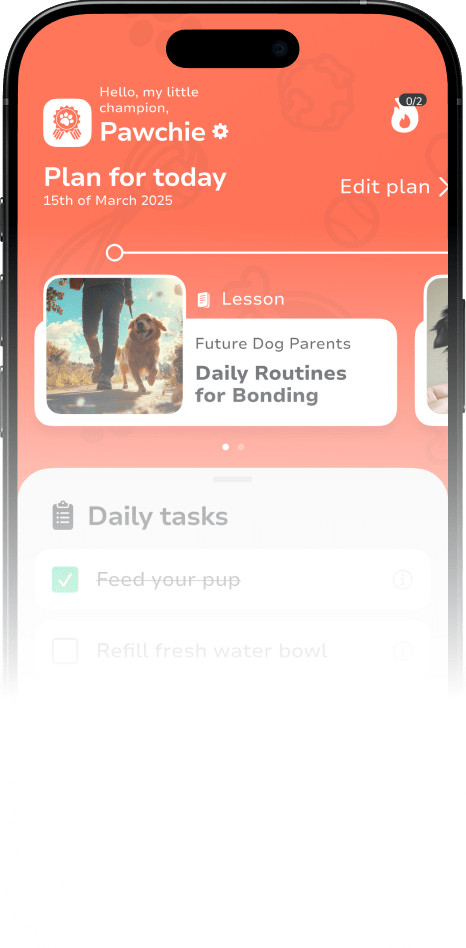
If it seems like building a communication system with our dogs is difficult, PawChamp app offers support through the Behavior Expert's Chat and different step-by-step exercises to work through.
When things are stressful, there are a variety of coping mechanisms we can practice with our dogs. Some may help them exert the energy through movement, and others may help them redirect the energy into puzzle tasks.
Because every relationship (human and dog) is unique, the PawChamp Behavior Expert Chat can be a neutral third party guide if things get difficult.
Understanding the Human-Dog Emotional Connection
It may seem like a large jump comparing the communication between human roommates to the communication between an owner and their dog. Do dogs even have emotions? If so, are they able to even comprehend that we have them too?
Believe it or not, Covid helped us find some answers around these questions. There are a plethora of studies taken across the globe that validated the emotional benefits dogs brought their owners during the Covid quarantine.
Every Relationship Is Different
Living with someone can definitely have its learning curve. Overtime the household forms their own routines. Even though someone might not have grown up putting their dishes in the dishwasher before going to bed, this could be a newly learned skill to prevent future arguments.
Everyone in the household can understand not speaking to a certain member until they've had their cup of coffee in the morning. It may not take more than one AM yelling match to learn how to keep the peace.
Can Dogs Sense Your Emotions?
In the same way we learn how to avoid that roommate before they've had their coffee, living with a dog can have a very similar learning curve. By observing our dogs' behaviors, we can learn to respect our dogs' wishes.
For example, Fluffy may not like her paws touching when she's sleeping, but she loves it when her paws are touched in play. This may seem like a one-sided relationship, where the human must do all the observational work.
🔍 Fun fact
But believe it or not, our dogs are observing our behaviors to learn what we like and dislike as well!
PawChamp Explains Emotional Synchrony Between Owners and Dogs
While it does take time to get to know each other's quirks, there are a variety of exercises and set ups we can use to make the process smoother. PawChamp offers a convenient challenge called the Dog Love and Bonding Challenge, that can guide us over 14 days through the different times and situations where we may be overlooking this communication.
Not only do the challenges help build these skills in the home. But it will also push us to get out of the house with our pups and perhaps think of how they respond to the world a little differently.
How Does Owner Stress and Anxiety Affect Dogs?
Wouldn't it be great if everything was as easy as opening an app, following directions, and alakazam on to the next task? Unfortunately, we don't function as robots though, and we need to make sure we (both us and our dogs) have the bandwidth.
Anyone who has dealt with an anxious dog in the past surely understands how distracting and nearly impossible it can be to try to communicate with them in public.
What Is Dog Anxiety?
This makes the locations we plan on going with our dogs much more significant. Dog anxiety can look like human anxiety with several telltale signs:
An inability to stay still
Increased respiration rate
The occasional scream or bark
If we're unable to provide the support they need during this time, our dogs may escalate their behavior to an intensity that can't be ignored. Does this hypothetical situation sound familiar?
Signs of a Stressed Dog When You're Feeling Anxious
Regardless if it's in public or private, it can be really difficult to stay calm if our dog is not.
💡 Tip
But staying calm during these hectic situations is the best way to calm an anxious dog.
It's very similar to dealing with a human roommate in that aspect. We can help a stressed roommate by listening and helping them get a break or at least some space from whatever is causing the stress. But if we're too anxious and don't have the bandwidth to listen to our dogs, then it is our responsibility to ensure they can at least get a break or some space from whatever is causing them stress.
Dog Behavior Changes Based on Owner's Emotional State
Dogs are looking to us for information as to how to respond in every situation. A reactive dog may become even more reactive if we respond to the situation in an animated way. While the saying "fake it, until we make it" may not always be the solution, it's a really good place to start when attempting to help an anxious dog.
How Dogs React to Anger, Sadness, or Happiness
Unfortunately, "faking it, until we're making it" doesn't always work. Our dogs can recognize our stress regardless if it's a result of something good (our favorite football team just scored a goal) or something bad (we just broke our phone screen).
If we're stressed many dogs want to help us at that moment, which can look very different depending on the dog in front of us.
The Psychology of a Reactive Dog
Some dogs may get amped up if they recognize we're stressed and other dogs may go hide somewhere until they see we've worked through our energy. Just like with humans, we want to give our dogs space to recognize it's a normal part of life to occasionally see their humans stressed.
If we're concerned that our dog needs reactive dog training for these situations, PawChamp offers help from behavior experts. The experts can help us build a plan around which exercises can best help our dog when things get difficult for us or them.
Positive Reinforcement and Emotional Regulation for Dogs
Redirecting the brain to tasks when we're feeling emotional can be a healthy coping mechanism.
Practicing positive reinforcement dog training forces us and our dogs to temporarily ignore the noise around us and focus on working together.
This process looks different for every human-dog team, and these agendas never go according to plan. Having a PawChamp behavior expert oversee our progress and prevent potential speedbumps can make things flow a little more smoothly.
Training Techniques for Emotionally Reactive Dogs
It would be great if there was a one-size-fits-all roadmap that anyone with a reactive dog could follow to improve their dog's behavior. But this is what makes life interesting! We get to decide, with our dogs, how we want to work through the hard times.
Some people rely more heavily on exciting movement exercises. The PawChamp app has step-by-step directions on how to set up activities like:
Bowling
Catch and praise
Chase me games
Some people rely more heavily on brain teaser exercises, such as:
Cup and treat
The chair game
Discrimination challenges
Both techniques can be very effective with turning the emotions down.
Building a Resilient Bond with Your Dog During Emotional Ups and Downs
Regardless if our training plan relies more heavily on movement exercises or puzzle games, the end goal is to teach our dogs that we are a team. Overtime, these skills become much easier for us and our dogs to fall back on.
There is nothing like the bond we build with our dogs as we overcome challenges together — and discovering fun ways to bond with your dog only makes that connection stronger.
How PawChamp Helps With Dog Behavior and Emotional Bonding?
Our moods affect our dogs more than we realise — and navigating that without a clear roadmap can feel overwhelming. PawChamp gives you the structure and support to build emotional balance together. Here's what you get with PawChamp:
A structured training plan built around your dog's emotional triggers — because a reactive dog and a clingy dog respond to completely different approaches.
Science-based, positive reinforcement exercises that turn stressful moments into bonding opportunities for both of you.
The Dog Love Challenge — experience designed to strengthen emotional synchrony between you and your dog through small, intentional daily interactions.
Ask a Dog Expert whenever you're unsure how to respond to a sudden behavior shift, anxiety spike, or reactive moment.
Take a quick quiz today and get a personalized training plan built around your dog's emotional needs.