Peu de salutations sont aussi enthousiastes qu’un chien qui se jette sur votre poitrine dès que vous entrez. Le fait que le chien saute est l’un des problèmes de comportement les plus courants dont les propriétaires parlent, et la bonne nouvelle est que c’est très réparable. La plupart du temps, ce comportement n’est qu’une excitation et une habitude apprise, pas une forme de défi. Ce guide explique comment empêcher un chien de sauter sur les gens en cinq étapes simples basées sur la récompense que vous pouvez commencer dès aujourd’hui.
Astuces clés :
Le saut est généralement une recherche d’attention, donc la solution est de changer ce qui est récompensé.
Un comportement calme, avec les quatre pattes au sol, doit mériter l’attention que votre chien souhaite.
La régularité de la part de tous les membres du foyer est ce qui fait que cela fonctionne durablement.
Le renforcement positif fonctionne bien mieux que de gronder ou de repousser votre chien.
Les chiots peuvent apprendre des salutations polies tôt, ce qui évite des habitudes plus difficiles plus tard.
Pourquoi les chiens sautent-ils sur les gens au départ ?
Avant de corriger ce comportement, il est utile de le comprendre. La plupart des chiens qui sautent sur les gens ont un motif simple : se rapprocher de votre visage et attirer votre attention.
Quand un chien qui saute est accueilli par des caresses, un contact visuel, ou même un « non » excité, cela compte toujours comme une récompense. Lire le comportement de votre chien dans ces premières secondes vous indique ce qui motive ce saut, que ce soit la joie, une énergie nerveuse ou une habitude.
La hauteur joue aussi un rôle, puisque l’objectif est d’atteindre votre visage et que vos mains sont la source des friandises et des caresses. Une fois que vous voyez le saut comme une demande d’attention plutôt qu’une impolitesse, la solution devient évidente : donnez cette attention uniquement quand les pattes restent au sol.
🐾 Fait amusant
Les chiots lèchent et se dirigent vers le visage des chiens adultes comme un signe de salutation amicale, donc sauter vers votre visage fait en partie partie des bonnes manières innées dans le langage canin.
Arrêter le saut est l’un des plus grands défis avec les petits chiens ; répondez à quelques questions rapides et obtenez un programme adapté à votre petit compagnon.
Comment empêcher un chien de sauter : 5 étapes simples
Voici la partie que vous attendiez, et le programme est agréablement simple. Apprendre à empêcher un chien de sauter repose sur une idée : ignorer le saut, récompenser le calme. Nous privilégierons une modification douce du comportement plutôt que la punition.
Cette approche basée sur la récompense est celle recommandée par la Société américaine de comportement animal, et elle fonctionne parce que les chiens répètent ce qui rapporte. La punition, en revanche, ajoute souvent de l’anxiété aux salutations et peut aggraver le saut.
Étape 1 — Ignorer complètement le saut
La façon la plus rapide d’apprendre à empêcher un chien de sauter sur les gens est de supprimer la récompense. Quand votre chien saute, détournez-vous, croisez les bras et évitez le contact visuel.
C’est l’entraînement au comportement canin dans sa forme la plus simple : pas d’attention pour les pattes en l’air. Dès que les quatre pattes touchent le sol, vous êtes prêt à répondre.
Étape 2 — Récompenser les quatre pattes au sol
Maintenant, inversez la situation. Dès que votre chien est debout ou assis calmement, félicitez-le chaleureusement et offrez-lui une friandise à sa hauteur.
Répéter cela enseigne comment entraîner un chien à ne pas sauter en faisant du sol l’endroit où les bonnes choses arrivent. Un chien qui saute apprend vite que garder les pattes au sol rapporte ce que le saut n’a jamais apporté.
Étape 3 — Enseigner un comportement incompatible
Un chien ne peut pas s’asseoir et sauter en même temps, alors donnez-lui un travail. Donnez le signal « assis » avant toute salutation et récompensez-le généreusement.
C’est le cœur de la façon d’apprendre à un chien à ne plus sauter : remplacer l’action indésirable par une que vous appréciez. Associez le signal à un langage corporel calme de votre part, car une posture détendue aide aussi votre chien à rester calme.
Pratiquez l’assis quand personne n’arrive d’abord, puis utilisez-le à la porte. Un comportement n’est fiable que lorsque votre chien peut le faire avant que l’excitation ne commence.
Étape 4 — Comment empêcher un chien de sauter quand il est excité
Les moments d’énergie intense comme les retours à la maison sont le vrai test. Pour gérer comment empêcher un chien de sauter sur vous quand il est excité, gardez votre propre énergie basse et attendez le calme avant de saluer.
Si votre chien saute quand même, reculez et recommencez sans drame. Le saut des chiots diminue particulièrement quand les arrivées deviennent prévisibles au lieu d’une fête.
Étape 5 — Pratiquez avec des invités et des inconnus
Les comportements appris doivent se généraliser, alors répétez avec des aides. Demandez à un ami d’entrer et donnez de l’attention uniquement quand votre chien garde les quatre pattes au sol.
Une routine simple ressemble à ceci :
Attachez votre chien pour empêcher doucement un saut vers le visiteur.
Demandez à l’invité d’ignorer votre chien jusqu’à ce qu’il se calme.
Récompensez l’assis, puis autorisez une salutation calme.
Avec la répétition, apprendre à faire cesser un chien de sauter sur les gens devient naturel pour votre chien. Pratiquer comment apprendre à un chien à ne pas sauter autour d’invités excitants est la dernière pièce du puzzle.
Pourquoi la régularité est-elle essentielle avec un chien qui saute ?
La principale raison pour laquelle l’éducation échoue est la présence de messages contradictoires. Si une personne récompense le saut tandis qu’une autre l’ignore, un chien qui saute reste confus.
Assurez-vous que tout le monde applique la même règle à chaque fois, c’est le cœur de la modification du comportement canin. La répétition fiable est ce qui ancre durablement la nouvelle habitude.
Imaginez une famille dont le Labrador, Cooper, accueillait chaque visiteur avec les deux pattes sur leurs épaules. Rien n’a changé jusqu’à ce que les quatre conviennent d’ignorer le saut et de récompenser le calme à la place. En environ deux semaines, Cooper proposait un assis à la porte au lieu d’un saut.
Cooper a appris à proposer un assis au lieu d’un saut — votre chien le peut aussi. Faites le quiz d’une minute et PawChamp construit un programme pour rendre cet assis fiable.
Maintenant que vous savez que le saut n’est qu’une demande d’attention, transformez la solution en habitude quotidienne — une routine de bonnes manières construite autour de votre chien, en quelques minutes par jour.
Comment PawChamp vous aide ?
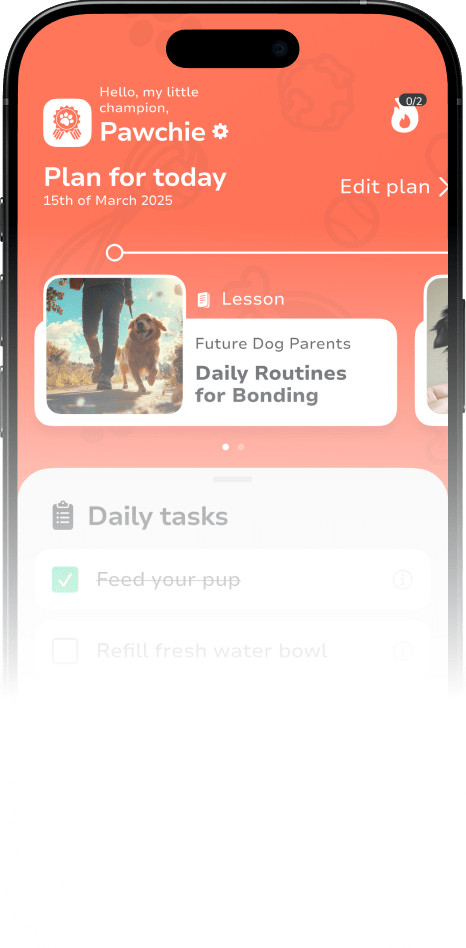
Vous avez maintenant la méthode : ignorer le saut, récompenser le calme, et rester régulier. La partie difficile n’est pas de le savoir — c’est de le faire de la même manière, à chaque salutation, jusqu’à ce que cela devienne automatique. C’est ce que PawChamp comble : il transforme ces cinq étapes en un court exercice quotidien, suit la diminution des sauts semaine après semaine, et vous offre un chat Demander à un expert canin pour les moments où vous avez un doute.
Chaque leçon est basée sur la même approche de renforcement positif que vous venez de lire, pour que votre chien apprenne ce qu’il doit faire — pas seulement ce qu’il doit éviter.
En résumé
Sauter est une habitude basée sur l'attention, donc la solution est de récompenser le calme et d'ignorer le saut. Suivez les cinq étapes, assurez-vous que chaque membre du foyer soit cohérent, et entraînez-vous avec des invités jusqu'à ce que les salutations polies deviennent automatiques. Restez patient et positif, célébrez les quatre pattes au sol, et votre accueillant enthousiaste apprendra une meilleure façon de dire bonjour.