Si votre chien connaît déjà les ordres assis, pas bouger et viens, il est temps de passer au niveau supérieur. apprendre de nouveaux exercices à votre chien est l’un des meilleurs moyens de renforcer votre lien, d’aiguiser sa concentration et de dépenser l’énergie mentale qui se transforme souvent en mauvais comportements. La bonne nouvelle — les tours à apprendre à votre chien n’ont pas besoin d’être compliqués. Voici six tours amusants et impressionnants, ainsi que la méthode exacte pour apprendre des tours à un chien correctement.
Astuces et conseils clés
Les tours pour chien stimulent mentalement votre chien et réduisent les comportements dus à l’ennui.
Les bases comme assis et pas bouger ne sont que le début — les tours à apprendre à votre chien peuvent être bien plus amusants et utiles.
Oui, vous pouvez vraiment apprendre de nouveaux tours à un vieux chien — l’âge ne bloque pas l’apprentissage.
Comment apprendre des tours à un chien : des sessions courtes, des récompenses très motivantes et de la régularité.
Ces tours fonctionnent pour les chiots, les chiens adultes et les chiens âgés, avec quelques ajustements mineurs.
Peut-on apprendre de nouveaux tours à un vieux chien ?
L’expression selon laquelle on ne peut pas apprendre de nouveaux tours à un vieux chien est dépassée et tout simplement fausse. Les chiens de tout âge peuvent apprendre de nouveaux comportements tant qu’ils sont en bonne santé et motivés. Les chiens plus âgés se concentrent souvent mieux que les chiots et répondent bien à des sessions d’entraînement calmes et régulières.
Peut-on apprendre de nouveaux tours à un vieux chien comme rouler ou tourner en rond ? Absolument — ils auront juste peut-être besoin de plus de pauses et de tours physiques un peu plus doux. Commencez par des tours faciles et augmentez la complexité progressivement. Les chiens seniors bénéficient de la stimulation mentale autant que les jeunes, et l’entraînement peut même améliorer leurs fonctions cognitives avec l’âge.
💭 Réfléchissez
Les chiens âgés se concentrent souvent mieux que les chiots car ils ont dépassé la phase de distraction liée à l'énergie débordante — les séances d'entraînement peuvent alors sembler étonnamment fluides.
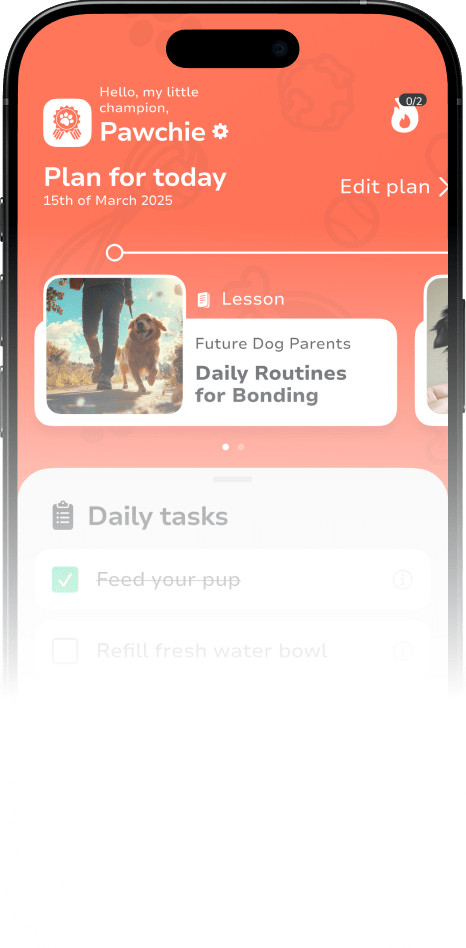
Vous voulez un programme d'entraînement quotidien qui va au-delà de l’assis et du pas bouger ? PawChamp crée un programme étape par étape adapté à l’âge, la race et le style d’apprentissage de votre chien.
6 tours sympas à apprendre à votre chien au-delà de l’assis et du pas bouger
Ces six tours sympas à apprendre à votre chien sont amusants, impressionnants et parfaits pour l’enrichissement mental quotidien. Aucun d’eux ne nécessite d’équipement sophistiqué — juste des friandises, de la patience et des sessions courtes de cinq à dix minutes. Ce sont aussi parmi les tours les plus populaires à apprendre à votre chien car ils sont faciles à montrer à vos proches et à votre famille. Voici les tours à apprendre à votre chien qui le feront dépasser les bases.
Tour 1 — L’ordre « touche »
Le tour de l’ordre toucher apprend à votre chien à poser son nez sur votre main sur commande. C’est l’un des tours les plus utiles et faciles à apprendre à votre chien car il développe la concentration et redirige l’attention des distractions. Pour commencer, tenez votre paume à plat près du nez de votre chien — quand il renifle ou touche votre main, marquez le moment avec un « oui » et récompensez.
Répétez cela 10 à 15 fois lors de courtes sessions, puis ajoutez l’ordre verbal « touche » juste avant de montrer votre main. C’est aussi une excellente base pour apprendre des tours à un chien en général, car cela établit une communication claire entre vous et votre chien. Une fois maîtrisé, vous pouvez utiliser « toucher » pour appeler votre chien loin des distractions ou rediriger un comportement anxieux.
💡 Astuce
L’ordre « touche » est l’un des tours les plus pratiques que vous puissiez enseigner — il sert aussi d’outil de concentration lorsque votre chien se laisse distraire lors des promenades.
Tour 2 — Comment apprendre à un chien à rouler
Apprendre à un chien à rouler est plus facile que la plupart des propriétaires ne le pensent. Commencez avec votre chien en position « couché », puis tenez une friandise près de son nez et déplacez-la lentement vers son épaule. En suivant la friandise, son corps va naturellement rouler sur le côté.
Une fois qu’il est couché sur le côté, continuez à déplacer la friandise en arc de cercle jusqu’à ce qu’il roule complètement. Marquez et récompensez dès qu’il termine le mouvement. C’est l’un des tours les plus amusants à apprendre à votre chien car il le fait bouger et c’est impressionnant — mais évitez-le si votre chien a des problèmes de dos ou d’articulations. Pour la plupart des chiens, ce tour est clairement dans la catégorie des tours faciles une fois qu’ils comprennent le mouvement.
Évitez ce tour si votre chien a des problèmes de dos ou d’articulations — il existe beaucoup d’autres tours qui ne sollicitent pas la colonne vertébrale.
Tour 3 — Comment apprendre à votre chien à faire la révérence
Le tour de la révérence est l’un des tours élégants à apprendre à votre chien, et il est étonnamment simple. Pour comprendre comment apprendre à votre chien à faire la révérence, commencez avec votre chien debout. Tenez une friandise devant son nez et abaissez-la lentement vers le sol entre ses pattes avant.
Alors qu’il baisse sa poitrine tout en gardant l’arrière-train levé, marquez et récompensez. Répétez plusieurs fois jusqu’à ce qu’il comprenne le mouvement, puis ajoutez l’ordre « révérence ». C’est un de ces tours qui suscite presque toujours une réaction — on dirait que votre chien salue vraiment les gens. Bonus : beaucoup de chiens font naturellement la révérence pendant le jeu, vous pouvez donc récompenser ce comportement et le renforcer.
🔍 Fait amusant
La révérence est l’un des gestes les plus universels dans le langage corporel des chiens — ils l’utilisent toutes races confondues pour signaler que ce qui va suivre est un jeu, pas de l’agressivité.
Tour 4 — Tourner
Le tour du chien qui tourne est l’un des tours uniques les plus populaires à apprendre à votre chien car il s’apprend rapidement et rend bien en photo. Tenez une friandise près du nez de votre chien et déplacez-la lentement en cercle, en guidant sa tête et son corps. La plupart des chiens font un cercle complet en quelques essais.
Une fois qu’ils comprennent le mouvement, ajoutez l’ordre « tourne » juste avant le signal de la main. C’est un des tours faciles à apprendre à votre chien qui sert aussi d’échauffement rapide avant les promenades ou les sessions d’entraînement. Vous pouvez ensuite apprendre la direction inverse avec un ordre différent comme « tourne » dans l’autre sens — un tour amusant qui impressionne tout le monde.
Apprenez toujours le tour dans les deux sens pour garder le corps de votre chien équilibré — beaucoup de chiens favorisent naturellement un côté.
Bloqué sur un tour ou votre chien décroche en plein milieu d’une session ? Discutez avec un expert canin PawChamp pour des conseils personnalisés qui remettent l’entraînement sur les rails.
Tour 5 — Apprendre à un chien à aboyer sur commande
Apprendre à un chien à aboyer sur commande est l’un des tours les plus divertissants à apprendre à votre chien, mais cela demande de la patience. Surveillez les moments où votre chien aboie naturellement — à la sonnette, pendant le jeu ou quand il est excité. Dès qu’il aboie, marquez avec « oui » et récompensez.
Une fois qu’il associe l’aboiement aux récompenses, ajoutez l’ordre verbal « aboie » juste avant qu’il n’aboie. Évitez d’abuser de ce tour si vous vivez en appartement ou avez des voisins proches. C’est aussi une étape utile pour apprendre à un chien des tours si vous voulez ensuite lui apprendre le « silence » — il faut d’abord apprendre l’aboiement avant d’apprendre le silence.
Tour 6 — Se coucher sur commande
L’ordre se coucher est un tour fondamental qui ouvre la porte à beaucoup de comportements plus avancés. Commencez avec votre chien assis, puis tenez une friandise à son nez et abaissez-la lentement au sol entre ses pattes avant. La plupart des chiens suivent la friandise pour se coucher.
Au moment où son ventre touche le sol, marquez et récompensez. Une fois qu’il le fait régulièrement, ajoutez l’ordre verbal « couché ». C’est un de ces exercices faciles qui s’avèrent utiles au quotidien — utile chez le vétérinaire, au restaurant et lors des présentations à de nouvelles personnes. Les tours solides comme celui-ci servent de base pour des tours comme rouler, faire la révérence et faire le mort.
Construire un bon « couché » tôt rend les tours futurs comme rouler, faire le mort et ramper beaucoup plus faciles — cela vaut la peine d’y consacrer du temps.
Conseils pour apprendre des tours à votre chien qui tiennent dans la durée
La différence entre un chien qui connaît des tours et un chien qui les exécute sur commande tient à la façon dont vous entraînez. Des sessions courtes, régulières et positives battent toujours les longues séances marathon. Voici comment apprendre des tours à un chien pour qu’ils restent vraiment sur le long terme :
Limitez les sessions à 5–10 minutes — les chiens perdent vite leur concentration.
Utilisez des friandises de grande valeur comme de petits morceaux de poulet, de fromage ou du foie lyophilisé.
Terminez toujours sur une réussite, même si cela signifie revenir à un tour plus facile.
Entraînez-vous d’abord dans un environnement peu distrayant, puis augmentez progressivement la difficulté.
Marquez le moment exact où votre chien réussit avec un « oui » clair ou un clicker.
Évitez de répéter l’ordre plus d’une fois — dites-le, attendez, et récompensez quand il répond.
Ces tours à apprendre deviennent fiables par la répétition, pas par la pression. Même les tours faciles demandent quelques semaines de pratique régulière avant d’être solides dans tous les environnements.
Les études montrent que les chiens retiennent mieux les comportements appris quand les sessions se terminent par une réussite — même si vous devez revenir à un tour plus facile pour y arriver.
Comment PawChamp aide-t-il à apprendre des tours à votre chien ?
Apprendre de nouveaux tours est amusant, mais savoir par où commencer — ou quoi faire quand votre chien bloque — peut être frustrant. PawChamp vous offre une expérience d’entraînement structurée, étape par étape, adaptée à l’âge, la race et le niveau d’apprentissage de votre chien. Voici ce que vous obtenez avec PawChamp :
Des tutoriels guidés pour des tours basiques et uniques à apprendre à votre chien, avec des instructions claires en vidéo et en texte.
Un suivi des progrès pour voir exactement ce que votre chien maîtrise semaine après semaine.
Des programmes d’entraînement quotidiens qui mélangent tours, obéissance et autocontrôle pour un enrichissement mental complet.
Demander à un expert canin en chat pour les moments où votre chien refuse un ordre ou que l’entraînement stagne.
Répondez à un court quiz aujourd’hui et obtenez un programme d’entraînement personnalisé adapté au comportement et au style d’apprentissage de votre chien.
En résumé
Apprendre de nouveaux tours à votre chien est l'une des expériences les plus gratifiantes que vous puissiez partager. Les six tours présentés ici vont bien au-delà du simple « Assis » et « Pas bouger », développent la concentration et renforcent votre lien sans nécessiter d'équipement sophistiqué ni des heures d'entraînement. Gardez les séances courtes, utilisez des récompenses de grande valeur et soyez régulier. Que votre chien ait 1 an ou 12 ans, l'éducation maintient son esprit vif et sa queue qui remue.