Het beste hondenvoer kiezen ziet er voor iedereen anders uit. Een van de belangrijkste aandachtspunten is of je hond een gevoelige maag heeft. Het is goed om te weten welk hondenvoer je het beste kunt kiezen voor een gevoelige maag, want er zijn veel opties.
Belangrijkste inzichten
- Dunne ontlasting, af en toe braken, winderigheid of een jeukende huid kunnen er allemaal op wijzen dat je hond een dieet voor een gevoelige maag nodig heeft.
- De meeste spijsverteringsproblemen zijn terug te voeren op de darmgezondheid, dus zachter en goed verteerbaar voer helpt vaak.
- Bloed in de ontlasting, lusteloosheid of andere ernstige symptomen vragen om een dierenarts – niet om een dieetwijziging.
- Een licht dieet, zoals gewone kip met rijst en 100% pompoen, kan milde maagklachten kalmeren.
- Nieuw voer moet geleidelijk worden geïntroduceerd, over ongeveer vier dagen, om maagklachten te voorkomen.
Signalen dat je hond gevoelig hondenvoer nodig heeft
Het meest voorkomende signaal dat een hond ander voer nodig heeft – waarschijnlijk een dieet voor een gevoelige maag – is een maagklacht die diarree veroorzaakt. Een hond die dagelijks, of zelfs om de twee dagen, dunne ontlasting heeft, kan baat hebben bij een dieet voor een gevoelige maag. Een ander veelvoorkomend symptoom is af en toe braken. Een hond die zich verder volkomen normaal gedraagt maar af en toe braakt, vertoont iets abnormaals waar je rekening mee kunt houden bij je voerkeuze. Andere signalen om op te letten zijn winderigheid en een jeukende huid. Een gevoelige huid en een gevoelige maag gaan vaak hand in hand.
Waarom braakt mijn hond of heeft hij spijsverteringsproblemen?
Elke hond is anders, dus er is niet één antwoord voor elke hond. Toch zal mijn eerste vraag altijd zijn: "Wat geef je hem te eten?" en mijn tweede: "Heb je ooit een ander voer geprobeerd?" Een van de meest voorkomende oorzaken van spijsverteringsproblemen bij honden is de darmgezondheid.
Darmgezondheid is eigenlijk de belangrijkste oorzaak van veel andere problemen bij honden.
Het antwoord is dan ook eenvoudig: je hond heeft waarschijnlijk spijsverteringsproblemen die verband houden met de darmgezondheid. Sommige honden kunnen een aandoening zoals gastro-enteritis ontwikkelen, waarbij de maag en darmen ontstoken raken. Dit kan worden veroorzaakt door iets kleins, zoals een voerwijziging, of iets ernstigs, zoals parasieten, ziektes of giftige stoffen.
| Milde symptomen | Spoedeisende dierenarts |
|---|---|
| Lichte diarree | Ernstige diarree (vooral wanneer er bloed aanwezig is) |
| Licht braken | Hevig braken |
| Winderigheid | Lusteloosheid |
| Jeukende huid | Misselijkheid |
Wanneer voer voor een gevoelige maag kan helpen
Een dieet voor een gevoelige maag kan om verschillende redenen helpen – voornamelijk bij maagklachten, maar ook bij zaken als een gevoelige huid. Diëten voor een gevoelige maag bevatten zachtere ingrediënten die de darmen ontzien. Een gezondere darm betekent een gezonder lichaam in het algemeen. Een dieet voor een gevoelige maag kan dus helpen bij klachten als braken, diarree, een jeukende huid en zelfs andere kleine problemen!
De milde symptomen die hierboven worden genoemd – chronische diarree, braken, winderigheid of een jeukende huid – betekenen waarschijnlijk dat het tijd is voor een dieetwijziging. Maar bij ernstigere symptomen, zoals bloed in de ontlasting, lusteloosheid of andere verontrustende signalen, is een dieetwijziging niet aan te raden en is een bezoek aan de dierenarts op zijn plaats.
Wat geef je een hond met maagklachten?
Misschien heb je nu geen toegang tot een dieet voor een gevoelige maag – wat geef je je hond dan als hij last heeft van zijn maag? Je raadt het al: een licht dieet. Veel mensen geven witte rijst of quinoa met gewone kip. Iets anders wat kan helpen, is je hond een dag laten vasten. Dit vasten mag slechts één dag duren, en sommige mensen geven tijdens het vasten geitenmelk of botbouillon.
Vasten is gunstig omdat het de darmen even rust geeft, een metabolische reset biedt en cellen de kans geeft om te herstellen.
Een geweldige toevoeging aan het voer is pompoen! Het moet wel 100% pure pompoen zijn, zonder toevoegingen. Die vind je in vrijwel elke supermarkt!
Waar let je op bij hondenvoer voor een gezonde spijsvertering?
Denk terug aan wat je eerder hebt gevoerd als je op zoek gaat naar het juiste dieet. Wat leek goed te zijn voor de maag van je hond? En wat niet? Dat is belangrijk om mee te nemen. Heb je vroeger rundvlees geprobeerd en had hij daar constant diarree van? Dan kun je rundvlees maar beter vermijden. Zoek naar een voer met een beperkt aantal ingrediënten, dat goed verteerbaar en graanvrij is. Sommige honden kunnen koolhydraten niet goed verteren, terwijl andere dat wel kunnen, dus het vermijden van granen kan in het belang van je hond zijn.
Probeer vulstoffen, bijproducten, maïs, tarwe, soja en kunstmatige toevoegingen te vermijden. Zoek naar een korte ingrediëntenlijst die makkelijk te lezen is. PawHealth en CareTeam kunnen algemene richtlijnen geven over waar je op kunt letten bij voer voor een gezonde spijsvertering.
💡Tip:
Hoe gastrointestinaal hondenvoer de spijsvertering ondersteunt
Wat maakt gastrointestinaal hondenvoer nu eigenlijk zo bijzonder? En wat is er anders aan vergeleken met gewoon voer?
Er is eigenlijk geen groot verschil in de ingrediënten zelf.
De meeste van deze voersoorten gebruiken een 'zachtere' eiwitbron zoals lam of vis, hebben een lager vetgehalte, voegen pompoen of een andere ondersteunende vezel toe en bevatten een probioticum. Als je dus goed weet waar je op moet letten bij het kiezen van een dieet voor een gevoelige maag, hoef je niet per se een zak te pakken waarop 'gevoelige maag' staat. Dat is vaak niet de beste keuze als je de achterkant van het etiket goed leest.
Hoe kies je het beste droge hondenvoer voor een gevoelige maag
Lees altijd de achterkant van de zak – niet alleen de ingrediëntenlijst, maar ook de voedingswaarden. Kies een 'zachte eiwitbron' zoals lam of vis. Voer met een beperkt aantal ingrediënten is de beste keuze! Graanvrij is ook een prima optie. Door je ingrediënten goed te kennen, kies je echt het beste droge hondenvoer voor een gevoelige maag.
Puppyvoer kiezen voor een gevoelige maag
Puppyvoer kiezen voor een gevoelige maag kan net even anders zijn. Ook al heeft je puppy last van zijn maag, het is belangrijk te beseffen dat hij nog steeds puppy-specifieke behoeften heeft en voer nodig heeft dat speciaal voor puppy's is samengesteld. Welk beperkt-ingrediënten-, graanvrij of gevoelige-maagdieet je ook kiest: zorg altijd dat het geschikt is voor puppy's. Maagdarmklachten bij puppy's kunnen vrij snel ernstig worden en leiden tot uitdroging en andere serieuze problemen, waardoor een bezoek aan de dierenarts eerder nodig kan zijn.
Van voer wisselen zonder de maag van streek te maken
Overstappen op ander voer moet een geleidelijk proces zijn. Je wilt het nieuwe voer niet zomaar van de ene op de andere dag volledig introduceren. Geef op de eerste dag ongeveer 75% van het huidige voer gemengd met 25% van het nieuwe voer. Op de tweede dag geef je 50% huidig en 50% nieuw. Op de derde dag 25% huidig en 75% nieuw. En op de laatste dag kun je volledig overstappen op het nieuwe voer! Sommige mensen doen elke dag een lepel pompoen in de bak om het spijsverteringsstelsel te helpen wennen aan de wisseling. Weigert je kieskeurige hond het nieuwe voer? Probeer dan een lepel pompoen, rijst of kip toe te voegen!
💡Tip:
Langzaam van voer wisselen is lastig goed te doen en het is de stap die het snelst overgeslagen wordt. De stapsgewijze handleidingen van PawChamp begeleiden je bij het geleidelijk introduceren van nieuw voer, zodat je geen nieuwe maagklachten uitlokt.
Te snel eten en stress – verborgen oorzaken van maagproblemen
Naast een gevoelige maag kunnen er ook andere redenen zijn waarom een hond na het eten braakt, zoals te snel eten. Een hond die meteen aanvalt zodra het eerste brokje in de bak valt en binnen enkele seconden klaar is, kan baat hebben bij een antislokbak (ook wel puzzelvoerbak genoemd). Te snel eten kan maagklachten veroorzaken doordat de maag overbelast raakt of de hond te veel lucht inslikt.
Stress is een andere factor die dunne ontlasting kan veroorzaken. Denk je dat dit een mogelijkheid is? Ga dan na wat de stress kan veroorzaken, verwijder die factor en kijk of de ontlasting daarna verbetert. Een bezoek aan de dierenarts kan nodig zijn om een oplossing te vinden.
Hoe PawChamp helpt
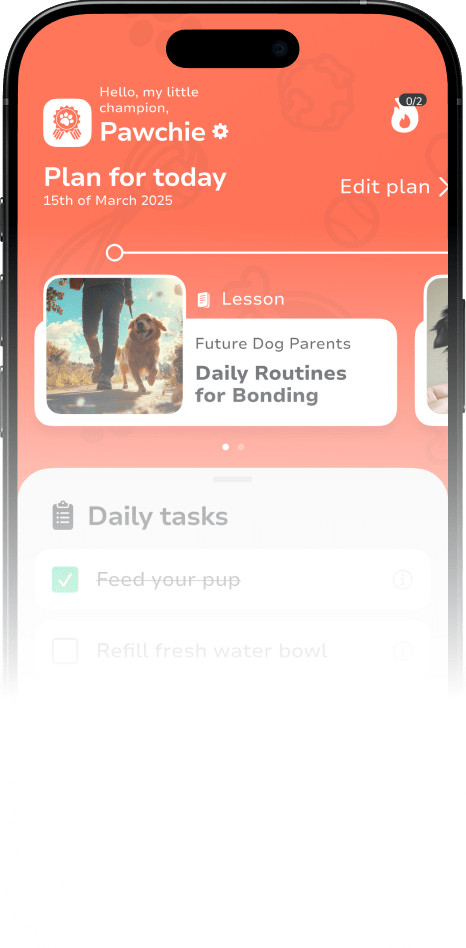
Het juiste voer en je dierenarts regelen de medische kant. Een rustige, geleidelijke voerwisseling, een langzamer eetritme en minder stress zijn beheersmaatregelen – en dat is waar PawChamp dagelijks bij ondersteunt.
Chat met echte experts in de app – gedragstherapeuten en coaches die je kunnen helpen bij voerwisselingen en kieskeurig eetgedrag.
Stapsgewijze handleidingen die je begeleiden bij het langzaam wisselen van voer, zodat je geen nieuwe maagklachten uitlokt.
Dagelijkse uitdagingen die de structuur en routine opbouwen waar een gevoelige hond goed bij gedijt.
Ondersteuning bij de stressgerelateerde kant van maagproblemen, van een overenthousiast etensmoment tot angstige eters.
Weet je niet zeker of het voer, het eetritme of stress de oorzaak is van de maagklachten van je hond? Stel je vraag aan een PawChamp-expert en bespreek het voordat je iets aanpast.
Conclusie
Doe altijd eerst onderzoek naar het voer voordat je een zak kiest waarop 'gevoelige maag' staat. Denk bij het kiezen van nieuw voer terug aan de voersoorten die je al hebt geprobeerd, of aan bepaalde ingrediënten die de maag van je hond van streek hebben gemaakt. Pompoen en een langzame introductie van het nieuwe voer worden je beste vrienden! De belangrijkste stappen zijn: laat de dierenarts ernstige aandoeningen uitsluiten en wissel het voer geleidelijk in.