Few things feel more reassuring than a dog who can help protect your home — but real protection dog training is calmer, more structured, and far more obedience-based than the movies suggest. Done well, it builds a confident, controlled companion, not an aggressive one. Before you start, here's what actually matters — from the foundation skills to realistic costs.
Key Takeaways
Protection dog training is built on obedience and control, never aggression.
Guard dog training and personal protection are different goals with different plans.
Experts largely agree on when to start protection dog training: foundations early, formal work later.
Temperament and dog behavior matter at least as much as breed.
Professional guidance keeps the advanced stages safe and effective.
What Dog Protection Training Really Involves
Good dog protection training looks surprisingly ordinary at first. Long before any protective behavior, a dog has to master rock-solid obedience — the calm, the focus, the control. Unlike old-school guard dog training that leaned on fear, modern methods use positive reinforcement to build confidence and clear communication.
In practice, that foundation comes down to a handful of non-negotiable skills:
Reliable recall — coming back the instant you call, even mid-chase.
Calm focus — keeping attention on you when it matters most.
A dependable “off switch” — settling on cue once the excitement passes.
Impulse control — waiting patiently, leaving items, and ignoring triggers.
Steady dog behavior in new places — staying relaxed around noise, strangers, and other dogs.
Master these, and you have a dog who reads a situation and responds to your cues — not one who reacts on raw instinct. Skip them, and no amount of advanced work will hold together.
🐾 Trainer's insight
A protection-trained dog is, first and foremost, an obedience-trained dog. Pros often say the calm — the recall, the focus, the rock-solid “leave it” — is the real work. The protective layer comes last, and only on top of that foundation.
Personal vs. Family Protection Dog Training
With those foundations in place, the next question is what you're actually training toward — because not every protection goal is the same. Personal protection dog training focuses on one handler and their immediate safety, often across changing environments. Family protection dog training, by contrast, teaches a dog to stay gentle with children and guests while still alert to genuine threats.
That difference shapes everything, so a thoughtful training protection dog plan always starts by defining exactly who, and what, the dog is protecting.
Home and Close Protection Dog Training
The setting matters too. Home protection dog training is mostly about deterrence and calm alerting — a dog who notices visitors and feels secure on their own turf. Close protection dog training is more advanced, teaching a dog to stay glued to a handler in busy, unpredictable places. Both demand a stable temperament and, for most owners, hands-on professional support.
Not sure where your dog's training should begin? For powerful, driven breeds, everything starts with structure.
A step-by-step, reward-based plan that builds the obedience and impulse control every protection dog needs first.
When to Start Protection Dog Training
Timing is one of the most common questions owners ask. The honest answer to when to start protection dog training is simple: begin the foundations in puppyhood, but save the protective work for a mature dog.
As for what age to start dog protection training formally, most reputable trainers wait until around 12–18 months, once a dog is physically and mentally settled. Early socialization and obedience set the stage — rushing the dog behavior side tends to backfire.
How to Teach Your Dog Protection Training
You can't shortcut the process, but you can prepare beautifully. Learning how to teach your dog protection training starts with everyday obedience, impulse control, and confidence-building games — never aggression drills.
A solid training protection dog plan layers skills slowly: focus first, then control around distractions, then structured scenarios with a certified decoy. Picture Bailey, a young Shepherd whose entire “training” for months was simply calm heeling and a flawless recall before any protective work began.
Online Protection Dog Training and Costs
Once you understand the path, the practical questions follow. Online protection dog training can't replace hands-on decoy work, but it's excellent for the obedience and control foundation you'll need first. Many owners pair app-based skill-building with a local dog board and train program for the advanced phase.
Budget matters too. As for how much protection dog training, programs vary widely — from a few hundred dollars for foundation courses to several thousand for residential protection training.
🌟 Did you know?
“Protection” and “aggression” are opposites in good training. A properly trained protection dog is more relaxed in public than an untrained one, because clarity and control replace fear and guesswork — the calm dog is the confident dog.
How PawChamp Builds the Foundation Protection Work Needs?
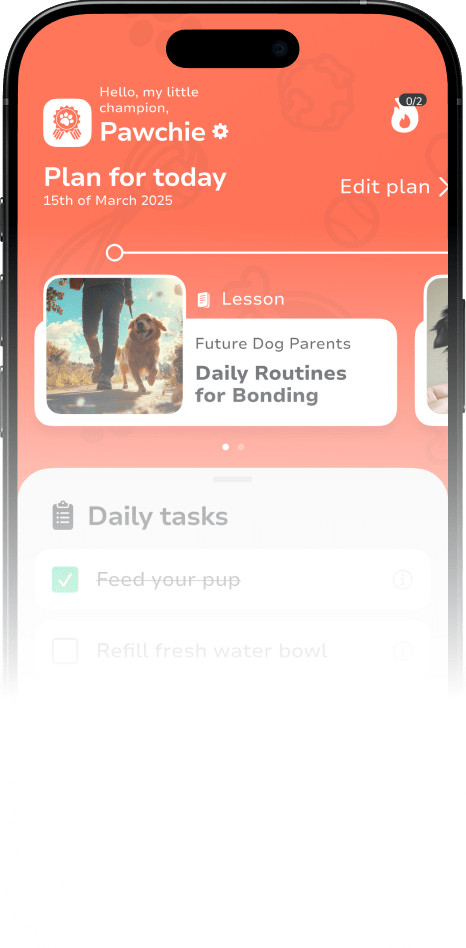
Every protection program stands on one thing: obedience you can trust under pressure. That's exactly where PawChamp comes in.
The app turns the unglamorous-but-essential groundwork into a clear daily plan — focus, impulse control, calm settling, and reliable recall — all built on positive reinforcement. Progress tracking shows you when a skill is truly solid, and the Ask a Dog Expert chat helps you judge whether your dog's temperament is suited to protection work in the first place. PawChamp doesn't teach bite work — it builds the controlled, confident dog who can safely learn it later from a certified pro.
Bottom Line
Real protection dog training isn't about creating a fierce dog — it's about creating a calm, obedient, confident one who responds to you no matter what. Start with foundations early, wait for maturity before formal protection work, and lean on certified professionals for the advanced stages. Get the control right first, and everything else follows safely.