Votre chien aperçoit un autre chien de l'autre côté de la rue, et la promenade tranquille se transforme en aboiements, en tiraillements et en laisse emmêlée — le tout sous le regard des passants. Vous n'êtes pas un mauvais maître, et votre chien n'est pas un mauvais chien. Les aboiements d'un chien sur les autres chiens font partie des problèmes les plus courants en promenade, et des plus faciles à corriger. Pour comprendre ce que votre chien exprime et comment l'empêcher d'aboyer sur les autres chiens, tout se joue sur la distance et le timing.
Astuces clés
La plupart des aboiements envers les autres chiens viennent de la frustration ou de la peur, pas d'une question de dominance.
La réactivité en laisse et l'agressivité véritable se ressemblent, mais nécessitent des approches différentes.
La distance est votre principal outil, car un chien au-delà de son seuil n'est plus en mesure d'apprendre.
Récompensez les regards calmes et le désengagement — jamais les aboiements.
Pourquoi mon chien aboie-t-il sur les autres chiens ?
La plupart des maîtres pensent que les aboiements signifient que leur chien cherche la bagarre. C'est rarement le cas. La vraie réponse à « pourquoi mon chien aboie-t-il sur les autres chiens ? » est souvent plus simple : votre chien veut quelque chose et ne peut pas l'obtenir. Les chiens frustrés qui veulent saluer aboient parce que la laisse les en empêche. Les chiens craintifs aboient pour éloigner la menace — et ça marche, car l'autre chien finit par passer son chemin.
Un troisième groupe n'a tout simplement jamais appris à réagir autrement. Pourquoi les chiens aboient-ils sur des congénères qu'ils n'ont jamais rencontrés ? Personne ne leur a enseigné une autre option, et les aboiements sont devenus une habitude.
🤔 Réfléchissez à ceci :
Réactivité en laisse ou agressivité
Les deux se ressemblent vus de dix mètres de distance.
La réactivité en laisse est une réaction de dépassement du seuil, provoquée par la frustration ou la peur. Les aboiements sont forts, le corps se projette en avant, puis tout se calme dès que l'autre chien est parti. Un chien réactif envers les autres chiens salue souvent poliment sans laisse.
L'agressivité véritable est plus silencieuse et plus froide : regard fixe et dur, corps figé, poids porté vers l'avant sans le moindre rebond. Les maîtres qui se demandent pourquoi leur chien est agressif envers les autres chiens décrivent généralement de la réactivité. La différence se voit dans l'immobilité, pas dans le volume. Un chien agressif envers les autres chiens avec des antécédents de morsures nécessite l'intervention d'un spécialiste du comportement qualifié — pas un article de blog.
La réactivité répond à un programme structuré que vous pouvez mettre en place vous-même. L'agressivité, elle, exige une évaluation en personne. Le Riney Canine Health Center de Cornell l'affirme clairement : un chien réactif n'est pas automatiquement un chien agressif, mais une réactivité laissée sans traitement peut basculer vers l'agressivité.
📌 Exemple :
Comment empêcher un chien d'aboyer sur les autres chiens
Toutes les méthodes reposent sur une même idée : un chien au-delà de son seuil n'est plus en mesure d'apprendre.
Le système repose sur la désensibilisation et le contre-conditionnement. Vous trouvez la distance à laquelle votre chien remarque l'autre chien mais peut encore accepter une friandise, vous associez cette vue à quelque chose de positif, et vous réduisez cet écart sur plusieurs semaines. Les maîtres qui cherchent comment empêcher leur chien d'aboyer sur les autres chiens travaillent souvent trop près, répétant les aboiements au lieu de les remplacer.
Appliquez cette séquence à chaque promenade d'entraînement :
- Repérez l'autre chien en premier, puis prenez de la distance jusqu'à ce que le vôtre accepte à nouveau une friandise.
- Marquez le moment où votre chien regarde et reste calme.
- Récompensez le regard qui se détourne — jamais les aboiements.
- Terminez la session pendant que votre chien réussit encore.
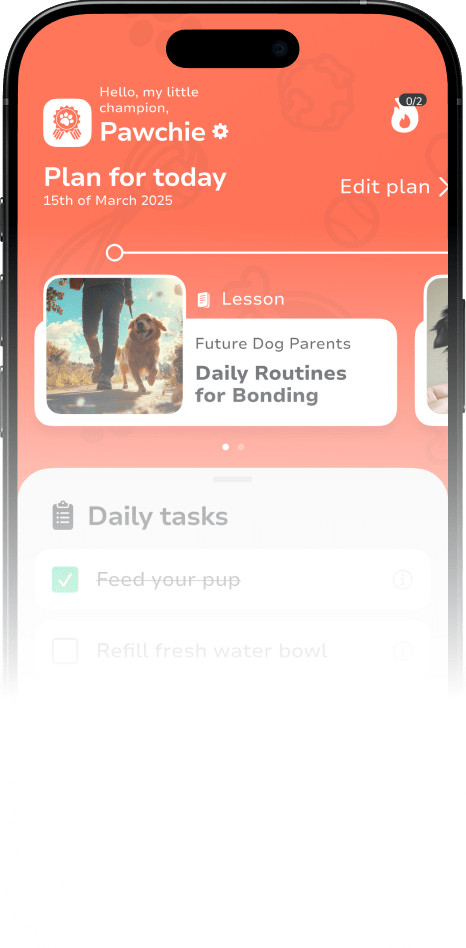
Répétez suffisamment souvent, et empêcher votre chien d'aboyer sur les autres chiens deviendra une routine, non une crise. Les guides étape par étape de PawChamp et le cours sur la réactivité accompagnent les maîtres dans cette séquence précise, en courtes sessions quotidiennes — pour suivre un programme plutôt qu'improviser au bord du trottoir.
Éducation à la réactivité en laisse lors des promenades
La promenade est votre salle de classe la plus difficile : vous ne pouvez pas contrôler qui tourne au coin de la rue.
Choisissez d'abord votre terrain. Les rues calmes, les trottoirs larges et les sorties matinales vous offrent la distance qui rend l'éducation à la réactivité en laisse possible. Un parking à 7h du matin vaut mieux qu'un parc animé à midi.
Ensuite, pratiquez le jeu d'engagement-désengagement. Votre chien regarde l'autre chien, vous marquez le comportement, votre chien se retourne vers vous, et la récompense arrive. Le timing prime sur la friandise : récompensez avant les aboiements, jamais après. Saisir le bon moment dépend de votre capacité à lire les signaux de votre chien tôt, quand son corps est encore détendu.
💡 Conseil :
Réduisez la distance au déclencheur sur plusieurs semaines plutôt que sur quelques promenades. La régularité est la vraie réponse pour apprendre à votre chien à ne plus aboyer sur les autres chiens — et c'est précisément ce que la plupart des maîtres sous-estiment. Les progrès ressemblent à un chien qui remarque, puis détourne le regard.
Quand les aboiements deviennent de l'agressivité
Certains comportements vont au-delà d'un simple problème d'aboiements. Des élans répétés avec intention, des tentatives de mordre ou des antécédents de morsures dépassent ce qu'un article peut résoudre. La question n'est plus « comment empêcher mon chien d'aboyer sur les autres chiens », mais plutôt « qui peut évaluer cette situation en personne ».
Prenez rendez-vous avec un spécialiste du comportement animal accrédité dans votre région — et faites-le maintenant, sans attendre le prochain incident. Notre guide sur comment gérer l'agressivité canine en toute sécurité explique en quoi consiste ce type de travail. La messagerie Demander aux experts canins de PawChamp vous met en contact avec des éducateurs canins certifiés, et le cours sur l'agressivité propose un travail structuré sur les déclencheurs, les seuils et les soins coopératifs. Un vrai risque de morsure nécessite quelqu'un qui peut observer votre chien dans la même pièce.
Comment PawChamp peut vous aider
Lire une méthode, c'est facile. L'appliquer un mardi pluvieux, après deux séries d'aboiements, c'est une autre histoire.
- Le cours sur la réactivité transforme la désensibilisation en une session que vous pouvez pratiquer dès aujourd'hui.
- Pawchie AI répond à vos petites questions à 23h, sans jugement.
- Les défis quotidiens et les séries quotidiennes maintiennent le travail même dans les semaines sans motivation.
- Demander aux experts canins met un éducateur canin certifié à portée de main quand une promenade tourne mal.
Chaque cours et guide PawChamp est élaboré avec des éducateurs canins certifiés, et le contenu est examiné par l'International Association of Animal Behavior Consultants (IAABC). L'agressivité véritable reste du ressort d'un professionnel en personne ; tout le reste commence avec un programme que vous pouvez démarrer dans l'application dès aujourd'hui.
En résumé
Un chien qui aboie sur les autres chiens est généralement un chien dépassé, pas un chien en quête de conflit. Gérez la distance, maintenez votre chien en dessous de son seuil, et récompensez le regard calme plutôt que de punir le bruit. Si vous observez une véritable agressivité — intention, immobilité ou antécédents de morsures — faites appel dès maintenant à un professionnel qui peut intervenir en personne.
Références
Cornell University College of Veterinary Medicine, Riney Canine Health Center. Managing reactive behavior.