Ihr Hund empfängt Sie an der Tür und leckt sofort Ihre Hände, Ihre Handgelenke und – wenn Sie es zulassen – Ihr Gesicht. Zehn Minuten später ist er immer noch dabei. Warum lecken Hunde einen mit solcher Beharrlichkeit an? Lecken ist eines der ältesten Kommunikationsmittel im Repertoire eines Hundes – teils Zuneigung, teils Informationssammlung, teils Gewohnheit, die jedes Mal verstärkt wird, wenn Sie reagieren. Das meiste davon ist völlig normal. Ein kleiner Teil ist es wert, genauer beobachtet zu werden.
Wichtige Erkenntnisse
Lecken ist in erster Linie Kommunikation – Zuneigung, Geschmack, Begrüßung und Aufmerksamkeitssuche werden alle über die Zunge vermittelt.
Das Lecken im Gesicht hat seine Wurzeln in der Welpenzeit, als das Belecken des Mauls der Mutter sowohl Begrüßung als auch Bitte war.
Ein kurzes Lecken der Lippen während des Streichelns signalisiert oft leichtes Unbehagen – kein Wohlbehagen.
Gewohnheitsmäßiges Lecken ist erlerntes Verhalten, das durch Ihre Reaktion verstärkt wird.
Plötzliches, zwanghaftes oder nächtliches Lecken kann auf Angst oder ein gesundheitliches Problem hinweisen.
Warum lecken Hunde einen an? Die wichtigsten Gründe
Fragen Sie zehn Hundebesitzer, warum Hunde einen gerne ablecken, und Sie erhalten zehn Theorien – die meisten davon teilweise richtig. Das Verhalten hat mehrere, sich überschneidende Motivationen statt einer einzigen klaren Erklärung, weshalb es in so vielen verschiedenen Momenten des Tages auftaucht.
Vier Gründe erklären nahezu alles:
- Geschmack – der unromantischste und am meisten unterschätzte. Haut enthält Salz, Spuren Ihrer letzten Mahlzeit und das Duftprofil Ihres gesamten Tages.
- Zuneigung und Bindung – Lecken ist ein soziales Verhalten unter Hunden, das zur Begrüßung und zum Abbau von Spannungen eingesetzt wird. Auf Sie gerichtet bedeutet es: Sie gehören zur Gruppe.
- Aufmerksamkeit – das ist das Verhalten, das Hundebesitzer ungewollt aufbauen. Jedes Lecken, das eine Reaktion auslöst, lehrt Ihren Hund, dass es funktioniert.
- Instinkt – Welpen lecken zur Begrüßung und um Futter zu fordern, und dieser Reflex erlischt nie vollständig.
Was bedeutet es also, wenn ein Hund einen um 6 Uhr morgens anleckt? In der Regel, dass die letzten zwanzig Versuche erfolgreich waren – Sie haben sich bewegt, gesprochen oder sind aufgestanden. PawChamp wertet das als Hinweis auf ein unerfülltes Bedürfnis und nicht als eine Gewohnheit, die unterdrückt werden sollte.
📝 Zum Nachdenken
Warum lecken Hunde einem ins Gesicht und lecken Menschen an?
Das Lecken im Gesicht hat die tiefsten Wurzeln. Welpen lecken um das Maul ihrer Mutter herum, um sie zu begrüßen und sie dazu zu bringen, Futter zu bringen – und dieser Instinkt bleibt bis ins Erwachsenenalter erhalten. Das Gesicht ist schlicht der Ort, an den sich die Begrüßung schon immer gerichtet hat, was erklärt, warum Hunde einen ins Gesicht lecken und nicht ans Ellenbogen.
Das erklärt auch den Anstieg bei Wiedersehen. Ihr Gesicht trägt die stärksten Duftinformationen, die Sie zu bieten haben – und Ihr Hund hat den ganzen Nachmittag darauf gewartet.
Manche Hunde begrüßen jeden auf diese Weise. Warum lecken Hunde Menschen, die sie gerade erst kennengelernt haben? In der Regel liegt es am Temperament – sozial selbstsichere Hunde behandeln neue Menschen als Gruppenmitglieder, die es zu begrüßen gilt.
Warum leckt mein Hund mich, wenn ich ihn streichle?
Die Schleife aus Streicheln und Lecken ist meistens gegenseitig: Sie pflegen Ihren Hund, er pflegt Sie zurück. Gegenseitiges Fellpflegen ist echte Bindung, und für viele Hunde ist es die natürliche Art, Zuneigung zu erwidern.
Aber achten Sie auf das Tempo. Hundebesitzer, die fragen, warum ihr Hund sie anleckt, wenn sie ihn streicheln, erwarten eine rein herzerwärmende Antwort – die ehrliche hängt jedoch von der Art und Weise ab. Langsam und sanft bedeutet Behagen. Schnell und zunehmend intensiv ist Überreizung – die Energie, die aus einer Kuschelei ein Rangeln werden lässt.
Es gibt auch ein subtileres Signal. Wenn Hunde sich die Lippen lecken, während sie gestreichelt werden, ist das oft eine leichte Beschwichtigungsgeste – sie bedeutet häufig „das ist mir etwas zu viel” und nicht „bitte mach weiter”. Zusammen mit einem abgewandten Kopf oder einem eingezogenen Körper ist es eine höfliche Bitte um Abstand.
🔍 Wussten Sie schon?
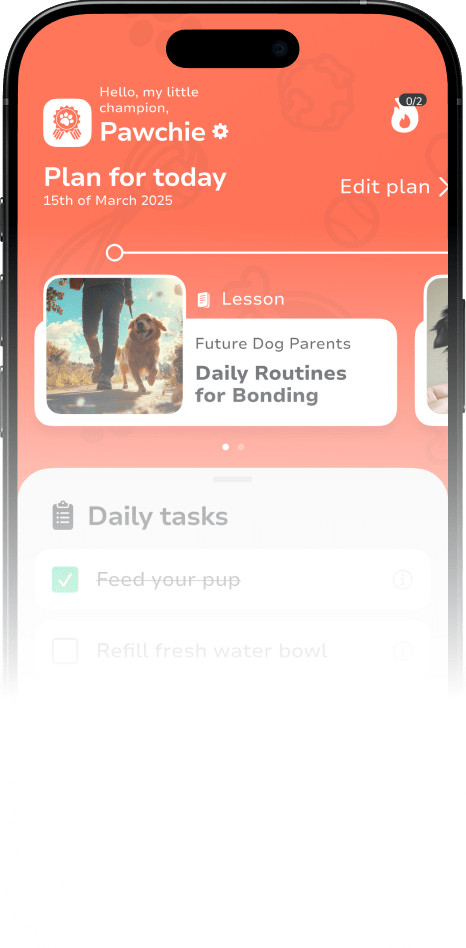
Die praktische Lösung hier ist, eine ruhigere Alternative zu lehren: ein Beruhigungssignal, das Ihr Hund zeigen kann, anstatt die Intensität zu steigern. Die täglichen Lektionen von PawChamp sind genau auf solche kleinen, wiederholbaren Gewohnheiten ausgerichtet, damit eine ruhige Reaktion zur Selbstverständlichkeit wird – und nicht etwas, das Sie in dem Moment aktiv managen müssen.
Warum leckt mein Hund mich so oft?
Häufiges, gewohnheitsmäßiges Lecken hat weniger mit Emotionen als mit Lernen zu tun. Jedes Lecken, das eine Reaktion auslöst – ein Lachen, ein Wort, ein Wegschieben – lehrt Ihren Hund, dass es funktioniert. Aufmerksamkeit ist Aufmerksamkeit, auch wenn sie genervt erfolgt.
Das ist die ehrliche Antwort auf die Frage, warum der eigene Hund einen so oft anleckt: Sie waren ein hervorragender, ahnungsloser Trainingspartner. Das ist keine Widerspenstigkeit und kein Zeichen, dass etwas nicht stimmt.
Wer sich fragt, warum der eigene Hund einen ständig ableckt, kann die Schleife genauso durchbrechen, wie sie entstanden ist. Das Lecken ignorieren, vier Sekunden Stille abwarten, dann Aufmerksamkeit schenken. Bei Bedarf zu einem Kauspielzeug umlenken. Die Gewohnheit lässt nach, weil die Belohnung sich verändert.
Es gibt jedoch eine Grenze, ab der „oft” zu etwas anderem wird.
Warum leckt mein Hund mich übermäßig viel?
Zwanghaftes Lecken sieht anders aus, wenn man weiß, worauf man achten muss. Es ist wiederholt statt reaktiv, schwer zu unterbrechen und geht oft weiter, nachdem Sie sich abgewandt haben.
Die Auslöser sind meist stressbezogen. Trennungsangst, Langeweile oder eine Veränderung der Routine können sich alle als Lecken äußern, da die Handlung selbstberuhigend wirkt – sie baut Anspannung ab, ähnlich wie Nägelkauen bei Menschen. Wer sich fragt, warum der eigene Hund einen übermäßig viel ableckt, beschreibt oft einen Hund, der mit seinem eigenen Unwohlsein umgeht. Deshalb zielt PawChamp auf die zugrundeliegende Überreizung ab – nicht auf die Zunge.
Die Nacht ist ein häufiger Brennpunkt. Ein Hund, der einen nachts übermäßig viel ableckt, hatte seinen Tag oft nicht ausreichend ausgefüllt und liegt nun in einem stillen Haus wach, ohne etwas zu tun.
♨️ Interessanter Gedanke
Wenn Ihr Hund Sie ständig ableckt und Umlenken wirklich nicht hilft, oder wenn das Lecken zwanghaft und auch auf sich selbst gerichtet ist, ist ein Gespräch mit Ihrem Tierarzt angebracht – und keine Trainingsanpassung. Anhaltendes zwanghaftes Lecken kann eine körperliche Ursache haben.
Warum lecken Hunde einen, nachdem sie gebissen haben?
Die Abfolge Beißen-dann-Lecken verwirrt Hundebesitzer, weil sie wie zwei widersprüchliche Botschaften aussieht. Das ist sie nicht. Hunde lecken einen nach dem Beißen als Beschwichtigungsgeste – das Nächste, was sie einer Entschuldigung bieten können.
Es ist teils Beruhigung Ihnen gegenüber und teils Selbstberuhigung nach innen. Ihr Hund hat gespürt, dass der Moment zu weit gegangen ist, und versucht, ihn zurückzusetzen. Diese Abfolge zu lesen – zusammen mit der übrigen alltäglichen Körpersprache Ihres Hundes – macht einen verwirrenden Moment zu einem lesbaren, und genau dieses Verständnis baut das PawChamp-Coaching auf.
Lecken als wechselseitige Kommunikation verstehen
Zu verstehen, warum Ihr Hund leckt, ist eine Frage der Lesekompetenz – und die lässt sich aufbauen. PawChamp hilft auf beiden Seiten:
- Gewaltfreie tägliche Lektionen, die aufmerksamkeitssuchendes oder ängstliches Lecken in ruhigere, sinnvollere Verhaltensweisen umlenken.
- Fragen Sie einen Hunde-Experten – Chat-Zugang zu zertifizierten Trainern, die das spezifische Muster, das Sie beschreiben, einschätzen können.
- Beschäftigung und Spiele, die die Leerstunden füllen, in denen zwanghaftes Lecken in der Regel beginnt.
Bei Lecken, das wirklich zwanghaft wirkt, steht Ihr Tierarzt an erster Stelle – PawChamp übernimmt die Trainingsseite, nicht die medizinische.
Fazit
Lecken ist meistens die Art Ihres Hundes zu sagen: „Ich kenne Sie, ich habe Sie vermisst, schenken Sie mir Aufmerksamkeit” – normal, liebevoll und tief instinktiv. Achten Sie auf Tempo und Kontext statt nur auf das Verhalten selbst: Langsam und sanft bedeutet Behagen, frenetisch und unstoppbar ist einen näheren Blick wert. Lenken Sie um, was zur Gewohnheit geworden ist, füllen Sie die Stunden, die ängstliches Lecken begünstigen, und suchen Sie Ihren Tierarzt auf, wenn es zwanghaft wird.