One of the biggest choices when choosing the best dog food for your dog is deciding between grain free dog food and diets that contain grain. Neither is automatically the winner, and it solely depends on your dog, their needs and your own beliefs about what is best for your pet.
Key Takeaways
- Grain free dog food leaves out cereal grains and replaces them with carbohydrates like sweet potato, peas and lentils.
- Grain-free is not automatically healthier — it suits dogs with grain allergies or sensitive stomachs.
- Grains are not simply filler; they carry real nutritional value for most dogs.
- The FDA has investigated a possible link between high-legume diets and heart disease, without proving cause.
- Understanding what is grain free dog food starts with reading the label, not the marketing.
What Is Grain-Free Dog Food, Really?
Choosing dog food grain free of cereal grains is a controversial topic in the nutrition and health industry. There are opinions and there are facts. Grain-free diets do not contain cereal grain ingredients such as corn, wheat, rice, oats, barley and rye.
Taking the grains out of a diet means something else has to go in their place.
🍠 Tip:
A frequent misconception about grain diets is that most of those "grain" ingredients are put into the food as filler. So instead of having nutritional value to the dog, it is instead put in to make the dog feel fuller and add a higher nutritional content on the back of the bag. That isn't accurate — whole grains contribute protein, fibre, vitamins and minerals, and for most dogs they are a perfectly digestible energy source.
Is Grain-Free Dog Food Better Than Grain?
So is grain free dog food better? In some cases, yes grain-free diets can be healthier, but not necessarily. A dog with a known allergy issue to listed grains in the diet is the clearest reason to switch to a grain-free diet, suggested by your vet.
Sweet potatoes have lots of benefits and can help the digestive system and immune system more than corn, wheat or rice can, and most grain-free diets contain sweet potato. The honest version of grain free vs grain dog food is that grain diets are usually recommended for dogs who have no allergies or health concerns.
Grain Free Dog Food and the FDA Investigation
There is one more thing any honest grain-free guide has to mention. In 2018 the FDA began investigating reports of dilated cardiomyopathy (DCM), a serious heart condition, in dogs eating diets high in peas, lentils and other legumes. Over 90% of the reported diets were labelled grain-free and 93% contained peas or lentils.
The FDA never established that grain-free food causes DCM, and it stopped routine updates at the end of 2022, calling the link a complex issue with several likely factors. Cases have appeared on grain-inclusive diets too, so the common thread looks like a high proportion of legumes rather than the absence of grain.
❤️ Tip:
Choosing Grain-Free Food for Your Dog's Needs
Choosing the best grain free dog food depends on your dog specific. There are options like sensitive stomach, senior, puppy, high protein and different proteins. So, decide what your dog needs first. A high quality grain free dog food states its protein source clearly and doesn't lean on legumes for the top three ingredients.
Grain-free diets are not only recommended for dogs with allergies but also for dogs with sensitive stomachs as well, and that's what makes grain free sensitive stomach dog food worth a look — the gentler carbohydrates are easier to digest.
Homemade feeding deserves a word of caution. Homemade dog food is easy to get wrong nutritionally, so talk to a vet or a board-certified nutritionist before building a DIY diet.
Not sure which of those your dog actually needs? PawHealth and CareTeam, PawChamp's wellness advisors, can talk you through what to look for on a label — general guidance, not clinical advice. A couple of quick questions about your dog will point you at the right starting place.
Mealtime Manners and Food-Based Training Games
A common behaviour for some dogs is inhaling their food. Before you're even done scooping the food into their bowl, it's already gone. So, what can you do? Well, there's lots of options that can slow down their eating all while making mealtime fun.
Another common issue during mealtime is when a dog is not interested in eating their "boring" food, so you have to make it fun and exciting. Resource guarding, begging, jumping at the bowl and barking are also common issues during mealtime, but with PawChamp's help, you can find a solution.
Calm Mealtime Manners
Experiencing issues such as barking for food, jumping, or dog begging? It may be a good idea to teach your dog "sit, stay" and have them wait until you place the food down and tell them okay.
A slow feeder dog bowl helps a gulper pace themselves, which is worth doing for comfort as much as manners.
Resource guarding needs slow, gradual and consistent training. You can feed treats and other "lesser value" items from your hand, if it can be done so safely. You can also train drop and leave it, which can help with resource guarding. It's important to train and practice with a "lesser value" item or food first and work your way up.
🦴 Tip:
Food-Based Training Games
Maybe all your dog needs is a bit of fun during mealtime. So, what can you do? There are so many options that are not only enriching, but fun. Turning a meal into a foraging game adds enrichment, slows fast eaters and builds focus, and food puzzles for dogs double as an easy indoor activity:
- Snuffle mat — hide kibble in the fleece strips and let your dog forage by nose. It allows your dog to use not only their brain but also their senses.
- A lick mat for dogs — spread soft food across the mat; calming and slows eating. Best with canned foods or other spreadable food and treats, and it can be frozen.
- Muffin tin game — treats in a muffin tray with some holes covered by tennis balls, so your dog nudges them aside.
- Treat scattering — simply toss the food on the ground around the area and let your dog scavenge.
- A puzzle feeder dog bowl, also known as a slow feeder, is great for dogs who need to slow down — fun patterns make your dog go through a maze to eat.
- KONGs or other stuffable toys are a great option to keep your pup occupied. Freeze one for a longer, calming session.
Getting a Picky Dog to Accept New Food
It can be hard switching your dog to a new diet, especially if they're picky. So, what can you do to help your dog adjust to this switch and accept their new food? Luckily, there are lots of options making the switch easier.
How to Transition Dog Food Safely
Knowing how to switch dog food matters as much as choosing it. Go gradually: mix the old and new food together over 7 to 10 days, increasing the new portion a little at a time until you're feeding the new diet alone.
That slow ramp is the whole trick to how to transition dog food without an upset stomach or a refusal on day one.
What to Do With a Picky Eater Dog
A picky eater dog needs a different question first. The first thing you should consider is what is making them uninterested in this food. Is it the flavour? Maybe the taste of a certain protein is unappealing to them, and trying a different flavour can help.
A dog won't eat new food at all sometimes, so add some toppings to their bowl. Try adding their favourite treats on top, bone broth, goats' milk, yogurt or other healthy enticing options.
🥣 Tip:
The other half of how to get dog to eat is lowering the pressure. Standing over the bowl, coaxing, or swapping food every two days teaches a dog that refusing produces something better.
How PawChamp Helps
Choosing the right food is half the job. Getting your dog to calmly accept and eat it is training, and that's what PawChamp supports.
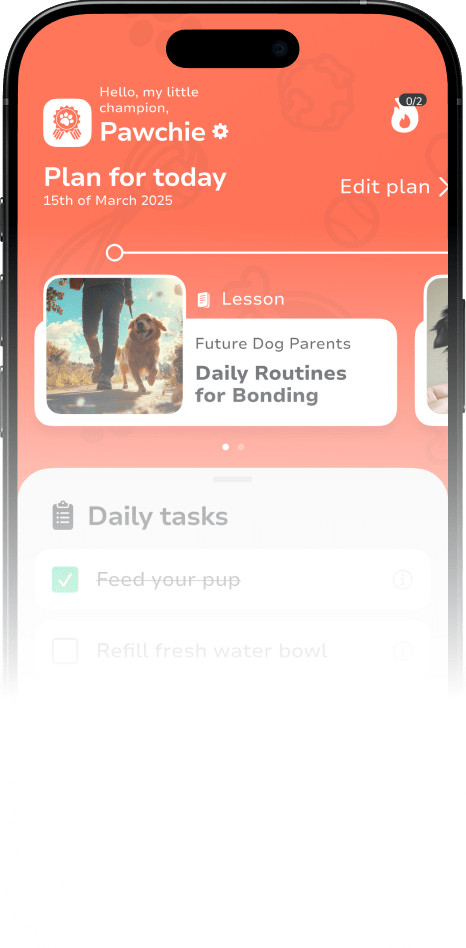
- Step-by-step guides — structured plans for mealtime manners, food-based games, and gradually transitioning to a new food: introduce, reward, build up.
- Daily challenges — keeping the routine consistent day to day, because consistency is what makes mealtime habits and transitions stick.
- Ask Dog Experts — chat with certified trainers about guarding, begging, bolting food, or refusing to eat.
- PawHealth and CareTeam — wellness advisors who can offer general guidance on what to look for in a food.
Working on the bowl routine rather than the bag? PawChamp turns it into short daily steps you'll actually keep up.
Grain-Free Canned Dog Food and Other Formats
Luckily, grain-free has other options than just kibble. They make grain free canned dog food, fresh grain-free diets, grain-free dehydrated dog food, freeze-dried grain free and grain-free air-dried dog food. So if grain free is something you're looking for, however you do not want to feed kibble, there are lots of other options.
Wet Dog Food and Canned Options
Wet dog food is going to have the most moisture and be the softest option. This is great for dogs with urinary issues, kidney issues and diabetes as it offers the most amount of moisture to their diet, however, you can always water down other foods as well.
🦷 Tip:
Best Dry Dog Food and Fresh Formats
The best dry dog food for your household may still be kibble on cost and convenience, and grain free small breed dog food matters here because kibble size and calorie density are formulated differently for smaller mouths.
Fresh grain-free diets you can find almost anywhere now, even local grocery stores. They are kept in the refrigerator section and there are so many brands available, offering both grain and grain-free options. This is a great option if you want to stray away from kibble or other highly processed diets, and it's also great for dogs with dental issues as it is softer and can be mushed down.
Dehydrated, freeze-dried, and air-dried diets are similar but different. They all have the same goal, which is to offer less processed dog food. They do undergo different processing but have minimal processing, allowing them to retain a high amount of their original nutrients. These are all great options for people who want to feed a less processed diet without paying the high cost or doing all of the work, and the best part is they come in both grain and grain free options.
Grain-Free Salmon Dog Food and Protein
Luckily, there are lots of different options of protein in grain-free dog food. Grain free salmon dog food is one of the most used grain-free options and it is said to be "easier" on the stomach than other commonly used proteins. Any salmon dog food also brings omega-3s, which support skin and coat.
A high protein grain free dog food suits active dogs, while grain free senior dog food usually dials protein and calories to an older dog's slower pace. Match the formula to the life stage, not to the marketing on the front.
Conclusie:
There is no such thing as "grain-free diets are better" or vice versa. It solely depends on your dog, their needs, your needs and your beliefs on what is best for your pet. It's always best to talk with your veterinarian and get insight on the different options and why they think one is best for your dog — and remember that how calmly your dog eats is a training question, not a nutrition one.
References
U.S. Food and Drug Administration. FDA Investigation into Potential Link between Certain Diets and Canine Dilated Cardiomyopathy Last updated December 2022.